
Your line runs a cook short on a Friday night, tickets stack three deep at the rail, and a cook burns thirty seconds on an order deciding what to fire next. That lost time is the most expensive thing in your building, and almost none of it lands on a report. AI in the restaurant kitchen has started clawing those minutes back, in the one part of the restaurant most operators have yet to automate. The tools doing it cost a fraction of a robot arm, and they already run on lines like yours.
Where do restaurant kitchen labor hours go?
Walk a short-handed line during a rush and the wasted minutes hide in plain sight, once you stop watching the fryer. They sit in coordination. A cook squints at a handwritten ticket and guesses the fire order. Expo re-fires a whole table because the delivery order and the dine-in order never lined up to land together.
The opener preps a full pan of something that won't move, runs dry on the thing that does, and a cook drops everything mid-service to break more down. Every one of those scrambles is paid labor nobody scheduled. And labor keeps getting pricier. Restaurant365's mid-year read report found three in four operators watched labor costs climb through the first half of 2026, which makes every minute you win back worth more than it was a year ago.
Why the kitchen is the last place restaurants added AI
AI reached restaurants through the back door. It landed first in the marketing inbox and the accounting close, where the work is text and numbers and a wrong answer costs little. The National Restaurant Association's 2026 report shows the pattern. Marketing leads by a wide margin, at about one in five full-service operators. Administrative work comes next, near one in ten. On the line itself, adoption barely registers.
That order makes sense. Marketing copy can be redone in a minute. A mis-forecasted prep list wastes real food, and a badly sequenced rail costs covers, so the tools built for the pass and the prep table arrived later. Most kitchens are meeting them for the first time this year.
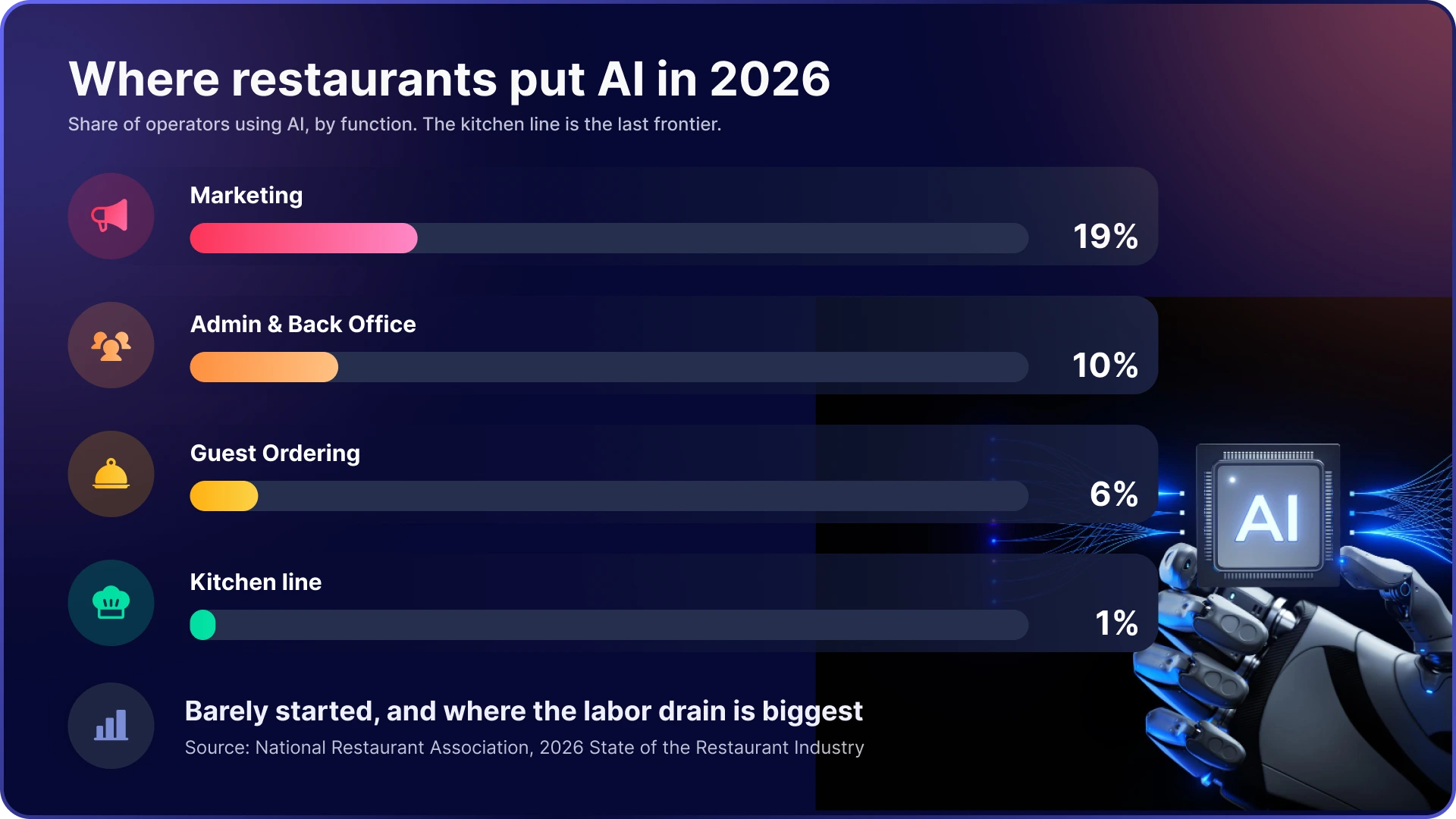
The biggest labor drain in the building is the corner operators have automated least.
Must Read: Unlock profit with AI Marketing for Restaurants
What restaurant kitchen AI saves in labor hours today
The restaurant kitchen AI paying off right now is the plain kind, not the kind that ships with a robot arm. A smart kitchen display sequences tickets by cook time and course, so every plate for table nine lands in the same ninety seconds instead of trickling out one at a time. Cook-time monitoring flags a ticket that is aging before it turns into a comp.
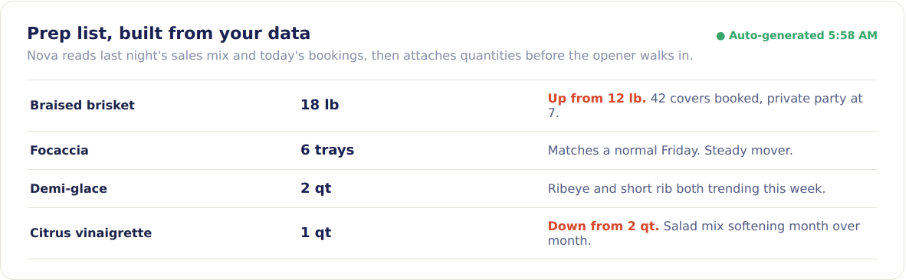
Prep automation reads yesterday's sales mix and today's bookings, then hands the morning crew quantities in place of a gut guess. Forecasting sees the rush coming, so you are not paying two extra bodies through a dead Tuesday afternoon.
Picture a Saturday night. Without sequencing, delivery tickets and dine-in orders hit the board in whatever order they arrive, and the line spends real seconds every ticket deciding what to fire. Turn sequencing on, and the board makes that call, so the crew just cooks. Trim fifteen seconds a ticket across 300 covers and the hours pile up by the time you cash out.
What operators using AI in the back office report
Restaurant365, 2026 State of the Restaurant Industry Mid-Year Report. More than 420 operators running close to 10,000 restaurants.
No robot on the line. Fewer manual handoffs through the busiest ninety minutes of the shift, and the savings show up where you can bank them.
How Nova's smart KDS and prep automation work
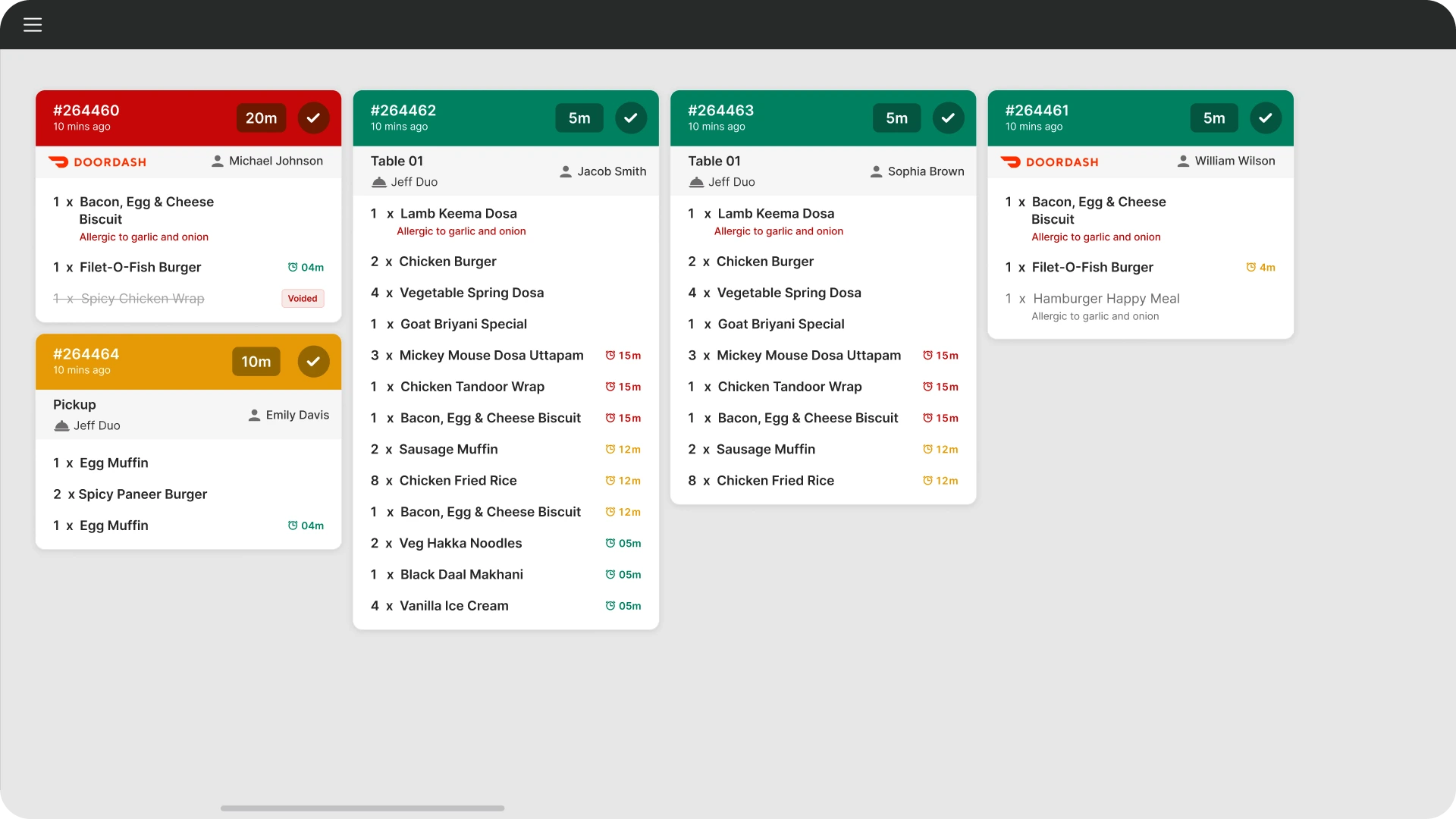
Nova built its kitchen tools on that working layer. Nova's smart KDS takes the sequencing problem head-on. Tickets order themselves by cook time and course, color-code by how long they have been open so nothing quietly rots at the pass, and route each item to the right station without anyone sorting by hand.
Dine-in, online, and delivery orders drop into one queue, so expo works from a single screen instead of refereeing three. When an item gets 86'd or an order changes, every affected station sees it at once.
The prep side runs on the same logic. Nova reads your sales history and the day's bookings, then builds the prep list with quantities already attached, so the opener starts on the right amounts before the first order fires.
Because the KDS, POS, online ordering, and inventory sit on one platform, the AI works from the whole picture in place of a thin slice. That connection turns a suggestion into one you can trust. We get into why in The Hidden Cost of Disconnected Software.
Want to see it on your own menu? Nova's team will run your Friday rush through the KDS with you and show the sequencing on your real tickets.
How to evaluate restaurant kitchen AI for your restaurant
Two questions cut through most demos. First, what does this remove from my team's day? If the honest answer is a couple of minutes on a task you do twice a week, keep your budget. Second, what does it cost per location every month, all in, once setup fees and add-ons are on the table?
Then run it before you commit. Put the tool in one location, pick the number it claims to move (ticket times, prep accuracy), and measure it against your current baseline for a few weeks. Check that it reads from the systems you already run, because AI pointed at disconnected data guesses with confidence, which is worse than not guessing. You can see how the math pencils out on connected tools against bolt-ons before you sign anything.
1. What does it take off the line? Name the specific task and the minutes saved, not a vague promise of efficiency.
2. What is the all-in monthly cost per location? Setup, add-ons, and support, so you can weigh it against the hours it wins back.
3. Does it read from the systems you already run? Connected data makes the suggestion trustworthy. A bolt-on guesses from a slice.
4. Can you prove it in one location first? Measure the one number it claims to fix against your baseline before you roll it out.
The takeaway for your line
The kitchens gaining ground in 2026 got there by moving coordination off a short-handed crew and onto software that never gets slammed. It happens quietly, one well-sequenced ticket at a time. The frontier is open because most operators have not reached it yet, so the hours are still sitting there for the taking on your line.