.svg)
You already know this from experience. If you run a restaurant, labor is your highest controllable cost, and at the same time, it is the reason guests leave happy or frustrated. Every interaction, every delay, every smile on the floor traces back to your team.
Payments are increasing, demands are tougher, and employee turnover is not willing to reduce. Concurrently, the clients remain desiring speed, friendly relations, and no errors. How do you strike this balance and not burn your managers or cut corners? And what about schedules that build on the floor?
This guide will take you through what restaurant workforce management is today, why it is more crucial than ever, and how intelligent operators are employing superior systems to remain profitable and keep teams contented. By the close, you will be able to know what to correct, what to monitor, and how to proceed forward with confidence.
What Is Restaurant Workforce Management?
The workforce management for restaurants is the organized method in which you strategize, operate, and enhance the daily operations of your employees. It consists of scheduling, time and attendance tracking, productivity monitoring, payroll input preparation, and keeping teams engaged and informed.
A lot of restaurants continue to believe that workforce management is creating a weekly roster. This is just a fraction of the picture. Simple scheduling provides an answer to one question: who and when works. Whole restaurant staff management responds to far larger ones. Do you have enough staff to meet demand? Are you paying for idle time? Do you put your best people in the best places?
Major Issues in the Workforce Management of Restaurants.
Even though the problems in the workforce may appear different on the surface, most restaurants are grappling with the same workforce problems.
During slow seasons, overstaffing consumes margins without much commotion. Employee shortage during peak durations brings about stress, errors, and negative reviews. Employee turnover is high, and this puts the managers in a continuous employment mode. Overtime sneaks in when the schedules are not planned but reactive.
There is another risk of manual scheduling and time tracking. Minor mistakes translate to payroll controversies. It is difficult to incentivize the right talent or correct bad shifts because of limited visibility on productivity.
Basic Elements of an Effective Restaurant Workforce Management.
Visibility, control, and consistency are central to strong restaurant workforce management. When the scheduling, performance, and labor costs are linked, managers cease to respond to the issues, but prevent them. With the correct base, it becomes easier to make decisions on a daily basis and achieve growth in the long run.
Smart Scheduling and Demand Forecasting.
The beginning of smart scheduling is in the knowledge of demand. Great managers create schedules based on the historical sales, day-to-day trends, and local trends instead of repeating the last-week schedule.
Monitoring Labor Cost and Productivity.
It is not sufficient to know your labor percentage. You have to have a view of the real-time performance of labor vis-a-vis sales. Such indicators as sales per hour of labor reveal which shifts are productive and which require revision.
Task and Shift Management
Clear roles reduce chaos. Accountability will be enhanced automatically when the shifts have clear tasks and checklists. The task management also assists new personnel to settle in more quickly. They are familiar with success even without a supervisor constantly watching them. This format produces less tense transitions and a more regular output.
Shift Swaps and Communication.
The lack of communication brings about no-shows and last-minute rushes. Announcement, swap of shifts, and confirmation tools are simple and save the manager an hour each week.
Payroll Readiness and Compliance.
The labor regulations have become tougher, and errors are costly. Risk reduction is achieved through overtime warnings, rule enforcement, and clean payroll exports. Restaurant workforce software keeps you in line and keeps payroll processing seamless and predictable.
Best Practices to Enhance Restaurant Workforce Management
Most successful operators have a few habits that they adhere to. It is not habitual; it is data-scheduled. They do not check labor against sales monthly, but daily. Even minor corrections at the start eliminate massive problems in the end.
Training of staff across the board gives flexibility in case of unforeseen rush. Scheduling minimizes burnout and turnover. Loyalty is developed by recognition and rewards for reliable performance.
Most importantly, they make use of technology to minimize the work of the admins. Performance is enhanced automatically when managers do not waste time in schedule repairs but rather coach teams.
The Benefits of Better Workforce Management to Your Restaurant.
Increased restaurant labor management brings about both visible and invisible wins. The percentage of labor cost is reduced without service degradation. This increases the productivity due to the fact that individuals are in their areas of performance.
When the employees are respected and supported, the turnover is decreased. Hiring costs fall quietly. Visitors experience smoother service, even when there are high seasons.
Shifts and places can be consistent in their operations. Managers experience stress less, and have more control. It is this stability that enables the restaurants to expand without having to fight fire all the time.
How NOVA Assists in Managing the Workforce of Restaurants?
NOVA is built for modern restaurant operations where speed, clarity, and control are non-negotiable. With a unified POS and labor view, sales data and staff performance live in one powerful platform.
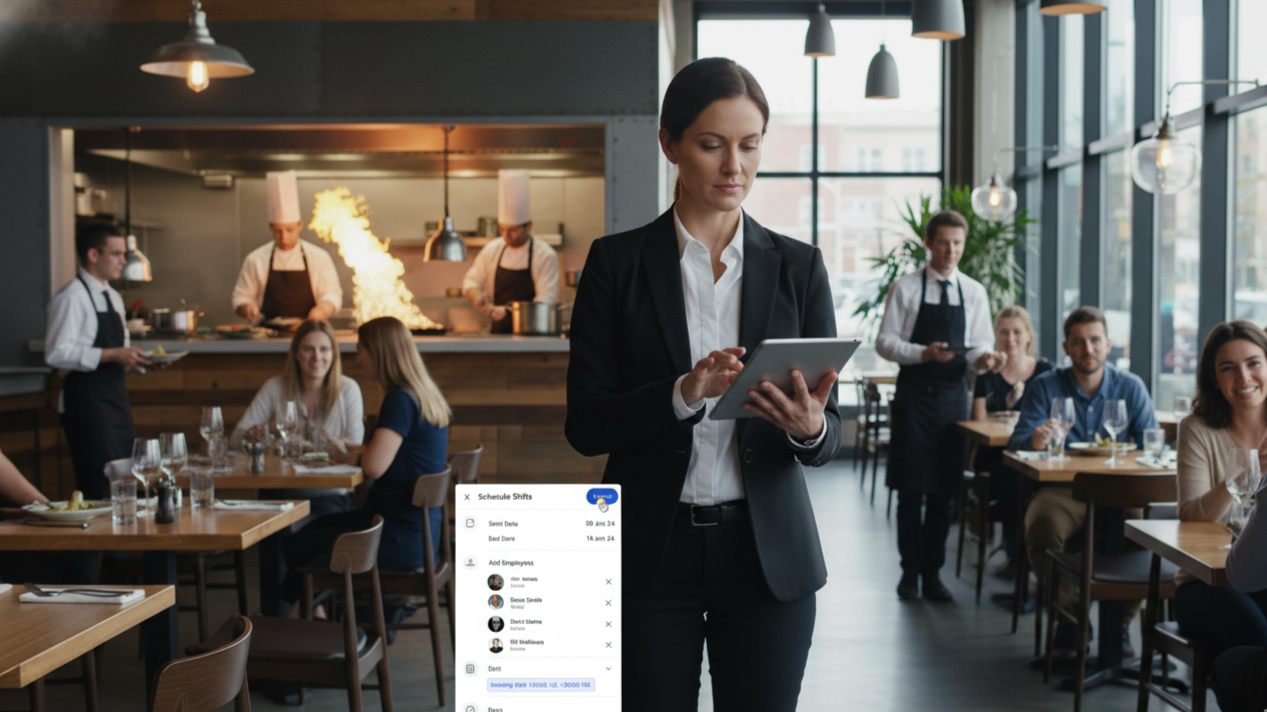
Real-time labor vs sales dashboards show exactly how your labor is performing as service unfolds, not after the shift ends. As restaurant scheduling software, NOVA helps you staff smarter, respond faster, and keep labor costs aligned with demand, every single hour.
Unified POS and Labor View
Track sales and staff performance in a single location to ensure faster, smarter decisions by the managers. No switching equipment, no blinds when live on service.
Sales vs. Real-Time Labor Tracking.
Monitor labor percentage per hour and ensure proper staffing before expenditure goes out of control. Be profitable in the slow times without damaging peak time service.
AI-Native Demand Forecasting.
Employees are available to meet actual needs rather than speculation or what happened last week. Eliminate overstaffing and understaffing practices.
Integrated Order Flow
More guests will be served by the same team with easier kitchen and front-of-house coordination. Increased production without increasing work pressure.
Automated Labor Reports
Get labor summaries on a daily basis without having to calculate them manually or at the end of the day. Managers save time and concentrate on managing teams.
Multi-Location Control
Ensure uniformity in branches, with the local offices having flexibility. Ideal when the brand desires a big size, without the mayhem.
Seamless Payroll-Ready Data
Export precise labor information that is clean to process payrolls faster and with no errors. Less controversy, less discipline, increased trust.
KPIs to Monitor Restaurant Workforce Management
In order to remain in control, follow the following few key numbers:
- Labor Cost Percentage - Displays the efficiency of revenue turnover into staffing expenditure.
- Sales Per Labor Hour (SPLH) - It is the measure of productivity of every hour of labor.
- Overtime Hours - Indicates bad schedules and inefficient demand planning.
- Staff Turnover Rate - Indicates morale, burnout, and effectiveness of the manager.
- Schedule Adherence - Monitors the level of similarity between scheduled schedules and reality.
- Order Throughput Per Shift - Indicates the smoothness of teams in dealing with service volume.
The weekly view of such KPIs creates more focused decisions and relaxed operations.
Make Your Workforce Your Competitive Advantage with NOVA.
The best restaurants in 2026 do not fill shifts only. They do performance intentionally. NOVA restaurant workforce software assists the operator to tie labor decisions with actual business results by providing complete visibility of sales, staffing, and productivity in real-time.
Workforce management with NOVA is made smarter, easier, and scalable. You can manage the labor expenses without compromising on service, giving the managers the clarity to operate and form teams that work better each shift.
Watch the NOVA AI-native platform optimize scheduling, productivity, and labor in real time. Book a free demo today.
Frequently Asked Questions of Restaurant Workforce Management.
- What is restaurant workforce management?
It involves the daily planning, monitoring, and optimization of the management of staff time, performance, and cost.
- What is the frequency of review of labor performance?
Daily reviews work best. Summaries that are done on a weekly basis assist in long-term adjustments.
- Is software able to save labor?
Yes, when it provides real-time visibility and smarter scheduling, not only reports.
- What to do with labor reduction and quality of service?
Cut waste, not people. Staff demand instead of blanket cuts.
- Does multi-location brand management differ in workforce management?
Yes. At scale, central visibility and uniform rules are necessary.