
Running a restaurant means striking a balance between commerce and guest experiences. However, with evolving trends, rising inflation, and intense competition, it is becoming challenging for restaurants to maintain a healthy profit margin while satisfying customer expectations.
Let’s check out what the average profit margin is for the restaurant industry in 2026, and how you can ensure your profit margin goes above and beyond it.
What Is the Average Profit Margin in the Restaurant Industry?
The profit margin for restaurants depends on various factors, such as scale, brand reputation, and technological adoption. It can be anywhere between 0 and 15 percent. However, the average profit margin of the restaurant industry, considering all types of establishments (cafes, bars, fine dining, fast casual, quick-service, etc.), falls between 3 and 5 percent. Generally, quick-service restaurants have higher profit margins than full-service restaurants, with bars being the highest.
Why Restaurant Profit Margins Are So Low
Inflation and Rising Food Costs
The average food and non-alcoholic beverage costs amount to 32.4% of sales. However, according to the National Restaurant Association, food and labor costs have gone up by 35% in the last five years. Moreover, other factors, such as supply chain disruptions, climate-related shortages, and transportation costs, also result in higher food costs. It calls for restaurants to increase their average menu prices to overcome inflation and maintain their profit margins.
Increasing Labor Costs
Various states across the U.S. have increased the minimum wage to uplift workers. However, it has introduced a new challenge for restaurants in maintaining the average profit margin. As labor costs increase, restaurants must find ways to optimize shifts and increase productivity. Another reason for high labor costs is the high turnover rate (over 70%). As restaurants are unable to retain employees, they must invest heavily in training.
High Overhead Costs
You need to incur certain overhead costs, such as rent, utilities, and power bills, regardless of the volume of guests that arrive at your restaurant. Hence, during a slow season, it can be quite challenging to sustain, let alone maintain the average profit margin.
Intense Competition
The restaurant industry is one of the most competitive, with 14-30% of restaurants failing in the first year itself. Recently, popular brands like Denny’s and TGI Fridays closed multiple outlets across the U.S. Amid intense competition, restaurants are expected to keep competitive menu pricing, which does not help with the profit margin. Moreover, restaurants must also offer special offers and discounts to stay ahead of their competitors.
Food Wastage
The food industry contributes to 51.7% of food wastage in the U.S. With food costs increasing constantly, restaurants have to keep food wastage in check to maintain healthy profit margins.
Operational Inefficiencies
Your restaurant must run like a well-oiled machine. Any operational disruption or bottlenecks can cause a decline in profits. For instance, a disorganized kitchen layout forces staff to walk extra for ingredients, slowing down service and increasing labor hours.
How to Calculate Your Restaurant’s Profit Margin
Before calculating profit margin, let’s discuss the two types of profits - net profit and gross profit. Gross profit is calculated by deducting the total cost of preparing a dish from the total sales. On the other hand, net profit is the profit a restaurant makes after deducting all expenses from total sales.
Let’s see how to calculate the gross and net profit margin.
Gross Profit = Total Sales - COGS
Where, COGS = Cost of Goods Sold
For example,
Total annual sales = $100,000
COGS = $60,000
Gross Profit = $40,000
Gross Profit Margin = (Gross Profit / Total Sales) x 100
= 40%
Net Profit = Total Sales - Total Expenses
Net Profit Margin = (Net Profit / Total Sales) x 100
The total expense may include rent, marketing, COGS, and labor costs.
Key Factors That Influence Your Profit Margin
- Type of Restaurant
The type of restaurant you run greatly influences your profit margin. For instance, a QSR has a greater profit margin than a fine-dining restaurant. Let’s discuss the different restaurant profit margins in detail.
- Full-Service Restaurants - These have a low profit margin because they invest heavily in decor, employee training, ambiance, cutlery, and more. Moreover, the footfall is lower due to low table turns and long preparation time.
- Quick-Service Restaurants - QSRs have a higher volume than full-service restaurants, leading to higher margins. Minimal table service and quick meals mean more footfall.
- Bars - Alcoholic beverages have the highest profit margins. Limited menu items and rapid service result in regular profits.
- Menu
A restaurant’s menu is a significant factor in the profit margin. The menu needs to be engineered to promote the best-selling items. Moreover, you also have to factor in the preparation time for dishes, as complex items can lead to additional labor costs.
Recommended read: Menu Engineering to maximize Profits
- Technology Adoption
In today’s age, there are various restaurant tools available for owners that help them enhance operational efficiency, reduce costs, and enhance guest satisfaction. For instance, handheld POS devices enable servers to reduce waiting times and increase table turns by streamlining tableside ordering. On the other hand, restaurants that still rely on manual processes experience higher error rates, slower workflows, and operational loopholes.
- Location
Restaurant location is highly critical to its profit margins, as it directly impacts the footfall, permits, and overhead costs. A premium location has high visibility, but the rents are also high. On the other hand, an isolated location would not reap sales. Hence, restaurants must evaluate rent and monthly sales and analyze if they can maintain profit margins.
Strategies and Steps to Boost Your Profit Margins
The profit margin is a combination of two factors - sales and expenses. Therefore, to boost profit margins, restaurants must either increase their sales or reduce their overall expenses. Here are some strategies that will help.
- Managing Operational Expenses
Recurring operational costs, such as electricity bills, repairs, and rent, make up a significant portion of overall costs. Hence, you must take smart steps to minimize these expenses. For instance, you can install energy-efficient equipment and lighting on the premises. Moreover, you can schedule preventive maintenance to avoid repairs.
- Reducing Food Wastage
Inventory management needs to be given priority in every restaurant. Implement real-time monitoring of inventory levels and prevent overstocking of ingredients. You must also:
- Promote items in marketing campaigns that are nearing the expiry date.
- Deploy proper storage systems so that the ingredients stay fresh for longer.
- Manage item portions to ensure there are no leftovers
- Deploy the FIFO (First In First Out) policy to ensure the ingredients stocked first are used first
Recommended: 5 Proven Strategies to Reduce Food Waste
- Reduce Employee Turnover
More turnover means more onboarding and training costs. Moreover, new employees take a longer time to process orders, hampering the entire workflow. Hence, you must take steps to improve employee satisfaction by offering them incentives and benefits. Moreover, ensuring a fair payroll and tipping process goes a long way in ensuring retention. Introducing personal development programs and regular training sessions can also increase employee loyalty.
- Invest in Technology
According to an NRA survey, 76% of operators felt that technology gave them a competitive edge. New-age restaurant management tools have AI-enabled features to automate most manual processes. Moreover, they offer AI-based recommendations to streamline operations and identify bottlenecks. Technology not only cuts costs but also increases accuracy, consistency, and speed.
- Optimize Staff Scheduling
Scheduling workers efficiently can save you considerable labor costs. You must analyze peak times and slow periods to identify the number of workers required on a particular shift. Moreover, implementing smart scheduling software can help optimize workforce management. It minimizes human errors by automating the process. In addition, employees get real-time visibility of any shift changes, enhancing satisfaction. It also helps in compliance with labor laws, as shifts are managed through predefined rules.
Elevate Your Profit Margin with NOVA
Whether a full-service or a quick-service restaurant, a cafe or a bar, NOVA is a tailor-made restaurant management platform for every restaurant type. It is a comprehensive solution that offers all the tools you need to run a restaurant, including restaurant POS, kitchen display system, restaurant CRM, handhelds, workforce scheduling, payroll, loyalty programs, and more.
NOVA enables restaurants to work on a high profit margin by:
Reducing Costs
Labor Costs - Reduce labor costs through NOVA’s workforce scheduling feature. Manage shifts and get AI-based prompts on shift management based on past footfall analysis. Get advanced reports like labor productivity, labor costs, and overtime analysis to optimize labor management.
Training Costs - Built on the image-first principle, NOVA’s interface is easy to use and adapt. It reduces training and onboarding time and costs spent on new employees.
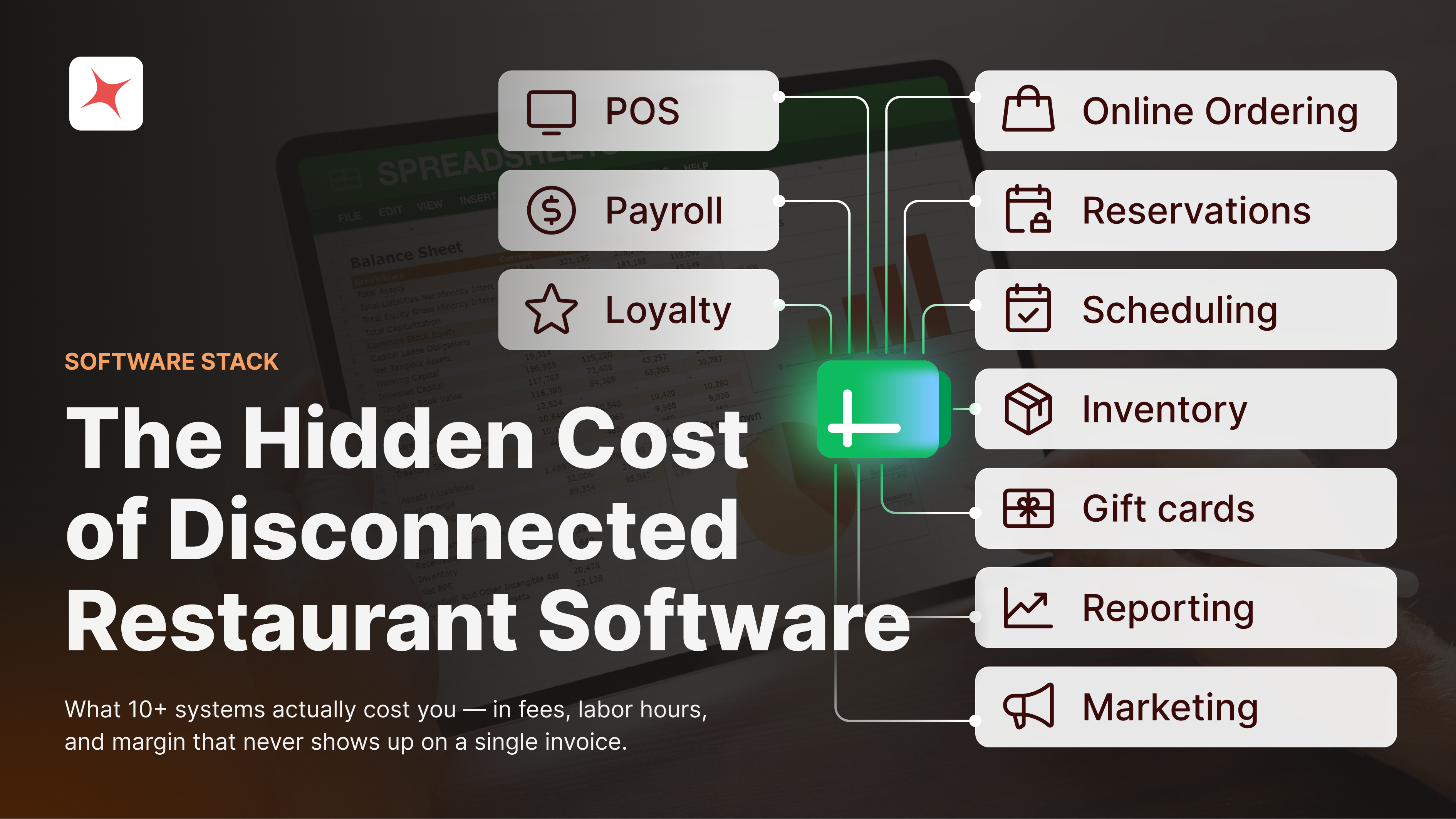
Integration Costs - Restaurants using more than four tools incur $18,200 annually in integration fees. NOVA eliminates these costs associated with fragmented tools and offers a comprehensive restaurant management solution.
Food Costs - NOVA enables restaurants to optimize ingredient usage with real-time inventory tracking. It gives real-time alerts on stock status to prevent food wastage.
Online Platform Commissions - With NOVA, you get a custom-built, personal NOVA mobile app and webstore. Create customized menus and CTAs according to brand requirements. Update the menu across all platforms in real-time. Eliminate the commission fee of third-party platforms.
Boosting Sales
AI-powered Marketing - NOVA’s in-built marketing feature is fueled by the power of AI. Integrated with the loyalty program, it can launch campaigns across multiple channels in minutes. Create AI-based personalized messages with the most relevant suggestions and offers.
Handhelds - NOVA’s handhelds increase table turns by eliminating the time servers spend going back and forth between the table and the POS. Servers get AI-based prompts on what items to upsell based on the customer’s preferences. Moreover, loyalty programs are integrated with the handhelds, empowering servers to offer discounts and special offers.
Keeping Up With the Restaurant Industry’s Average Profit Margin is Essential
Depending on the type of restaurant you run, it is critical to maintain the average profit margin. Being at or above that level means you are ahead or at par with your competitors. However, to do so, you must address the challenges of rising labor costs, inventory management, inflation, and more.
An intelligent technological solution like NOVA can help you maintain higher profit margins by reducing costs and boosting revenues. If you want to see NOVA in action, schedule a free demo now.