.svg)
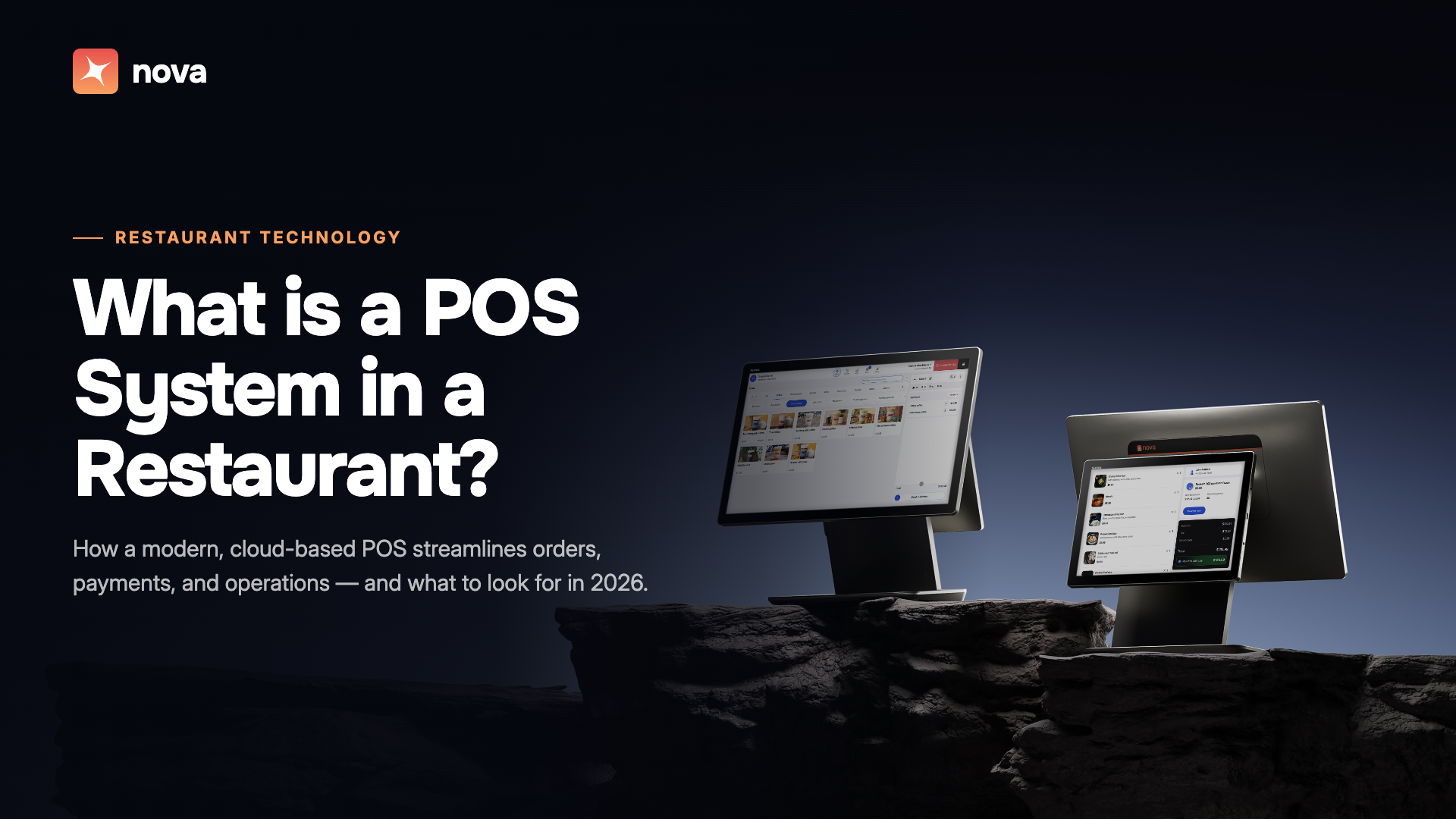
Running a restaurant in 2026 is fundamentally different from even a few years ago. Rising labor costs, thinner margins, and rapidly changing guest expectations have made operational efficiency a business imperative rather than a competitive advantage. At the same time, restaurants now operate across multiple ordering channels, including dine-in, takeaway, delivery, QR code ordering, kiosks, and online platforms, all of which must work seamlessly together.
Industry data consistently shows that restaurants using modern, cloud-based POS systems outperform those relying on legacy tools. Digital ordering adoption has accelerated, with a growing share of restaurant revenue now flowing through non-traditional ordering channels. Guests increasingly expect faster service, contactless payments, personalized offers, and real-time order accuracy, while owners need instant visibility into sales, labor, inventory, and profitability across locations.
This shift has transformed the role of the POS system. What was once a simple cash register is now the central operating system of a restaurant, connecting front-of-house and back-of-house operations, synchronizing payments and orders, and turning everyday transactions into actionable insights. In high-volume and multi-location environments, the POS system often determines whether a restaurant can scale efficiently or struggles under operational complexity.
For restaurant owners, the question in 2026 is no longer whether to use a POS system, but what kind of POS system can support sustainable growth. Modern POS platforms must go beyond billing to enable smarter staffing decisions, reduce food waste, improve guest retention, and surface trends before they become problems.
In this guide, we break down what a POS system in a restaurant really is today, how modern restaurant POS systems work, the features that matter most in 2026, and how choosing the right platform can directly impact revenue, efficiency, and guest experience.
What is a Restaurant POS System?
A restaurant POS system is developed by integrating hardware and software components. These components streamline restaurant operation management by working together. At the same time, specific-purpose software tools are developed with built-in features to cater to the operational needs of different types of restaurants. A restaurant can customize the POS system according to its precise needs. Likewise, it can extend the software by integrating it with widely used business tools.
What are the Key Functions of a Restaurant POS System?
POS systems for restaurants differ from each other in terms of features or functions. Most POS systems facilitate order management and payment processing. However, modern POS solutions like NOVA stand out from competitors by automating additional tasks like floor management, staff management, and daily report generation.
7 Important Functions of Modern Restaurant POS Systems
1) Order Management
A restaurant POS system sends orders directly from the server to the kitchen. Hence, order-taking and kitchen communication remain in sync. A manager can monitor real-time order status without referring to handwritten tickets and correcting errors. At the same time, digitalization boosts customer experiences by accelerating food preparation and delivery.
2) Billing & Payment Processing
A modern POS system in restaurants facilitates both cash and digital payments. In addition to supporting multiple currencies, they support major debit cards, credit cards, digital wallets, and gift cards. At the same time, the software ensures that payments are processed and bills are generated accurately in seconds.
3) Inventory Management
Restaurants foster operational efficiency by streamlining inventory management. New-age POS systems streamline inventory management by comparing product mix and sales mix information. The information helps restaurants track inventory in real time. The automated notifications sent by the systems make managers replenish low-stock items early. At the same time, the POS system reduces waste and optimizes costs by sharing insights gained by analyzing sales and inventory data.
4) Table & Reservation Management
New-generation POS systems for restaurants feature integrated reservation managers. The feature helps managers monitor reservations and waitlists in real time. The restaurant can boost customer experience by assigning tables to guests efficiently. At the same time, the system sends booking status updates automatically without requiring human intervention.
5) Staff Management
In addition to improving table and reservation management, new-age restaurant POS systems come with staff and restaurant scheduling systems. They boost staff performance by saving the time required for taking orders manually. Managers can use the same system to manage shifts and track employee hours. Hence, a restaurant can streamline workforce management without even implementing third-party HRMS systems.
6) Reporting & Analytics
As noted earlier, new-age POS systems collect and analyze crucial information about customers, sales, and inventories. Managers can monitor and analyze operations by generating daily reports automatically. At the same time, the data-driven insights shared by the system help them boost operational efficiency by detecting peak hours, adopting sales trends, and measuring menu performance.
7) Seamless Management of Online Orders & Delivery
Modern POS systems help restaurants manage in-house and online orders without implementing additional tech tools. A restaurant can manage table-side orders efficiently using the built-in features provided by the software. At the same time, it can streamline online order management through the POS system with leading third-party delivery platforms.
What are the Common Types of POS Systems for Restaurants?
Smart restaurant owners these days prefer modern POS systems to traditional POS systems. However, each restaurant has the option to implement several types of POS systems. Hence, the decision-makers must evaluate the pros and cons of each type of POS system for restaurants.
Traditional POS Systems
Traditional or legacy POS systems refer to on-premise POS software. The POS system operates as part of a restaurant’s physical IT infrastructure. The restaurant is required to install the software locally on targeted devices. Many restaurants opt for on-premise POS systems to enjoy benefits like data control and security.
However, they need to incur higher upfront costs by investing in hardware, software licenses, and installation. In addition, they must deploy dedicated technicians to maintain, update, and scale the legacy POS systems. Restaurant owners overcome these constraints by implementing cloud-based POS solutions like Nova.
Cloud-Based POS Systems
A cloud-based POS system in a restaurant stores and processes information on external servers. Restaurant staff can access the software anytime and anywhere over the internet using devices like desktops, laptops, smartphones, and tablets. Restaurant owners can access and scale the cloud-based POS solution based on subscription-based pricing plans.
They can further customize the cloud-based solution according to their precise operational needs. The system is maintained and updated by the vendor. A restaurant manager can troubleshoot issues by contacting the cloud solution provider. Hence, it becomes easier for restaurant owners to curb infrastructural and staffing overheads.
The real-time updates sent by the system help managers track customer, sales, and inventory details in real-time. At the same time, a restaurant can extend the software by integrating it with existing business tools seamlessly.
Mobile POS Systems
Mobile POS systems are designed as handheld devices. Restaurants usually use these devices for taking table-side orders. Also, these devices enable customers to make payments using the tap-to-pay options. Some of these mobile POS systems support inventory, seating, and data analysis.
Most restaurants opt for mobile POS systems due to portability. However, mobile POS systems often lack the robust features provided by modern POS systems like NOVA. Likewise, staff find it challenging to use these devices due to issues like internet connectivity, battery life, and transaction errors.
Why Choosing the Right Restaurant POS Solution Matters?
The right POS system helps restaurant owners generate more revenue by improving customer experiences and operational efficiency. A restaurant can achieve efficiency and profitability by opting for a POS system that is easy to implement, customize, integrate, and scale. However, it is always important for the restaurant owner to avoid common mistakes when selecting a POS system.
Not Identifying Restaurant-Specific Needs
Restaurant POS systems cater to the varying needs of restaurants by providing built-in features. However, a system may not meet the precise operational and transactional needs of a restaurant. Hence, owners cannot choose the right POS for their restaurant without defining business requirements clearly. They must use the requirements as key criteria to choose a POS system that meets their needs.
Prioritizing Price over Functionality
Often, restaurant owners opt for low-cost POS systems to save money. However, they should remember that low-cost business tools usually lack advanced features and superior customer service. It is always advisable to prioritize features and functionality over pricing. Restaurants these days meet their operational needs precisely by accessing cloud-based POS solutions based on pay-as-you-use pricing plans.
Not Considering Device Compatibility
When selecting a POS system in restaurants, owners ignore its hardware components. They should remember that staff will access the system using mobile devices when handling orders and managing operations remotely. Hence, owners should prioritize POS systems that are compatible with various devices. They can further opt for all-in-one POS systems that come with sleek handhelds, robust terminals, and kitchen display systems.
Ignoring Customization and Scalability
Many restaurant owners choose POS systems that complement their current operational needs. They forget the significance of scalability in the long run. Owners should opt for POS systems that can be scaled on demand as the number of services and customers increases. Likewise, they should ensure that the provider updates the POS solution regularly by adding advanced features and meeting emerging industry trends.
Neglecting Reporting and Data Analytics
Conventional POS systems usually do not facilitate report generation and data analysis automation. In the age of big data, restaurants increase revenue and profit by making data-driven decisions. Owners must check if the restaurant POS system facilitates key metric tracking by generating custom reports automatically. At the same time, they must choose POS solutions that feature real time reporting and data analytics solutions. The feature is essential to make informed decisions by gaining actionable insights into operations, sales, and customer data.
Not Leveraging Reviews and Testimonials
Most restaurant owners gather information about a restaurant POS system by accessing the content shared by the provider. The information makes it challenging to evaluate the functionality and performance of the POS solutions in real-time. When comparing and evaluating POS systems for restaurants, owners must collect real-world feedback by reading online reviews and customer testimonials. The customer-generated content will help them understand important aspects of the POS solution like user-friendliness, reliability, scalability, and customer support.
Overlooking Integration Options
Many restaurants implement POS as standalone software. Hence, restaurant owners implement multiple tech solutions to automate their operations. They can easily overcome the constraint by opting for a modern POS solution that can be integrated with essential business tools seamlessly. For instance, they can facilitate online order processing by integrating the software with leading delivery platforms.
Not Booking a Demo
Leading providers allow owners to assess the POS system in restaurants by booking a demo. However, many restaurant owners choose the POS solution without booking a demo. When they book a demo, it becomes easier for their team to evaluate crucial aspects of the system, like features, user interface, and reliability, according to their precise needs. Hence, smarter restaurant owners compare POS systems in real time by booking demos or free trials.
POS System by Restaurant Type
Not all restaurants operate the same way, and neither should their POS systems. In 2026, choosing a POS system based on your restaurant type, service model, and growth plans is critical to avoiding operational friction and technology limitations. A POS system that works well for a coffee shop may fail in a high-volume QSR or a multi-location brand.
Below is how modern POS systems should support different restaurant formats.
POS Systems for Quick-Service Restaurants (QSRs)
Quick-service restaurants operate on speed, volume, and consistency. A POS system for QSRs in 2026 must prioritize throughput, automation, and minimal human error.
Key POS requirements for QSRs:
- Fast order entry and payments
- Self-service kiosks and QR code ordering
- Kitchen Display System (KDS) integration
- High-volume order handling
- Centralized menu and pricing control
For QSR owners, the right POS system reduces queues, improves order accuracy, and enables higher sales per hour without increasing labor costs.
POS Systems for Cafes and Coffee Shops
Cafes and coffee shops balance speed with personalization. Peak hours demand rapid service, while repeat customers expect familiarity and loyalty recognition.
Key POS requirements for cafes:
- Mobile and tablet-based POS
- Quick modifiers for custom drinks
- Contactless and mobile payments
- Built-in loyalty and rewards
- Inventory tracking for ingredients
In 2026, cafe POS systems must support high-frequency transactions while capturing guest preferences that drive repeat visits.
POS Systems for Full-Service Restaurants (FSRs)
Full-service restaurants require deeper coordination between front-of-house and back-of-house operations. A full-service restaurant POS system must support complex workflows without disrupting the guest experience.
Key POS requirements for FSRs:
- Table management and floor plans
- Course-based ordering
- Split bills and tips
- QR and table-side ordering
- Seamless kitchen communication
For full-service restaurant owners, the POS system plays a crucial role in improving table turns, reducing errors, and maintaining service quality during peak hours.
POS Systems for Fine Dining Restaurants
Fine dining establishments emphasize experience, precision, and service excellence. The POS system must remain powerful behind the scenes while staying invisible to guests.
Key POS requirements for fine dining:
- Discreet table-side ordering
- Custom menu and pricing controls
- Detailed guest profiles
- Inventory and cost tracking at the ingredient level
- Staff permissions and audit trails
In 2026, fine dining POS systems must support high-touch hospitality while giving owners visibility into margins and performance.
POS Systems for Multi-Location and Franchise Restaurants
Multi-location operations face a unique challenge: maintaining brand consistency while managing performance at scale. A POS system for growing brands must act as a central command center.
Key POS requirements for multi-location restaurants:
- Centralized menu and pricing management
- Location-level reporting and benchmarking
- Role-based access controls
- Remote monitoring across stores
- Easy onboarding for new locations
For restaurant owners and operators, a scalable POS system ensures growth does not come at the cost of control or visibility.
POS Systems for Food Trucks and Pop-Up Concepts
Food trucks and pop-ups need portability, reliability, and simplicity. In 2026, these formats increasingly rely on mobile-first POS systems.
Key POS requirements for food trucks:
- Mobile POS with offline capability
- Fast payments and tipping
- Minimal hardware footprint
- Inventory tracking on the go
- Real-time sales visibility
A flexible POS system allows mobile food businesses to operate efficiently without sacrificing data insights.
Why One-Size-Fits-All POS Systems Fall Short
Restaurants that adopt generic POS systems often struggle with:
- Unused features that add complexity
- Missing tools critical to their service model
- Poor scalability during growth
- Fragmented workflows and data silos
In 2026, successful restaurant owners choose POS systems that align closely with their operational realities, not just their current size.
Choosing a POS System That Grows With Your Restaurant
The best POS systems are not tied to a single restaurant type. They are flexible platforms that adapt as your business evolves, whether you expand locations, add new ordering channels, or change service models.
A modern POS system should support where your restaurant is today and where you plan to be tomorrow.
Must-Have POS Features for Restaurants in 2026
In 2026, a restaurant POS system must do far more than process transactions. With tighter margins, higher labor costs, and guests demanding speed and personalization, restaurant owners need POS platforms that actively reduce complexity, improve decision-making, and protect profitability. The following features are no longer “nice to have”; they are essential.
1. Omnichannel Ordering Management
Modern restaurants generate revenue from multiple channels: dine-in, takeaway, delivery, QR code ordering, kiosks, and online platforms. A must-have POS system in 2026 unifies all these channels into one single order flow.
Instead of managing separate systems for each channel, owners gain:
- Centralized order management
- Consistent menus and pricing across platforms
- Reduced order errors and operational friction
- Faster kitchen throughput
A unified omnichannel POS prevents revenue leakage and ensures every order, regardless of where it originates, is treated equally by the kitchen and operations team.
2. Integrated, Flexible Payment Processing
Payments must be fast, secure, and invisible to the guest experience. In 2026, POS systems should support:
- Contactless payments
- Mobile wallets
- QR-based payments
- Split bills and tips
- Digital receipts
For owners, integrated payments mean fewer reconciliation issues, clearer cash flow tracking, and better control over transaction data. A modern POS also eliminates the need for third-party payment terminals that slow down service and fragment reporting.
3. QR Code Ordering and Table-Side Technology
QR code ordering has become a permanent part of modern dining. In 2026, POS systems must natively support QR workflows rather than treating them as add-ons.
Key capabilities include:
- Table-level ordering
- Real-time menu updates
- Upsell prompts and modifiers
- Faster table turns without added labor
For full-service restaurants and high-volume cafes, QR ordering reduces wait times while improving order accuracy and guest satisfaction.
4. Real-Time Sales, Performance, and Profitability Analytics
Restaurant owners need answers immediately, not at the end of the week. A must-have POS system provides real-time dashboards that surface:
- Hourly and daily sales trends
- Best- and worst-performing menu items
- Channel-wise revenue breakdown
- Location-level performance insights
In 2026, data visibility is no longer just for reporting. It enables owners to act quickly on trends, adjust staffing, optimize menus, and respond to demand shifts before they impact margins.
5. Inventory and Food Cost Control
Food costs remain one of the largest variables affecting profitability. Modern POS systems must connect sales data directly to inventory usage.
Essential inventory features include:
- Ingredient-level tracking
- Low-stock alerts
- Waste and variance monitoring
- Recipe-based deductions
By linking inventory with real-time sales, restaurant owners can reduce over-ordering, prevent stockouts, and maintain tighter control over food margins.
6. Workforce and Labor Management Integration
With labor costs continuing to rise, POS systems in 2026 must help owners optimize staffing without sacrificing service quality.
Must-have labor features:
- Shift scheduling
- Role-based access control
- Sales-per-labor-hour tracking
- Time clock and attendance integration
When labor data is connected to sales performance, owners can make smarter staffing decisions that align payroll with actual demand.
7. Built-In Guest CRM and Loyalty Capabilities
Guest retention is more cost-effective than constant acquisition. A modern POS system must automatically capture guest data and support personalized engagement.
Key CRM capabilities:
- Guest profiles and visit history
- Purchase behavior tracking
- Loyalty rewards and incentives
- Targeted promotions and offers
In 2026, loyalty programs are most effective when they are directly tied to POS data, not managed through disconnected third-party tools.
8. AI-Driven Insights and Automation
The most advanced POS systems in 2026 are AI-native, meaning they do not just report data but actively interpret it.
AI-powered POS capabilities include:
- Sales forecasting
- Demand prediction
- Menu performance recommendations
- Anomaly detection for unusual drops or spikes
Instead of manually analyzing spreadsheets, owners receive actionable insights that help them anticipate problems and identify opportunities earlier.
9. Cloud-Based Architecture and Remote Access
Restaurant owners increasingly manage operations across locations or while off-site. A must-have POS system must be cloud-based and accessible securely from anywhere.
Benefits include:
- Real-time remote monitoring
- Automatic updates
- Faster issue resolution
- Easier multi-location scaling
Cloud architecture ensures the POS grows with the restaurant rather than becoming a bottleneck.
10. Scalability for Multi-Location Growth
For growing brands, the POS system must support expansion without increasing complexity.
Scalability features include:
- Centralized menu and pricing control
- Location-level reporting
- Consistent guest experience across stores
- Easy onboarding for new locations
A POS that scales well allows restaurant owners to focus on growth rather than operational firefighting.
11. Open Integrations and Future-Ready Ecosystem
In 2026, no POS system exists in isolation. Owners must ensure their POS integrates seamlessly with:
- Accounting tools
- Delivery platforms
- Marketing systems
- Third-party hospitality tech
An open, API-driven POS ecosystem ensures flexibility and future-proofing as restaurant technology continues to evolve.
Restaurant POS Trends to Watch Beyond 2026
The must-have features above are quickly becoming table stakes. Looking past 2026, the restaurants that stay ahead will be the ones adopting POS capabilities that are just starting to reach the mainstream:
Agentic AI at the counter and online: POS integrated AI agents that can take orders, upsell, and answer menu questions without a human in the loop- not just AI-generated reports, but AI that acts.
Voice-activated ordering: Drive-thru and phone orders captured and entered by voice AI directly into the POS, cutting order errors and staffing pressure.
Predictive inventory and demand forecasting: POS systems that don't just track stock, but forecast next week's prep needs based on weather, local events, and historical sales patterns.
Embedded fintech: Built-in tools like buy now pay later for equipment, instant payouts, and dynamic tip suggestions based on service data.
Hyper personalized loyalty: Guest profiles that follow diners across locations and channels, powering offers tailored to individual order history.
Sustainability and waste analytics: Built-in tracking for food waste and energy use, driven by both regulatory pressure and margin pressure.
The common thread: POS systems are shifting from recording transactions to actively running the restaurant. Choosing a platform built to add these capabilities, rather than one that will need replacing in two years, is quickly becoming the real test of "future proof."
Restaurant POS System FAQs
What is a restaurant POS system?
A restaurant POS system is an integrated hardware and software platform that manages order taking, payment processing, kitchen communication, inventory, and reporting for a restaurant, replacing what used to require a cash register plus several disconnected tools.
How much does a restaurant POS system cost?
Most cloud-based restaurant POS systems range from around $0 to $100 or more per month per terminal in software fees, plus payment processing fees (typically 2.3% to 3.5% per transaction) and one time hardware costs for terminals, printers, and card readers. Pricing varies significantly by provider, restaurant size, and feature set.
What's the difference between a restaurant POS system and a regular cash register?
A cash register only records payments. A restaurant POS system handles the full transaction lifecycle, including order entry, kitchen routing, inventory deduction, staff management, and analytics, in addition to processing payments.
Do small restaurants and cafes need a POS system?
Yes. Even single-location cafes and food trucks benefit from faster order accuracy, real-time inventory visibility, and sales reporting that a cash register can't provide, and most modern POS providers offer plans scaled for small operations.
How long does it take to set up a restaurant POS system?
Basic setup, including menu configuration, hardware installation, and staff training, typically takes anywhere from a few days to two weeks, depending on menu complexity and how many integrations (delivery platforms, loyalty programs, accounting software) need to be connected.
Can a restaurant POS system work without internet?
Many cloud-based systems include offline mode, allowing the POS to keep taking orders and processing certain payments during an outage, then syncing data automatically once connectivity is restored.
.png)
Why is Nova POS the Best Fit for Any Restaurant?
NOVA is a modern POS system in a restaurant that is designed by restaurant owners. It comes with features to streamline and automate the operations of all types of restaurants. Nova’s Quick service POS system, Full Service Restaurant POS System, fine dining pos systems, fast casual POS system, and POS systems for cafes are specifically created to meet the unique operational needs of the specific format of the restaurant. The easy-to-use POS system is developed with features to automate crucial restaurant operations like table order management, payment management, and floor management.
At the same time, managers can use the system to gain a 360-degree view of their operations by generating automated daily reports and accessing data-driven insights. In addition to being easy to use, the cloud-based POS solution can be customized and scaled on demand according to the precise needs of the restaurant. Restaurant owners can further evaluate NOVA according to their precise needs by booking a demo.
Want to optimize your restaurant operations by leveraging NOVA? Contact us.