The Rise of Solo Dining: How Restaurants Can Redesign Experiences to Win the Fastest-Growing Guest Segment

Dining out is undergoing a quiet but powerful transformation.
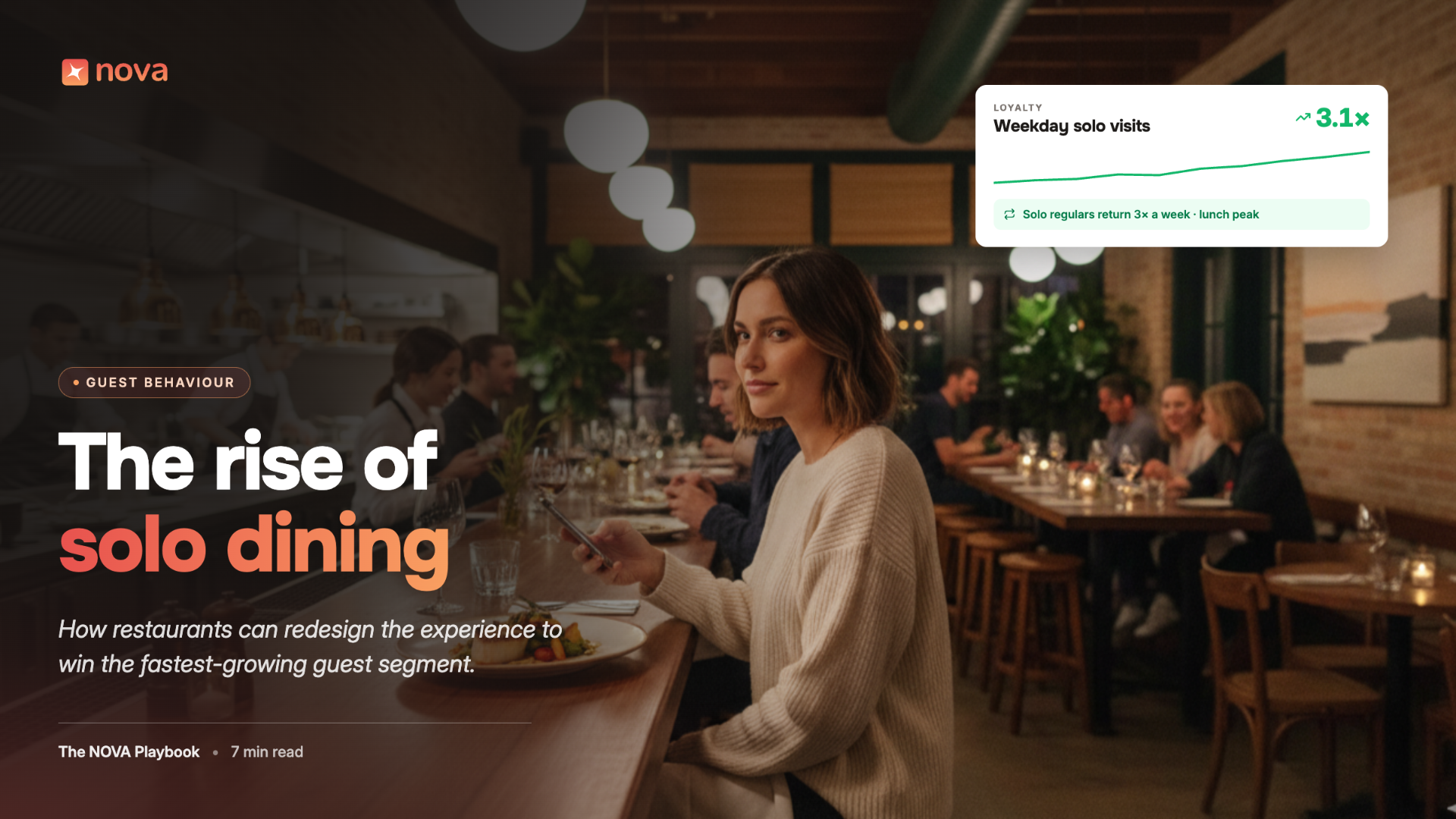
According to recent Yelp research data, searches for “solo dining” have surged by 271%, while searches for the “best place to eat alone” are up 150%. This isn’t a short-term fad or a post-pandemic anomaly. It reflects a deeper cultural shift in how people view food, time, and personal experiences.
For restaurant owners, this change presents a massive opportunity.
Dining out is no longer only about social gatherings, celebrations, or group outings. Increasingly, it’s about personal moments: a quick lunch between meetings, a peaceful dinner after work, or a solo coffee break to reset the day. Guests are choosing restaurants not just for food, but for how comfortable they feel dining alone.
Restaurateurs who recognize and adapt to this shift will gain a loyal, high-frequency customer base. Those who don’t risk leaving money on the table.
Why Solo Dining Is Growing So Fast
Several forces are converging to make solo dining a mainstream behavior.
First, work patterns have changed. Hybrid and remote work have blurred the lines between office hours and personal time. More people step out alone during the day for meals rather than coordinating group lunches.
Second, urban lifestyles are faster and more individual-centric. Consumers are more comfortable prioritizing convenience, efficiency, and personal well-being over social expectations.
Third, solo dining is increasingly seen as self-care. Eating alone is no longer awkward or lonely. For many guests, it’s a treat: a chance to slow down, think, read, or simply enjoy a good meal without distraction.
Finally, digital habits have reduced friction. Online menus, QR code ordering, restaurant webstores, and digital payments make dining alone seamless, eliminating many of the small discomforts that once discouraged solo visits.
For restaurant owners, the message is clear: solo diners are not an edge case anymore. They are becoming a core segment.
Why Solo Diners Are a High-Value Customer Segment
At first glance, solo diners might seem less attractive than groups. After all, a single guest usually has a smaller check size than a table of four.
But when you look closer, solo diners often deliver higher lifetime value.
Solo guests tend to:
- Visit more frequently
- Make faster decisions
- Require less table time
- Become habitual regulars
A solo diner who visits your restaurant three times a week easily outpaces a group that visits once a month. Solo dining also improves table turnover, especially during lunch hours and off-peak times.
Additionally, solo diners are more likely to develop emotional loyalty. When a guest feels comfortable and welcomed dining alone at your restaurant, it becomes their default choice: their “safe place” for meals.
What Solo Diners Look For in a Restaurant Experience
Understanding solo diners requires looking beyond food quality alone.
1. Comfort Without Awkwardness
Solo guests want to feel natural, not conspicuous. Sitting alone at a large table or waiting too long to order can amplify discomfort.
2. Speed and Efficiency
Solo diners often value quick service. Long waits or complicated ordering flows can discourage repeat visits.
3. Psychological Safety
Simple details matter: friendly staff, non-intrusive service, and seating that doesn’t make them feel exposed.
4. Flexibility
Solo diners may want to eat quickly or linger quietly. The environment should support both.
Restaurants that intentionally design for these needs immediately stand out.
Rethinking Restaurant Layouts for Solo Guests
One of the most visible ways restaurants are adapting to solo dining is through space redesign.
Bar Seating and Counter Seating
Bar-style seating is no longer just for bars. It’s becoming one of the most solo-diner-friendly formats across cafés, QSRs, and full-service restaurants. It offers:
- Clear purpose for single guests
- Faster service access
- Better space utilization
Communal Tables With Personal Space
Communal tables work well when designed thoughtfully. High-top tables with enough spacing allow solo diners to sit comfortably without feeling forced into conversation.
Micro-Zones Within the Restaurant
Some operators are creating subtle zones: quiet corners, window seats, or work-friendly areas, where solo diners naturally gravitate.
Lighting and Ambience
Bright, balanced lighting and intentional décor reduce the feeling of isolation. Harsh lighting or overly romantic setups can unintentionally alienate solo guests.
These changes don’t require a full renovation. Often, small layout adjustments deliver outsized results.
Menu Design for the Solo Dining Era
Menus built primarily for sharing or large portions can unintentionally discourage solo guests.
Forward-thinking restaurants are responding with smarter menu strategies.
One-Person Combos and Bundles
Curated solo meals remove decision fatigue and speed up ordering.
Flexible Portion Sizes
Offering half portions or smaller plates encourages solo diners to try more items without waste.
Quick-Serve Signatures
Solo diners appreciate dishes that are fast, reliable, and consistently good.
Beverage Pairings for Individuals
Thoughtful drink pairings: coffee, mocktails, or single-serve wine options, enhance the experience without excess.
Menu clarity and simplicity go a long way in making solo dining feel intentional rather than incidental.
Marketing Your Restaurant as Solo-Diner Friendly
Many restaurants already welcome solo diners, but they don’t communicate it.
That’s a missed opportunity.
Optimize Your Online Presence
Update Google Maps, Yelp, and review platforms with cues like:
- “Great for solo dining”
- “Comfortable counter seating”
- “Quick lunches and peaceful dinners”
These keywords directly match rising search intent.
Use Social Content Strategically
Show solo diners enjoying your space. Feature:
- A guest reading at the counter
- A professional having lunch alone
- A quiet coffee moment
This normalizes solo dining and attracts similar guests.
Run Solo-Focused Promotions
Midday solo specials, weekday combo meals, or “me-time menus” subtly signal that solo guests are welcome.
Positioning matters. Restaurants that openly embrace solo dining win trust more quickly.
Using Technology to Elevate the Solo Dining Experience
Technology plays a crucial role in removing friction for solo diners.
Seamless Ordering
QR-based ordering, mobile menus, and table-side ordering reduce wait times and eliminate awkward interactions.
Personalized Loyalty
Solo diners often have predictable preferences. Loyalty programs that recognize repeat visits and favorite items strengthen retention.
Data-Driven Staffing
Understanding solo dining patterns helps optimize staffing during lunch and off-peak hours.
Smart Recommendations
Digital menus and AI-driven insights can suggest items based on individual ordering behavior, enhancing the experience without pressure.
When technology fades into the background, solo diners feel more in control, which increases satisfaction and repeat visits.
Real-World Examples of Restaurants Embracing Solo Dining
Across markets, successful operators are already adapting.
- Cafés with counter seating see higher weekday utilization.
- Fast-casual brands using counter-service models reduce friction for single guests.
- Full-service restaurants offering bar dining experience increased solo weekday traffic.
In many cases, these changes weren’t driven by massive investments, but by a better understanding guest behavior.
A Simple 30-Day Action Plan for Restaurant Owners
Week 1: Audit Your Space
Identify seating that could be optimized for solo guests.
Week 2: Update Digital Touchpoints
Refresh online listings and menus to reflect solo-friendly options.
Week 3: Launch a Solo-Focused Menu Item
Test a one-person combo or quick-serve signature.
Week 4: Train Staff
Teach teams to welcome solo diners warmly without hovering.
Small, intentional steps can deliver immediate impact.
How NOVA Helps Restaurant Operators Win the Solo Dining Era
Solo dining thrives on speed, comfort, and personalization. For restaurant operators, delivering this consistently across locations requires more than good intent: it requires the right technology foundation. NOVA is built to support exactly this kind of modern guest behavior.
Frictionless Ordering for Solo Guests
NOVA enables QR-based and table-side ordering that allows solo diners to browse menus, customize items, and place orders at their own pace. Guests don’t have to wait for staff attention or feel rushed, which is especially important for those dining alone. The result is faster order placement, reduced wait times, and higher satisfaction.
Optimized Seating and Faster Table Turns
With real-time order and dining data, NOVA helps operators understand how solo diners use space differently from groups. Operators can identify peak solo dining windows, optimize counter and bar seating utilization, and improve table turnover without compromising guest comfort.
Menu Intelligence Built for Individual Preferences
NOVA’s data insights reveal which menu items are most frequently ordered by solo guests, at what times, and in what combinations. This allows operators to create one-person combos, optimize portion sizes, and design menus that align with actual guest behavior instead of assumptions.
Personalized Loyalty That Drives Repeat Visits
Solo diners are often repeat customers. NOVA’s built-in CRM and loyalty tools allow restaurants to recognize frequent solo guests, reward consistency, and deliver personalized offers based on visit frequency and ordering patterns. This turns casual solo visits into long-term loyalty.
First-Party Ordering Through a Branded Restaurant Webstore
NOVA enables restaurants to launch their own branded webstore for first-party ordering, giving operators full ownership of guest relationships. For solo diners, this means quick reorders, saved preferences, and a familiar ordering experience. For operators, it means better margins, richer customer data, and direct engagement without reliance on third-party marketplaces.
AI-Native Marketing Campaigns That Re-Engage Solo Diners Automatically
NOVA’s AI-native marketing engine helps operators run personalized WhatsApp, SMS, and email campaigns with minimal effort. Based on ordering behavior and visit frequency, the system can automatically trigger campaigns such as lunch-time nudges, solo combo reminders, or win-back offers. This keeps the restaurant top-of-mind without manual campaign management.
Smarter Staffing During Solo Dining Peaks
Lunch hours and off-peak times often see higher solo traffic. NOVA’s reporting helps operators align staffing levels with real demand, ensuring solo diners get fast service while keeping labor costs under control.
Scalable Experience Across Locations
For multi-location operators, consistency is critical. NOVA makes it easy to roll out solo-friendly menus, loyalty rules, ordering experiences, and operational workflows across all stores while still allowing local flexibility where needed.
In a dining landscape that is becoming more personal and individual-driven, NOVA gives operators the tools to deliver experiences that feel effortless for solo guests and operationally efficient for the business.
Conclusion: Solo Diners Are the New Regulars
Solo dining is no longer a niche behavior. It reflects a broader shift toward more personal, flexible, and intentional dining experiences. Guests are choosing restaurants where they feel comfortable dining alone, where service is effortless, and where every interaction respects their time and preferences.
For restaurant operators, this shift creates a powerful opportunity. By rethinking space design, menus, and guest journeys, operators can attract a high-frequency, high-loyalty segment that drives predictable revenue throughout the day. The winners in 2026 will be the brands that design for individuals just as thoughtfully as they do for groups.
Technology plays a critical role in making this work at scale. Platforms like NOVA help operators turn solo dining into a repeatable growth engine: combining frictionless ordering, first-party guest relationships, intelligent loyalty, and AI-driven marketing into a single, unified system.
If you’re looking to make your restaurant more welcoming for solo diners while improving operational efficiency and margins, it starts with the right foundation.
Book a demo with NOVA to see how modern, AI-native restaurant technology can help you capture the fastest-growing dining behavior of 2025: and turn individual visits into long-term loyalty.