
Guest expectations in 2026 are rising even as satisfaction scores are not. According to the American Customer Satisfaction Index, full-service restaurants scored 82 out of 100 in 2026, unchanged from the year before, and quick-service restaurants held flat at 79 for the third year in a row. At the same time, industry growth slowed to just 3% in 2025, and the typical restaurant saw flat to declining real sales, as diners grew more selective about whether a meal justified the price.
That gap between what guests expect and what most restaurants deliver is exactly where the opportunity sits. Guests already say they will pay for it: 64% of full-service diners and 47% of limited-service diners say they would pay more for a genuinely delightful dining experience. The restaurants capturing that willingness to pay are not necessarily the ones with the biggest menus or the lowest prices. They are the ones that treat guest experience as a system to be measured and improved, not a vague aspiration.
The strategies below cover the twelve areas that move the needle most, from personalization and staff training to ordering speed and consistency. Each one ties back to a specific driver of satisfaction that guests and industry data both confirm matters most.
The Business Case: Why Guest Experience Now Decides Which Restaurants Grow
Placement: directly after the revised intro above, before the "Where to Start" section and before strategy 1. This gives the reader the "why it matters, with numbers" before the "how to prioritize" and "what to do."
Guest experience used to be treated as a nice-to-have. The retention math makes it hard to treat that way any longer.
Across the industry, the average restaurant retains only 55% of its guests, compared with a 75.5% average retention rate across other industries, according to research from Harvard Business Review and Bain and Company. Bloom Intelligence's guest retention data tells a similar story: 77.4% of first-time guests never come back, and the restaurants with the highest churn lose an average of $375,380 in opportunity per location each year.
The gap matters because retained guests are worth dramatically more. Bloom Intelligence's platform data shows a one-time visitor generates an average lifetime value of $26, while a regular who visits six to twenty times is worth $685, and repeat guests spend 67% more per visit than first-timers. Toast's 2026 Regulars Report puts a finer point on it: just 7% of guests, the regulars, drive up to half of total order volume at a typical restaurant.
Guest loyalty is also more fragile than it used to be. The 2026 Phygital Index Report found that 45% of diners say their favorite restaurant chain changed in the past year, up sharply from 33% in 2025. Among Gen Z diners, that number rises to 51%.
None of this is abstract. It is standard business economics: acquiring a new guest costs five to seven times more than retaining an existing one, and Harvard Business Review's research shows that a 5% improvement in retention can increase profits by 25% to 95%. The twelve strategies that follow are the levers that move retention, and each one is tied to a satisfaction driver the ACSI's 2026 restaurant study confirms guests actually notice, from order accuracy to cleanliness to staff courtesy.
The 12 Strategies to Elevate the Guest Experience
Each strategy below maps to a different part of the guest journey, from the first personalized touch to how your team recovers when something goes wrong. They are not ranked by importance, since the right place to start depends on where your restaurant is losing the most guests today. Together, they cover the drivers guests say matter most, and that the ACSI's 2026 restaurant study confirms move satisfaction scores: order accuracy, cleanliness, staff courtesy, and consistency.
Personalize to Delight
In 2026, personalization goes beyond knowing the guest’s name. You must also know the guest’s meal preferences, dietary habits, allergies, preferred table, and more. Guests no longer feel impressed by generic offers or one-size-fits-all service. According to a survey, 70% of respondents preferred restaurants that offer personalized menu recommendations.
Some AI-native restaurant management tools analyze customer data, such as ordering history, visit frequency, and preferred meals, to enable servers to take a more personalized approach. However, it still depends on the FoH staff to make guests feel valued. The key is to have a conversational tone and provide personal touches.
Train Staff to Offer a Delightful Guest Experience
In 2026, delivering a memorable guest experience is not possible without the help of a well-trained staff. Nowadays, a smile and a warm welcome are not enough. Your employees must be trained to build deep emotional connections with guests. Servers must know the dishes inside out to help guests with allergies or dietary restrictions. Moreover, they must know how to pace courses so that the dish reaches the table at the perfect time. You must also empower staff to handle complaints regarding dishes, bills, or offers. Training should not be a one-off event. You must deploy a training program to upskill staff regularly.
Maintain Impeccable Cleanliness Standards
According to a study, 66% of guests don’t return to an unhygienic restaurant. A restaurant’s hygiene standards show its competence and enhance reliability. Especially after the pandemic, cleanliness has become a decisive factor for new-age customers. Guests nowadays notice the slightest of unhygienic practices, such as unclean staff uniforms, flatware spots, odors, and more. It creates a perception in guests’ minds that if the facility is unsanitary, so would be the food. Hence, you must deploy proper maintenance scheduling, with clear roles for the cleaning staff. Cleanliness should be considered a core process, like food preparation or inventory management.
Elevate the Waiting Area Experience
You must provide a delightful experience not only for the people dining at the table but also for the ones waiting for their turn. Most of the guests waiting might be first-time customers, and a bad impression would ensure they never return. Hence, you must have a designated waiting area with comfortable seating and lighting. Also, ensure that the hosts interact with the guests and inform them about the waiting time. You can also invest in advanced waitlist management tools that provide real-time notifications on the guests’ phones. Ensuring a convenient waiting process reduces guests’ stress.
Reduce the Total Ordering Completion Time
From the time guests sit at their table to the time they pay the bill, several processes are involved. Restaurants must ensure efficiency in all these processes to reduce the total order completion time. Optimizing the order completion time enhances guest satisfaction because they have to wait less for courses and payments. Moreover, it increases table turns and boosts revenue. Restaurants can do so by -
- Giving hosts real-time visibility of tables (floor-wise) through advanced restaurant management tools.
- Facilitating tableside ordering with handheld POS
- Ensuring course pacing for optimal delivery
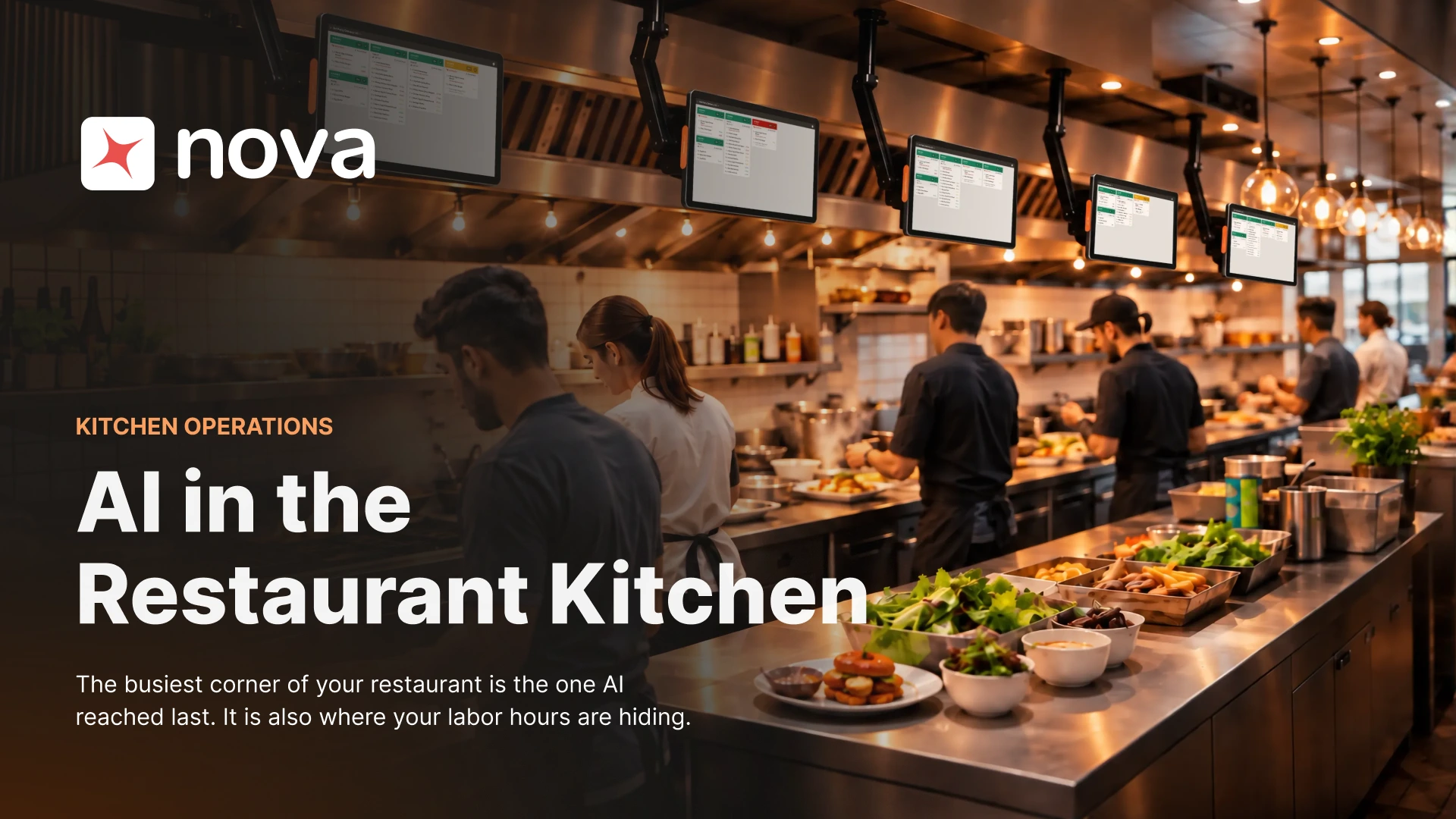
- Integrating POS with a kitchen display system to give the kitchen staff real-time order visibility and reduce preparation time
Actively Collect Guest Feedback
In 2026, feedback is not just about measuring satisfaction - it’s about continuous improvement and guest validation. However, in most restaurants, gathering feedback can be a long process, making guests reluctant to spend an exorbitant amount of time. Therefore, restaurants must implement quick QR-based surveys or post-visit messages to fast-track the feedback loop.
Collecting feedback is only a part of the process; restaurants must also act on the information. Managers must respond to guests’ feedback and let them know when their complaints have been resolved or suggestions accepted. Customer feedback is a great way to make customers feel special.
Focus on Ambiance and Layout
When it comes to ambiance, restaurants generally focus on the aesthetic part. However, in 2026, when online ordering has skyrocketed, restaurants must focus on creating a comforting, intuitive, and advanced ambiance. For instance, you must use sensor-based lighting and air conditioning that automatically adjust brightness and temperature.
Moreover, the layout must be designed for convenience. There should be clear pathways to the table, exit, and restrooms. Seating must be appropriately spaced so that guests don’t feel crowded. When guests can enjoy their meal in a cozy space, they are more likely to return.
Streamline Online Reservations
Online reservations are the first experience guests have of your restaurant. A complicated booking process can discourage guests before they even enter the restaurant. Therefore, restaurants must deploy an online reservation platform that is convenient and intuitive. Moreover, guests must be provided with real-time notifications on reservation status, along with one-touch booking modifications and cancellations. They must also be able to enter their seating preferences to get the best table.
Implement a Personalized Loyalty Program
Gone are the days of offering generic rewards to guests. In 2026, guests demand a more personalized approach to loyalty programs. Therefore, your loyalty program must be integrated with the CRM, POS, and online ordering platforms to gather order history, dietary restrictions, and meal preferences. According to it, you must provide guests with the right offers for their preferred meal. Advanced restaurant management solutions, such as NOVA, offer AI-powered loyalty programs that analyze customer behavior to recommend the best offers.
Focus on the Menu
In addition to the dishes, the menu’s layout and design also create a long-lasting impact on customers. Therefore, the menu must be clear, descriptive, and intuitive, enabling guests to order conveniently while uplifting your brand value. A well-designed menu must have clearly defined sections. Moreover, there must be a small yet creative description of each item, describing flavors, texture, and ingredients. When using digital menus, you must regularly alter item placement, with the most-sold item at the top.
Ensure Consistency Across Every Visit
Imagine guests experiencing a change in the taste of their favorite dish every time they visit. It will not only hamper guest loyalty but also tarnish the brand image. Hence, you must ensure exact consistency in the menu items, be it texture, taste, or garnish. If you are running a chain, make sure that the food consistency is maintained across all locations.
To ensure consistency, you must document recipes, set preparation protocols, and conduct regular quality checks. Moreover, if possible, try to source your ingredients from a single vendor to ensure consistency.
Act Proactively on Service Issues
No matter how hard you try to offer the best service, things can still go wrong sometimes. In such situations, where there is a complaint or dissatisfaction among a guest, servers should be professional yet empathetic. Simple actions, such as apologies, item replacements, and thoughtful gestures, can alter the guest’s mood and de-escalate the situation.
Where to Start: Quick Wins vs. Long-Term Investments
Twelve strategies are a lot to tackle at once, so it helps to know where to start. Some of these changes can be made this month with almost no budget. Others are worth planning as longer-term investments because they touch your technology stack and require more setup time.
Quick wins you can act on right away include collecting and closing the loop on guest feedback, improving the waiting area experience, and training staff to handle service issues proactively. These require little more than a process change and some coaching.
Longer-term investments include personalization powered by guest data, a loyalty program that adapts to individual preferences, and a unified ordering and kitchen display system. These pay off the most, but they depend on having the right technology foundation in place, which is where a connected platform makes the rollout faster than stitching together separate point solutions.
Start with the quick wins to build momentum, and use what you learn from them to prioritize which longer-term investment to make first.
How to Measure Whether These Strategies Are Working
Improving guest experience only matters if you can see it show up in the numbers. Before rolling out any of the strategies above, agree on a small set of metrics you will track before and after.
Net Promoter Score or a simple guest satisfaction score, collected through post-visit surveys, tells you how guests feel right after their visit.
Repeat visit rate, tracked over a 30 to 90 day window, tells you whether a good experience is actually bringing guests back.
Average table turn time and order-to-serve time tell you whether efficiency improvements are working without guests feeling rushed.
Online review rating and review volume on Google and Yelp give you an outside view of guest sentiment over time.
Revenue per available seat hour ties all of the above back to the number that matters most to the business, since a better experience should ultimately convert into more revenue per seat, not just happier guests.
Review these metrics monthly and pair them with the specific strategy you changed that month, so you can tell which initiatives are actually moving the needle.
Common Mistakes Restaurants Make When Improving Guest Experience
Most restaurants know they should improve guest experience. Where they go wrong is usually in how they execute it.
The first mistake is treating personalization as a one-time setup. Restaurants collect guest data once, build a few segments, and then never update them. Guest preferences change, and personalization only works if the underlying data keeps updating.
The second mistake is training staff once, typically during onboarding, and never again. Guest expectations and menu items evolve, and a single training session cannot cover every scenario a server will face months later.
The third mistake is collecting feedback and not closing the loop. Asking guests for feedback and then doing nothing visible with it signals that their input does not matter, which discourages future feedback and can hurt satisfaction more than not asking at all.
The fourth mistake is solving each problem with a separate tool. A waitlist app, a loyalty app, and a standalone POS that do not talk to each other create more friction for staff than they remove for guests, and end up working against the goal of a smoother, faster, more personal visit.
Ensure Delightful Guest Experiences with NOVA
NOVA is an AI-native restaurant management platform that enables restaurants to provide the best services to guests by minimizing waiting time, ensuring order accuracy, and personalizing their entire experience. NOVA offers an all-in-one solution, including POS, kitchen display systems, handhelds, CRM, loyalty programs, workforce management, online ordering platforms, and more.
Opt for NOVA and elevate guest experiences with:
Course Pacing
NOVA enables servers to set the course pacing according to the order, ensuring that the order doesn’t reach the table before time or too late. You can set the timing between different courses with automated prompts, such as “Next course in 10 min” or “Prep now”. This information is populated to the kitchen display system in real-time, enabling the kitchen staff to make adjustments accordingly. NOVA’s course pacing ensures guests get their order at the perfect time.
Tableside Ordering
NOVA’s handhelds streamline tableside ordering. No more waiting for the server to enter your order at the counter POS or getting your credit card back. Guests can order from the POS and pay using their preferred methods right at the table. In addition, NOVA handhelds also provide personalized item suggestions based on the guest’s order history and meal preferences, enabling servers to suggest add-ons, modifiers, and combos. Guests can also pay tips to the servers on the POS.
Personalized Loyalty Program
Traditional loyalty programs provide common offers and discounts to customers on similar items. NOVA, on the other hand, implements personalized loyalty programs powered by AI-based analytics. It enables you to give guests the right discount at the right time on their preferred items. Moreover, the loyalty program is integrated with all ordering programs to give guests a real-time status of their rewards.
Waitlist Management
Don’t let guests be displeased even when they are waiting for tables. NOVA’s waitlist management feature makes waiting for tables delightful. Guests get real-time notifications on the expected waiting time. Moreover, they can pre-order meals to reduce the ordering time and get discounts in the process.
Unified Solution
NOVA offers a comprehensive restaurant solution, where the POS and kitchen display system (KDS) are part of the same ecosystem, enabling real-time data sync. Hence, every order from handhelds or POS reflects on the KDS screen simultaneously, significantly reducing order time. Moreover, as the orders are displayed digitally, the scope of manual errors is minimized.
Digital Menu Management
NOVA's menu management tools let teams update items, descriptions, and pricing across every location and ordering channel from one place, so a change made once shows up correctly on the kiosk, the app, and the tableside device at the same time. Built-in analytics highlight which items and descriptions convert best, making it easy to prioritize bestsellers in digital menu placement.
Multi-location Consistency and Analytics
For multi-unit operators, NOVA centralizes recipes, service protocols, and quality checklists so every location follows the same standard. A unified analytics dashboard surfaces performance by location in real time, making it easy to spot where consistency is slipping before it affects the guest experience.
Want to see NOVA in action?
.png)
Frequently Asked Questions
What is guest experience in a restaurant, and how is it different from customer service?
Customer service is one part of guest experience. Guest experience covers everything a diner encounters during a visit, including wait time, cleanliness, ambiance, menu design, and how issues are resolved, not just how friendly the service is.
How much should a restaurant invest in guest experience technology?
There is no fixed number, but the strategies with the fastest payback are usually process changes like feedback collection and staff training, which cost little to start. Technology investments like personalization and loyalty platforms typically pay off over a longer horizon and are worth budgeting for once the basics are in place.
What is the fastest way to improve guest experience with a limited budget?
Start with the free or low-cost changes: closing the loop on guest feedback, improving the waiting area, and training staff to handle complaints proactively. These do not require new technology and can show results within weeks.
Does restaurant technology like kiosks or tableside ordering make service feel less personal?
When implemented well, technology removes repetitive tasks from staff so they can spend more time on the parts of service that actually build a personal connection, like conversation and attentiveness, rather than making service feel less personal.
How do you measure ROI on guest experience initiatives?
Track repeat visit rate, average check size, and revenue per available seat hour before and after each change. Guest satisfaction scores and review ratings are useful leading indicators, but revenue per available seat hour is the clearest measure of whether the investment paid off.
Happy Guests are Loyal Guests
In an increasingly competitive restaurant landscape, guest experience is your most powerful differentiator. Memorable experiences turn first-time diners into repeat customers and loyal brand ambassadors. As we move through 2026, restaurants that prioritize convenience, consistency, and personalization will be the ones that win both loyalty and market share.
Because guest expectations never stand still, improving the guest experience must be an ongoing effort. Continuous optimization, informed by data and guest feedback, allows restaurants to stay ahead of trends and deliver experiences that keep guests coming back.