Inclement Weather Policy for Restaurants: How to Protect Staff, Guests, and Revenue
.svg)
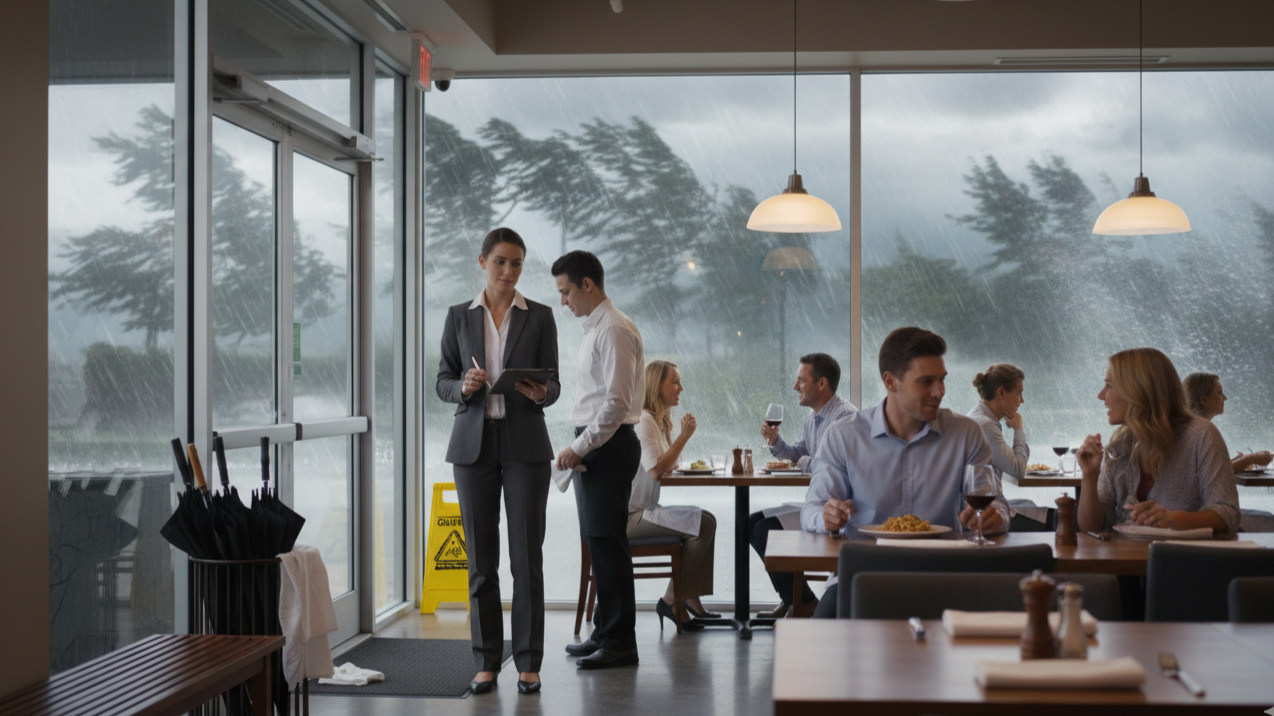
Severe weather disruptions are becoming more frequent and more disruptive for restaurant owners. From heavy rain and flooding to extreme heat, snowstorms, and power outages, inclement weather can quickly impact restaurant operations, staff safety, and the guest experience.
In February 2026, two major snowstorms across New York and the East Coast forced thousands of restaurants to delay openings, shorten hours, or shut down entirely with little notice. Many operators were left scrambling to communicate with staff and guests while managing lost revenue and safety concerns.
Without a clearly defined inclement weather policy, restaurants often face confused employees, last-minute closures, frustrated guests, and unnecessary revenue loss.
A strong inclement weather policy helps restaurant owners make faster decisions, communicate clearly, and protect both people and profits when severe weather strikes.
What Is an Inclement Weather Policy for Restaurants?
An inclement weather policy is a written set of guidelines that explains how your restaurant will operate during unsafe or disruptive weather conditions.
It outlines:
- When the restaurant will remain open, modify hours, or close
- Employee attendance expectations and pay policies
- Guest safety measures and service changes
- Communication procedures for staff and customers
For restaurant owners, this policy serves as a practical operational playbook during emergencies.
Why Every Restaurant Needs an Inclement Weather Policy
Employee Safety and Trust
A clear policy ensures employees are not forced to choose between safety and job security. This builds trust and improves long-term retention.
Faster Decision Making
When severe weather hits, owners need clarity, not debate. A predefined policy enables calm and confident decisions.
Better Guest Experience
Guests appreciate transparency. Clear communication during inclement weather reduces confusion and protects your brand reputation.
Reduced Liability Risk
Documented procedures demonstrate due diligence and responsible management during unsafe conditions.
Key Elements of a Restaurant Inclement Weather Policy
Operating Status Guidelines
Define when your restaurant will:
- Operate as normal
- Reduce hours or services
- Switch to takeout or delivery only
- Close completely
Clearly identify who has the authority to make the final decision.
Employee Attendance and Pay Policy
Your policy should clearly state:
- Whether employees are paid during weather-related closures
- Rules for late arrivals or early departures
- No-penalty attendance guidelines when travel is unsafe
Clarity here prevents conflict and confusion.
Guest Safety and Service Adjustments
Outline how service will change during severe weather, including:
- Reduced seating capacity
- Simplified menus
- Takeout or delivery-only service
- Refund and cancellation procedures
Consistency protects both guests and operations.
How Restaurant Owners Should Decide Whether to Stay Open or Close
There is no single rule, but restaurant owners should evaluate:
- Local weather advisories and government warnings
- Road and public transportation conditions
- Staff availability and commute safety
- Reliability of power, water, and internet
- Expected customer demand
In many cases, limited operations are safer and more profitable than remaining fully open.
Communicating Your Inclement Weather Policy Effectively
Internal Communication for Staff
- Notify employees as early as possible
- Clearly explain reporting expectations and pay policies
- Designate a single point of communication for updates
External Communication for Guests
- Update Google Business Profile hours
- Post clear notices on your website and social channels
- Proactively inform guests about reservation or service changes
Clear communication during inclement weather prevents frustration and negative reviews.
Operational Adjustments During Inclement Weather
Successful restaurants adapt operations quickly by:
- Reducing menu complexity
- Managing perishable inventory carefully
- Adjusting staffing levels safely
- Setting realistic guest expectations for delays
These adjustments help protect margins during uncertain conditions.
Common Inclement Weather Mistakes Restaurant Owners Make
- Delaying closure or service adjustments
- Leaving staff uncertain about pay or attendance rules
- Poor communication with guests
- Reopening before systems and teams are fully ready
Most of these issues stem from the absence of a documented inclement weather policy.
How Technology Helps Execute an Inclement Weather Policy
Modern restaurant management platforms allow owners to:
- Instantly update operating hours and service modes
- Switch between dine-in, takeout, and delivery
- Keep staff aligned with real-time updates
- Track performance and losses during weather disruptions
Operational flexibility is critical when conditions change quickly.
Creating and Maintaining Your Restaurant Inclement Weather Policy
- Document the policy clearly and store it where staff can access it
- Train managers and supervisors regularly
- Review the policy annually before peak weather seasons
- Update it after major weather events based on lessons learned
Prepared restaurants recover faster and earn long-term guest loyalty.
Conclusion: A Strong Inclement Weather Policy Is a Competitive Advantage
Inclement weather is unavoidable. Operational confusion is not.
A well-defined inclement weather policy for restaurants protects staff, reassures guests, reduces liability, and minimizes revenue loss.
Restaurants that plan ahead do not just survive severe weather. They maintain trust, stability, and long-term success.
Frequently Asked Questions About Inclement Weather Policy
What qualifies as inclement weather for a restaurant?
Inclement weather includes any condition that poses safety risks or disrupts operations, such as heavy rain, flooding, snowstorms, extreme heat or cold, cyclones, hurricanes, or power outages.
Should restaurants pay employees during weather-related closures?
This depends on local labor laws and internal policy. Many restaurants choose to offer partial or full pay to maintain morale and retention. The policy should clearly define this in advance.
When should a restaurant close due to bad weather?
Restaurants should consider closing when employee safety is compromised, utilities are unreliable, or authorities advise staying off the roads. Safety should always take priority over short-term revenue.
How should restaurants communicate closures to guests?
Restaurants should update Google Business Profile, websites, social media, and reservation platforms as early as possible to reduce guest confusion.
Can restaurants operate with limited service during inclement weather?
Yes. Many restaurants reduce hours, simplify menus, or switch to takeout-only service to operate safely while maintaining revenue.
How often should an inclement weather policy be updated?
At least once per year, ideally before high-risk weather seasons. Policies should also be reviewed after major weather events.