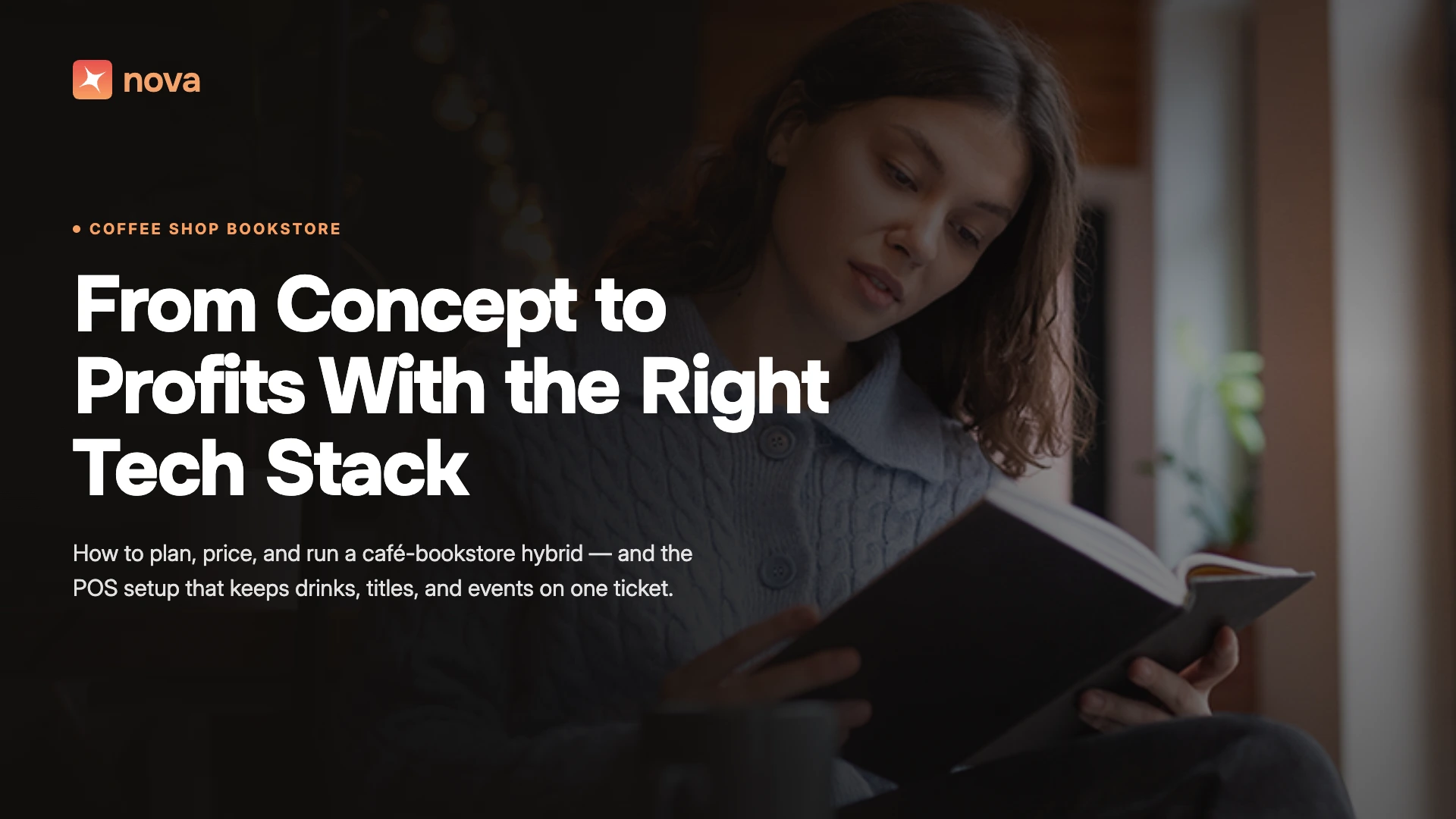
How to Start a Coffee Shop Bookstore: From Concept to Profits with the Right Tech Stack

The coffee shop bookstore hybrid model represents a proven business opportunity combining specialty coffee consumption trends with the independent bookstore revival. Whether you're an existing café or restaurant owner exploring a pivot, or a first-time entrepreneur validating a new concept, this guide covers the complete journey: from concept validation through daily operations, real cost data, and long-term profitability.
Quick answer: Opening a coffee shop bookstore typically costs $80,000 to $300,000 and takes 4 to 9 months from lease signing to launch. The model works because beverage sales (60-70% gross margin) fund daily operations while book sales (40-50% margin) drive longer visits and repeat traffic. Hybrid operators report customer spend 25-35% higher than standalone cafés, with most reaching break-even in 18-24 months.
Key takeaways:
- 422 new independent bookstores opened in the U.S. in 2025 alone, a 31% jump over 2024, signaling real demand for the community-retail model this hybrid taps into.
- Total startup costs range from $80K to $300K. Converting an existing food-service space cuts buildout costs significantly.
- Books alone won't carry the business. Beverage margins subsidize the retail side, not the reverse.
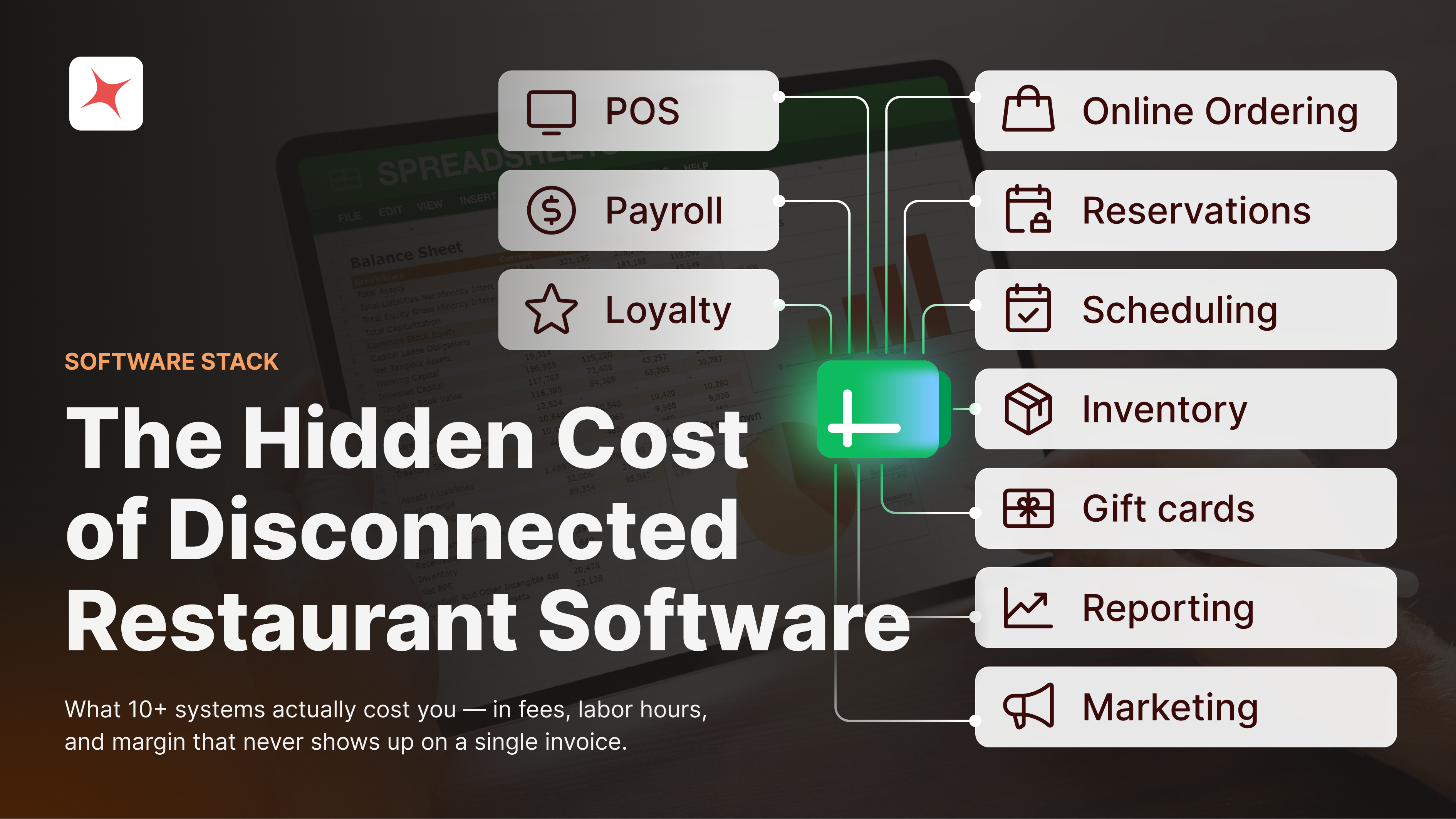
- A unified tech stack (POS, inventory, and loyalty in one system) is the difference between a manageable hybrid and a two-headed operational headache.
Coffee Shop Bookstore Trends: Why This Hybrid Model Is Booming in 2026
What is driving this shift? Two industries that were each declared "dying" a decade ago are now growing at the same time, and consumers are pulling them together into one destination.
- Independent bookstores are in a genuine resurgence. 422 new independent bookstores opened across the U.S. in 2025, a 31% increase over 2024, and independent bookstore counts are up roughly 70% since 2020, according to American Booksellers Association data (reported by Good Good Good). Online-to-local platform Bookshop.org saw sales grow 55% in 2025 alone, funneling over $40 million directly to independent booksellers since 2020. This is evidence that "buy local" bookselling isn't a nostalgia play; it's a growth category.
- Coffee remains a daily habit, not a discretionary treat. 73% of Americans drink coffee every day, and 51% purchase coffee out on a weekly basis, per industry data compiled by LocationsCloud. The U.S. coffee shop market reached an estimated $24.98 billion in 2026 across roughly 145,629 locations. Independent coffee shops are growing faster (3.2% annually) than chains (2% annually), meaning the growth is disproportionately going to operators who differentiate rather than compete on price.
- Print isn't dying either. Print book unit sales rose 0.3% in 2025, per Circana BookScan data (via Jane Friedman), the second consecutive year of stabilization after years of decline. This undercuts the assumption that physical bookselling is a shrinking category.
- Multi-purpose appeal: Consumers seek experiences beyond simple transactions, with hybrid spaces drawing remote workers, students, book lovers, and casual customers into the same room.
- Community focus: Independent bookstores thrive by functioning as cultural hubs with curated selections and experiences unavailable online, and coffee is the natural revenue engine that makes staying a while worthwhile.
Coffee Shop Bookstore Industry Statistics (2026 Data)
A quick-reference cheat sheet for planning and pitching investors or lenders. Paste this into a Webflow Embed component:
Coffee Shop vs. Bookstore vs. Hybrid: Which Model Actually Wins?
If you're an existing restaurant or café owner weighing whether to add books, or an entrepreneur deciding which concept to build from scratch, the trade-offs come down to margin blend, dwell time, and revenue diversification:
The takeaway for restaurant owners specifically: you likely already have the harder half of this built. A working kitchen, food service license, and trained staff are the expensive, slow-to-acquire pieces. See the pivot section below.
Revenue Model, Costs, and Profitability of a Bookstore Coffee Shop
Before jumping into execution, it is important to understand how a bookstore coffee shop actually makes money. Unlike traditional bookstores, which operate on thinner margins, hybrid café-bookstore models benefit from diversified revenue streams. Coffee, beverages, and light food items typically contribute the majority of revenue and deliver higher gross margins, while book sales play a crucial role in customer retention, dwell time, and brand differentiation. The most successful operators intentionally design their space and menu so that the café revenue fuels day-to-day operations while bookstore sales compound long-term loyalty.
On the cost side, major expenses when opening a coffee shop bookstore include rent, interiors, café equipment, book inventory, staffing, and licensing. Café margins can range from 60% to 70%on beverages, whereas books usually operate on lower margins but with slower inventory turnover. Break-even timelines often depend on footfall consistency and repeat visits, making operational efficiency and customer engagement critical in the first 9 to 18 months. Entrepreneurs researching how to start a bookstore coffee shop should focus early on optimizing ordering workflows, reducing staff friction, tracking best-selling items, and aligning pricing across both segments to reach sustainable profitability faster.
Is a Coffee Shop Bookstore Profitable?
The honest answer is yes, but profitability depends on how well the two revenue streams are balanced and managed from day one. Coffee and beverages typically carry gross margins of 60% to 70%, making them the financial engine of the business. Books operate on lower margins, usually between 40% and 50% on new titles purchased through wholesale distributors, and lower still on used books depending on acquisition cost.
The hybrid model's advantage is that books drive dwell time and repeat visits in a way that a standalone café cannot replicate. A guest who comes in for a coffee and stays for an hour browsing shelves is worth significantly more per visit than one who orders and leaves. Independent bookstore cafés that successfully build this dynamic typically report average customer spend 25% to 35% higher than a comparable café without a book component.
Events are where many coffee shop bookstores find a meaningful third revenue stream. Author signings, book clubs, poetry nights, and children's reading sessions drive incremental revenue through ticket sales, increased food and drink orders, and exposure to new customers who would not have discovered the café otherwise. Operators who treat events as a core part of the business model rather than an occasional extra tend to reach break-even faster, often within 18 to 24 months of opening.
The break-even timeline depends more than anything else on location foot traffic, average transaction value, and how quickly the operator builds a base of regulars. Cafés in high-footfall locations with a clear community identity and a well-curated book selection can reach profitability within the first year. Those in secondary locations or without a defined audience typically take longer, which is why financial modelling and location research matter before signing a lease.
How Much Does It Cost to Open a Coffee Shop Bookstore?
Initial Investment Breakdown
- Space buildout and renovation: $50,000 to $200,000
- Commercial café equipment: $15,000 to $40,000
- Furniture, shelving, and fixtures: $10,000 to $30,000
- Initial book inventory: $10,000 to $30,000
- POS and technology stack: $2,000 to $8,000
- Licensing and permits: $1,000 to $5,000
- Marketing, signage, and launch: $3,000 to $10,000
- Working capital reserve: $20,000 to $60,000
Typical Monthly Operating Costs
- Rent: Targeting 8% to 12% of revenue
- Labor: Typically 30% to 35% of revenue
- Food and beverage COGS: 28% to 35% of café revenue
- Book restocking: Ongoing based on sales velocity
- Utilities, insurance, and miscellaneous: $2,000 to $5,000
Funding Options
- Self-funding: Requires $150,000+ available capital
- SBA loans: 7(a) and 504 loan programs for buildouts
- Local business development grants: Many jurisdictions offer retail-focused funding
- Crowdfunding: Platforms like Kickstarter build audience while raising capital
Pivoting an Existing Restaurant or Café into a Coffee Shop Bookstore
Already running a café or restaurant? You have a real head start. The most expensive and time-consuming pieces of this business, a working commercial kitchen, food service licensing, health department approval, and trained staff, are typically already in place. Converting is usually faster and cheaper than building from zero, but it comes with its own checklist:
- Reassess your zoning and lease terms. Confirm your existing commercial lease and zoning classification permit retail book sales alongside food service. Some leases restrict "use type," which can require a landlord amendment.
- Add a seller's permit. Your food service license doesn't cover retail sales tax collection on books. You'll need a separate seller's permit or resale certificate.
- Reallocate space, don't necessarily expand it. Many successful conversions repurpose underused dining square footage, a slow lunch section, or an oversized waiting area into shelving rather than leasing additional space.
- Retrain, don't necessarily rehire. Existing staff already understand service standards. The gap is usually book knowledge and handling retail transactions (returns, special orders, consignment) inside a food POS.
- Unify your tech stack before adding inventory. This is the step most conversions get wrong. Bolting a separate bookstore POS onto an existing restaurant POS creates two disconnected systems, double data entry, and blind spots in loyalty and reporting. Consolidate onto a platform built to handle food, retail SKUs, and loyalty together (see the NOVA section below).
- Budget lower, not zero. Expect the buildout and equipment portions of the cost table above to shrink substantially. Most of your remaining spend goes to shelving, initial book inventory, and technology.
How to Open a Coffee Shop Bookstore: Step-by-Step
Think About the Café's Concept
Develop a clear vision addressing how you'll operate, design the space, market products, arrange seating, and determine service types. Theme-based concepts attract specific customer preferences and enhance retention.
Conduct Market Research
Research both cafés and bookstores in your target area. Examine competitor offerings to identify differentiation opportunities.
Set a Budget
Create detailed budget planning covering permits, inventory, equipment, staffing, and marketing. Account for contingencies and lease costs to prepare for launch and position for long-term success.
Search for a Good Location
Location determines long-term success. Prioritize areas with maximum footfall and lower competition, such as zones near colleges or offices. Ensure adequate sunlight, ventilation, and parking.
Comply with Zoning Requirements
Verify the space permits commercial café operations. Review regulations regarding design, parking, safety protocols, and emissions.
Selecting the Perfect Books
Diversify book selection across genres including science fiction, biography, and fantasy. Conduct literary events like author signings and poetry competitions to drive traffic and enhance brand identity.
Develop Your Coffee Shop Bookstore Menu
Research local suppliers for quality ingredients at reasonable prices. Create a diverse menu with coffee add-ons like pastries, sandwiches, and croissants. Ensure menus are readable with appropriate placement.
Choose the Best Equipment
Procure quality commercial equipment including coffee machines, kitchen display systems, self-order kiosks, POS systems, and refrigeration. Equipment reliability maintains brand reputation.
Create a Technologically-Forward Café
Contemporary customers expect technology enabling quick ordering without server interaction. Technology platforms boost employee satisfaction by eliminating repetitive tasks.
Invest in Marketing
Marketing defines café growth in the modern era. Leverage diverse platforms including email marketing, social media, and websites. Analyze performance through defined KPIs using advanced marketing automation tools.
Focus on Community Building and Local Marketing
Successful bookstore cafés function as neighborhood destinations beyond retail spaces. Host book readings, author meetings, poetry events, and storytelling sessions to drive consistent footfall and customer lifetime value. Optimize local SEO, partner with colleges and schools, and collaborate with local writers. Simple tactics including loyalty programs and event-based promotions, bridge offline and online engagement.
Hire the Right People
Invest in hiring quality staff across all roles. Consider demographic alignment with your target audience. The average barista age is 24 years, with 44% of U.S. coffee consumption from millennials.
Common Mistakes First-Time Coffee Shop Bookstore Owners Make
- Over-inventorying on day one. Buying broad, comprehensive stock instead of a tight, curated selection ties up cash and often misses what your specific neighborhood actually reads. Start narrow (see the 500 to 1,000 title guidance below) and expand based on what sells.
- Treating books as the primary revenue driver. Books support dwell time and differentiation. Beverages carry the margin. Businesses that under-invest in coffee quality and throughput to fund book inventory typically struggle to hit break-even.
- Running two disconnected systems. A separate POS for food and a separate system for book retail creates duplicate data entry, broken loyalty tracking, and no unified view of which customers buy both.
- Underestimating labor complexity. Staff need to competently handle espresso service, food prep, book recommendations, and retail transactions. Cross-training takes longer than most first-time operators budget for.
- Skipping the events calendar. Community programming (readings, signings, book clubs) is one of the lowest-cost, highest-retention levers in this model. Operators who treat it as optional typically see weaker repeat-visit rates.
- Underpricing the pivot cost for zoning and licensing changes. Even a straightforward café-to-hybrid conversion can stall for months waiting on a seller's permit or lease amendment if it isn't started early.
Licenses and Permits Required to Open a Coffee Shop Bookstore
Core Licenses and Permits
- Business license: Required through city or county clerk
- Food service establishment license: Issued after health department inspection
- Food handler certifications: Manager must hold certification; some states require all staff certification
- Seller's permit and resale certificate: Required for sales tax collection on book retail
- Certificate of occupancy: Confirms compliance with building codes
- Sign permit: Many cities require permits before installing external signage
State-Specific Considerations
Wine or beer service requires separate alcohol permits with timelines reaching three to six months in some jurisdictions. Ticketed events may require special events permits or entertainment licenses.
How to Source Books for Your Coffee Shop Bookstore
Working with Book Distributors
Independent bookstores primarily source through Ingram Content Group and Baker & Taylor, offering access to virtually all in-print titles with trade discounts of 40% to 46% off retail. Direct publisher accounts with Penguin Random House, HarperCollins, and Simon & Schuster offer slightly better terms on large orders with minimum requirements.
Used Books and Consignment
Used books provide higher margin potential with lower acquisition costs while attracting value-conscious readers. Source from customer purchases, estate sales, library sales, and regional wholesalers. Consignment models work particularly well for local authors and self-published titles, reducing upfront inventory costs.
Building Your Curation Strategy
Stock books reflecting your specific audience rather than attempting comprehensive coverage. A curated selection of 500 to 1,000 titles reflecting community interests outperforms large undifferentiated inventory. Identify fast-turning titles and categories in early months to build targeted depth.
Start Your Coffee Shop Bookstore With NOVA
NOVA functions as a unified restaurant management platform integrating front-of-house and back-of-house operations through an AI-native architecture that eliminates data silos and integration complexities. This solves the "two disconnected systems" problem described above.
One-Stop Solution
NOVA provides complete operational packages including POS, kitchen display systems, handhelds, and loyalty programs. Data syncs seamlessly across platforms, offering deep insights and hassle-free operations.
Personalized Webstore
NOVA's customizable webstore enables mobile-optimized ordering directly from Google, Instagram, SMS, and other platforms, boosting online sales potential.
Delivery Platform Integrations
NOVA integrates with major online ordering and delivery applications, enabling customers to order through preferred platforms while maintaining unified operations.
Easy Onboarding
NOVA's user-friendly interface designed for contemporary workers enables rapid staff onboarding and reduces training time.
Inventory Management
Real-time inventory tracking and AI-powered demand prediction optimize ROI while reducing perishable waste. This is a meaningful advantage when managing perishable café goods and book inventory in the same system.
Smarter Loyalty Programs That Build Regulars
NOVA moves beyond basic points systems, enabling personalized experiences through integrated POS and CRM that recognize repeat guests and track preferences across coffee and book purchases.
AI-Native Marketing Engine
In-built marketing functionality enables launching AI marketing campaigns in three steps, analyzing customer behavior patterns across different channels without costly third-party agencies.
Scaling Beyond One Location
Once your coffee shop bookstore is thriving, the next step many entrepreneurs consider is scaling: replicating the concept across multiple neighborhoods or even cities. Expanding allows you to increase revenue and brand visibility, but it also brings new challenges that can overwhelm operators if not managed properly.
How to Replicate the Concept Successfully
• Stay true to your core identity: Whether it is a literary-inspired menu, cozy design, or community events, carry your signature elements to every new location so the brand feels familiar yet locally relevant.
• Adapt to the neighborhood: Each community has its own demographic and cultural flavor. A store near a college campus may lean into study-friendly spaces and affordable menu items, while a suburban location might prioritize family seating and weekend events.
Common Pitfalls in Scaling Cafés
• Inventory headaches: Managing stock across multiple cafés often leads to over-ordering, waste, or shortages.
• Staffing challenges: Finding, training, and retaining the right people gets harder as your footprint grows.
• Inconsistent experience: If one location offers a great latte and cozy book selection but another feels disorganized, customers lose trust in your brand.
How NOVA Simplifies Multi-Location Growth
Scaling does not have to mean chaos. With NOVA, all your locations connect seamlessly on one AI-native platform.
• Centralized inventory management ensures you see what is selling(or spoiling) across all stores in real time.
• Unified staff onboarding and scheduling make it easier to train teams quickly and keep shifts running smoothly.
• Consistent customer experience is supported through shared loyalty programs, integrated CRM, and standardized menus, so customers feel at home no matter which location they visit.
• Performance dashboards let you compare sales, staff efficiency, and customer engagement across locations, helping you spot opportunities and address issues early.
With the right strategy and the right tools, scaling your coffee shop bookstore does not just multiply locations. It multiplies profitability and customer loyalty.
Frequently Asked Questions
Is a coffee shop bookstore a good business?
Yes, for operators who go in with realistic expectations and a clear concept. The hybrid model generates multiple revenue streams: beverages, food, book sales, and events, which provide more financial resilience than either a standalone café or a traditional bookstore. Customers who come in to browse shelves stay longer and spend more than those who come for a quick coffee. Success depends on location, community fit, and operational discipline more than concept novelty.
How much does it cost to open a coffee shop bookstore?
Total startup costs typically range from $80,000 to $300,000 depending on the market, size of the space, condition of the premises, and scale of the opening book inventory. The largest cost variables are space buildout and commercial café equipment. Operators who find a space previously used as a food service business can reduce buildout costs significantly. A working capital reserve of at least $20,000 to $60,000 is essential to cover operating costs while revenue builds.
Do I need a special license to sell books in a coffee shop?
You need a seller's permit or resale certificate issued by your state to collect and remit sales tax on book sales. This is separate from the food service license required to serve coffee and food. Most states make the seller's permit application straightforward andlow-cost. Check with your state's department of revenue for the specific requirements in your jurisdiction.
What books should I stock in a coffee shop bookstore?
Start with your audience, not the bestseller list. Research the demographics of your location, talk to potential customers, and build an initial selection around genres that reflect what people in your neighborhood actually read. A curated selection of 500 to 1,000 titles is more effective than a large undifferentiated inventory. Bestsellers and current releases drive foot traffic, while a deep-cut or locally focused section gives your bookstore a distinct identity that keeps customers coming back.
How do I source books for a coffee shop bookstore?
Most independent bookstores useIngram Content Group or Baker & Taylor as their primary wholesale distributors, both of which offer access to virtually all in-print titles at trade discounts of 40% to 46% off retail. Used books can be sourced from customers, estate sales, and regional used book wholesalers. A consignment arrangement with local authors is worth considering as a low-cost way to build community ties and add unique titles to your selection.
Can a coffee shop bookstore be run by one person?
In the early stages, possibly during off-peak hours, but not realistically for full service. The combination of café operations and bookstore management requires more than one person during any meaningful service period. Most operators start with two to three part-time staff and adjust as revenue grows. Financial projections should account for enough labor to run service safely and consistently from day one.
To Sum It Up
Coffee shop bookstore success extends beyond brewing lattes and stocking shelves. It involves creating community hubs with multiple revenue streams and real growth potential, backed by an industry tailwind that's more measurable than it might feel. 422 new independent bookstores opened in 2025 alone, and the coffee category isn't slowing down either. Success requires careful planning around concept definition, location selection, menu development, book curation, and staffing investment, and for existing restaurant and café owners, often less new investment than starting from scratch.
Contemporary café success demands operating intelligence through technology that reduces waste, streamlines operations, and builds customer loyalty across both sides of the business. NOVA addresses complex operational needs including inventory, loyalty, AI-powered marketing, and multi-location management, enabling focus on brand building through customer experience.