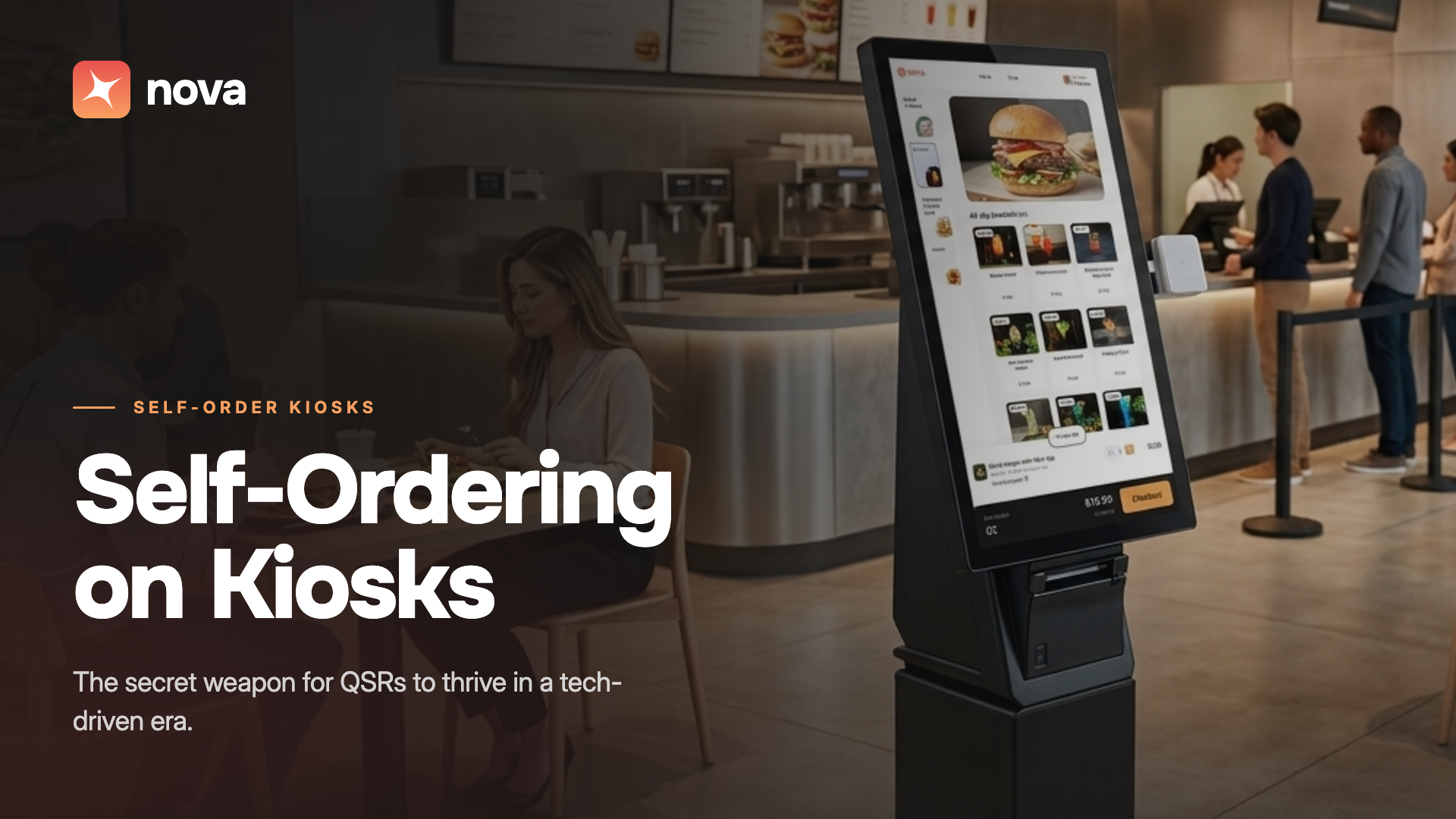

The shift toward kiosk self-order systems in quick-serve restaurants is accelerating rapidly, backed by clear operational and financial data. Studies show that self-ordering kiosks can reduce average wait times by up to 40%, while improving order accuracy by nearly 30%: a critical metric for maintaining customer satisfaction during peak hours. Many QSRs also report a 15–25% increase in average order value, driven by intuitive interfaces and automated upsell prompts that customers respond to more consistently than in-person suggestions.
Adoption is being fueled by changing consumer behavior: nearly 70% of Gen Z and millennial guests prefer kiosk self-ordering because it gives them more control, more customization, and a more private ordering experience. For operators, kiosk self-ordering provides another major advantage: data. Every tap and selection generates insights that help restaurants optimize menus, pricing, staffing, and promotional strategies.
As the industry moves toward a digital-first operating model, kiosk self-order technology is becoming not just a convenience but a proven driver of throughput, profitability, and customer loyalty. In this blog, we’ll explore why kiosks are no longer a luxury but a necessity for QSRs and how NOVA’s cutting-edge kiosk solutions are leading the charge with speed, style, and simplicity.
Customer Satisfaction: Faster, Smarter, and Stress-Free
Today’s customers crave convenience and control. Self-ordering kiosks deliver both, transforming the dining experience in three key ways:
- Reduced Wait Times
Long lines are a recipe for frustration. Kiosks allow customers to order in seconds, cutting queue times. QSR owners report time ordering time reduced up to 34% . During peak hours, this means happier guests and more transactions.
- Personalized Orders & Upsells
Kiosks empower customers to customize meals without feeling rushed. With easy-to-navigate menus, diners can add extras, adjust portions, or filter allergens—no awkward back-and-forth with staff. QSR brands generally see a 15–30 percent increase in average check size and kiosks appeal to a brand’s most valuable customer: somebody who orders independently, visits often, and is willing to explore new offerings.
- A Modern, Contactless Experience
Post-pandemic, 66% of customers prefer self-service options to minimize interactions. Kiosks cater to this demand while aligning with younger generations’ love for app-style autonomy.
Labor Cost Savings: Do more with less
Labor shortages and rising wages are squeezing QSR margins. Kiosks provide relief in three important areas of operation:
- Handling Peak Demand Without Hiring
One kiosk can manage the workload of 1-2 employees during rush hours. For a 5-location chain, this translates to $250,000+ annual savings in labor costs, considering an average pay of $75,000 per employee.
- Reducing Human Error
Manual order entry mistakes cost the average QSR $15,000 yearly in refunds and remakes. Kiosks cut ordering errors by 90%, ensuring accuracy and preserving profits.
- Freeing Staff for High-Value Tasks
With kiosks managing orders, employees can focus on food quality, drive-thru speed, or customer service—areas that directly impact loyalty and reviews.
The Demographic Shift: Why Self-Ordering Kiosks Are Now Expected
Millennials, Gen Z, and Gen Alpha - who will comprise 75% of QSR customers by 2025 - grew up with smartphones and instant gratification. To them, kiosks aren’t novel; they’re the norm.
- 68% of Gen Z diners prefer kiosks over counter ordering (Kiosk marketplace).
- 89% of our guests say the kiosk has improved their experience, and the interface is very intuitive (NOVA customers).
Ignoring this shift risks alienating your largest customer base.
Beyond Efficiency: Hidden Benefits of Self-Ordering Kiosks
Data from the kiosk is a peek into the ordering patterns of your most valued customers. Kiosks can help unlock:
- Data-Driven Insights
Kiosks track ordering patterns, peak times, and popular menu items. This data helps optimize inventory, staffing, and promotions.
- Enhanced Brand Perception
Sleek, modern kiosks signal innovation. Chains like McDonald’s and Shake Shack have leveraged kiosks to rebrand as tech-forward destinations.
- Upselling on Autopilot
AI-powered kiosks such as NOVA suggest add-ons (e.g., “Add a cookie for $1?”) based on cart items, driving 15–20% higher average ticket sizes.
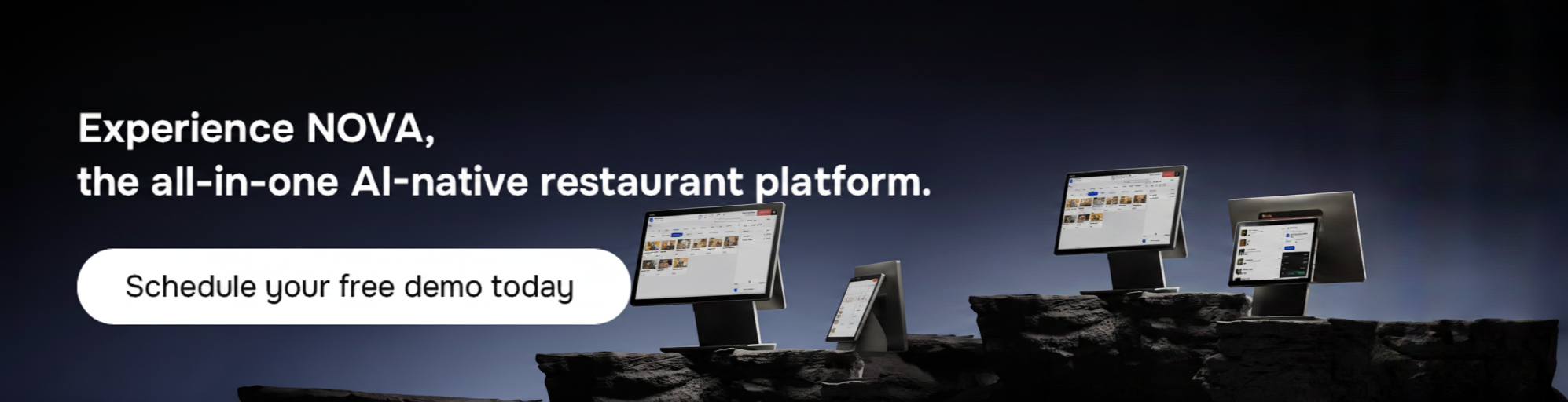
Why NOVA’s Self-Ordering Kiosks Stand Out: Built for Speed and Simplicity
Not all kiosks are created equal. NOVA’s self-ordering kiosks combine blazing speed, stunning design, and user-friendly navigation to maximize ROI:
- Lightning-Fast Performance: Orders were processed in under 3 seconds, even during lunch rushes. Offline mode ensures uninterrupted service if Wi-Fi drops.
- TikTok-Inspired User Interface: Image-first menus with high-res food photos and modifiers mimic a social media-like interface, making navigation intuitive.
- Single-screen flow: Customers scroll, tap, and check out without switching screens.
- Customizable Branding: Match kiosk themes to your restaurant’s vibe (e.g., retro diner or minimalist chic). Add seasonal promotions or loyalty program integrations.
- Enterprise-Grade Reliability: Built to withstand high traffic, spills, and greasy fingers. PCI-compliant payments and 24/7 remote monitoring.
- Seamless Integration: Syncs with your restaurant POS, kitchen display systems, and loyalty apps. Real-time menu updates (e.g., sold-out items).
Case Studies: How QSRs win with NOVA
- A modern cafe chain in California installed NOVA kiosks in 15 locations, achieving a 30% labor cost reduction and 18% higher customer satisfaction scores in 6 months.
- Zait & Zattar: A very high-traffic location in the heart of Los Angeles leveraged NOVA’s upselling AI to boost add-on sales by 22% without raising menu prices.
Future Trends & Innovations in Kiosk Self-Ordering
1. AI-Powered Personalization & Smart Recommendations
AI is transforming kiosk self-ordering from a basic interface into a dynamic sales engine. By analyzing purchase patterns, time of day, and customer preferences, AI-driven kiosks can deliver hyper-relevant upsell and cross-sell prompts. This leads to a higher average order value and a more personalized experience. As QSRs adopt more AI-native platforms, personalization will become a standard expectation, not a premium feature.
2. Voice-Enabled & Accessibility-First Experiences
Voice-enabled kiosks are emerging as the next leap in customer convenience, helping guests place orders hands-free with better accuracy. They also significantly improve accessibility for customers with mobility or visual challenges, ensuring inclusive ordering journeys. Combined with features like adjustable text sizes, high-contrast screens, and multilingual support, kiosk self-order systems are becoming more intuitive for broader demographics. This trend positions kiosks as true customer-first digital touchpoints.
3. Deeper Omnichannel Integration Across Mobile, Loyalty & Payments
The next generation of kiosks will operate as a seamless part of the restaurant’s digital ecosystem. They will sync in real time with mobile apps, loyalty programs, customer profiles, and digital wallets to deliver a unified experience. This integration allows guests to earn and redeem rewards instantly, reorder past meals, and enjoy consistent pricing and promotions across channels. For operators, omnichannel-connected kiosk self-ordering unlocks richer guest data and more targeted marketing opportunities.
4. Data-Driven Operations & Predictive Intelligence
Modern kiosks generate high-quality operational data that can be used to forecast demand, optimize staffing, and streamline kitchen workflows. Predictive analytics will help QSRs identify peak times, popular items, and emerging ordering trends before they impact operations. This insight also enables smarter menu engineering: such as promoting high-margin items or adjusting combos based on real-time preferences. With predictive intelligence built into kiosk self-order systems, restaurants can operate with greater accuracy and agility.
Conclusion: The Future of QSRs Is Self-Service
Self-ordering kiosks are no longer optional- they’re essential to staying competitive. They address critical pain points: labor costs, customer expectations, and demographic shifts. With NOVA’s modern, agile kiosks, you’re not just keeping up; you’re setting the standard.