.svg)
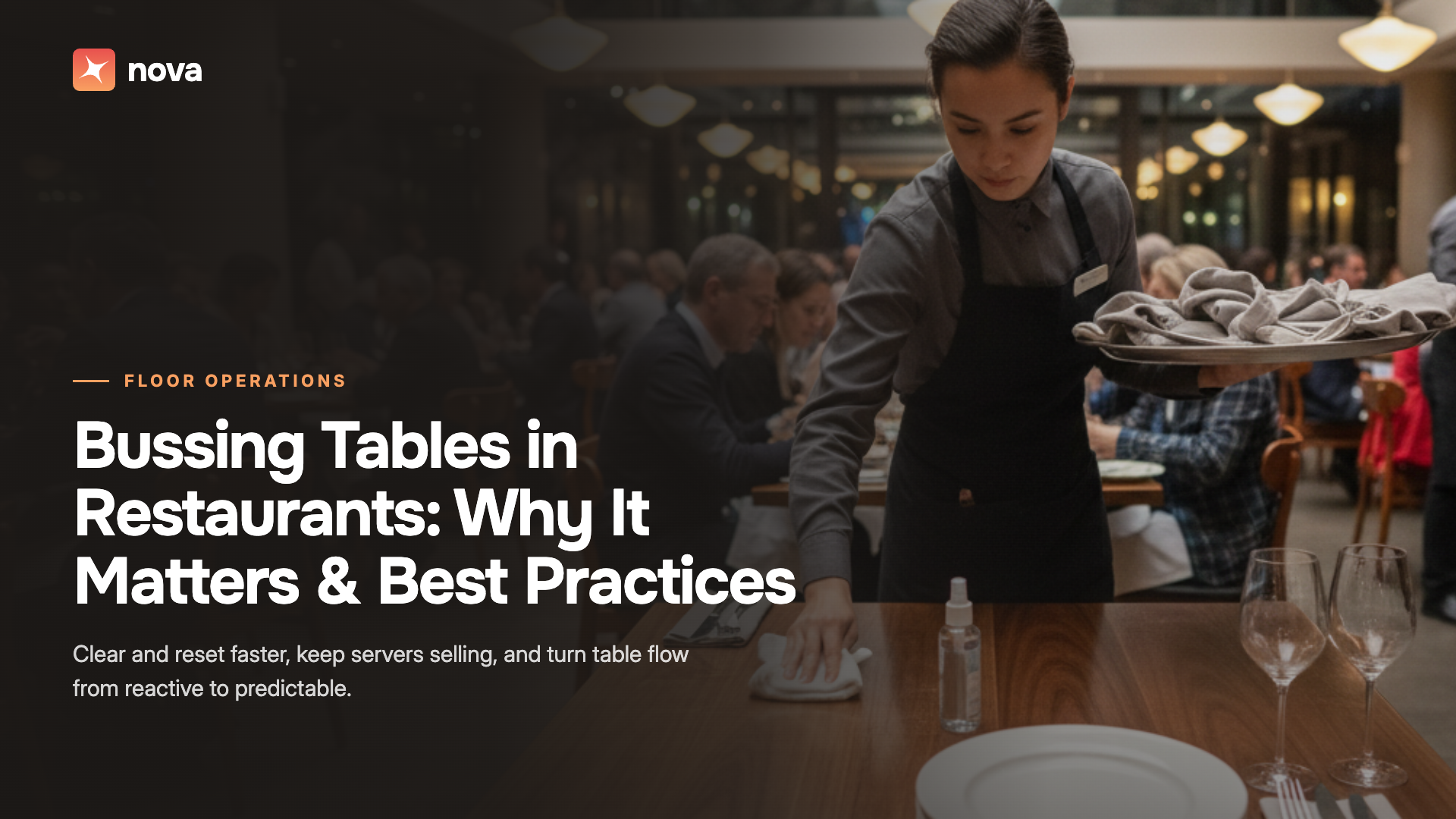
Walk into any busy restaurant, and you will notice a rhythm. Guests arrive, meals are served, conversations flow, and tables quietly turn over for the next party. But have you ever stopped to think about what keeps that rhythm from falling apart? Or why some dining rooms feel effortlessly smooth while others seem stuck in constant chaos?
At the center of that flow sits one of the most underestimated roles in hospitality: bussing tables. It may look simple from the outside, just clearing plates and wiping surfaces. In reality, bussing is a powerful operational lever that directly shapes guest experience, service speed, and revenue.
For restaurant owners and managers, understanding this function is not optional. It is a competitive advantage.
In this guide, you will learn what bussing truly involves, why it has a bigger financial impact than most realize, the challenges managers face, practical strategies to improve it, and how modern technology can transform table flow from reactive to predictable.
What Does Bussing Tables Really Mean in a Restaurant?
Bussing tables is simply clearing and resetting the tables to allow the next guests to be seated in the shortest time possible. But to define it so is to lose the big picture. Consider bussers to be the force that keeps the dining room frictionless.
When a table is not cleared, the action is stopped. Visitors who are waiting outside become impatient. Hosts hesitate. Servers feel the pressure. What is only a slight delay- creeps over the floor. It is a busser that intervenes to avert such a chain reaction.
The Role of a Busser
A busser helps the front-of-house staff and does the work that enables servers to sell, suggest, and establish relationships with the guests.
As servers control the experience, bussers control the environment.
The difference is important since time is the scarcity resource when in service. Each minute that a server takes to wipe a table is a minute that he/she is not upselling appetizers or checking on guests.
How It Differs from Servers and Hosts
- Hosts open the door and handle the waitlist.
- The servers contribute to revenue by taking orders and communicating with the guests.
- Speed and readiness are safeguarded by bussers.
Take out any of these roles and the system becomes weak. However, bussers are usually undervalued by restaurants as their victories are silent. Nothing seems wrong when they do their job well.
A Note on Global Terminology
In certain areas, the term busboy or busgirl is still used, whereas in many contemporary restaurants, gender-neutral language is now used: busser or dining room assistant. Fancy establishments can incorporate the position of server assistants. Names are changed, and the goal will always be the same: to make the tables turn without making the guests feel in a hurry.
Core Responsibilities of Bussing Tables
If you asked ten restaurant owners what bussers do, most would answer, “Clear tables.” That is only the surface.
Strong bussing tables are proactive, not reactive.
Clearing Plates, Glassware, and Utensils
The objective is to be fast without disturbance. Visitors must not feel like they are being stalked, but unfinished dishes must never be left to hang around long enough to indicate laziness.
Timing is everything. When bussers are taught to read body language, like when guests lean back or stack plates, they will take off the things at the appropriate time when it is natural. Comfort is made by that unobtrusive consciousness.
Cleaning and Resetting Tables
A clean surface is more than a reset table. It conveys preparation and professionalism.
Visitors subconsciously evaluate the hygiene in a few seconds. Sticky corners, crumbs, or water rings are a cause of suspicion. When the table looks messy, the guests can think that the kitchen is messy as well. This is what psychology refers to as the halo effect. There is one blemish that can be seen in the whole experience.
Restocking Supplies
Utensils, condiments, cutlery, and tableware should be easily accessible. Once they are exhausted, the service stops. Servers scramble. Guests wait.
Minor inconveniences swell up during rush hours. Ready bussers preclude such pauses.
Assisting Servers During Rushes
An excellent busser is a foresighted person. Service is maintained with refilling water, taking off share plates, or assisting in running food. See the trend here: bussers purchase time from all others.
Supporting Closing Tasks
The work never stops when the final visitors leave. Floors have to be cleaned, stations replenished, trash cleared, and the room prepared the next day. The next opening will be predicted by the closing strength.
Call-Out: Skills of Highly Effective Bussers
The best bussers rarely draw attention to themselves, yet their impact is unmistakable.
Key traits include:
- Speed without panic
- Strong communication
- Awareness of the room
- Attention to detail
- Team-first mindset
Restaurants that hire for attitude and train for technique often outperform those chasing experience alone.
Why Bussing Tables Matters More Than You Think
Most owners are obsessed with menu engineering and the percentage of labor, and they forget about an easy question: What is the speed at which we can serve the next customer? Bussing tables is at the very corner of service and profit.
Faster Table Turnover
Suppose a four-top is sitting in the uncleared state for ten minutes during dinner rush. That can delay the complete seating plan. Multiply that over a week, and the revenue lost is high.
Saving three to five minutes of turnaround time is enough to add another cover without increasing the size of the dining room.
Higher Server Productivity
The servers make money via recommendations and hospitality. Washing tables draws them out of that role. When bussers are managed effectively, servers remain in the positions where they generate value. It does not have to do with working harder. It is regarding the safeguarding of high-impact time.
Stronger Guest Experience
Visitors will never comment on a clean table, but they will quickly comment on a dirty table. Respect is indicated by cleanliness. It informs the guests that the restaurant is well structured and considerate. Comfort results in increased stay, positive reviews, and repeat business.
Direct Revenue Impact
The more prepared tables, the more the guests. The increase in the number of guests translates into more sales. Bussing tables is a revenue generator right under our noses at the peak times. Operators who see this quit perceiving bussing as support work and begin to view it as capacity management.
Pain Points Restaurant Managers Face with Bussing Tables
Most managers know bussing tables is important. The challenge lies in execution.
Let us step into a familiar Friday night scenario. The lobby fills up. A host scans the floor for open tables. Three are technically empty, but none are ready. Plates remain, surfaces are messy, and the lone busser is helping run food.
Now the wait time grows. Guests shift impatiently. A few walk out.
Sound familiar?
Staffing Challenges
Bussing roles often see high turnover. Many treat it as an entry-level job rather than a growth path. Without consistency, standards slip.
Inconsistent Cleaning
Some employees rush. Others over-polish. Without clear expectations, readiness becomes unpredictable. Guests notice variability even if managers do not.
Slowed Service During Peaks
Demand spikes rarely announce themselves. When the room fills suddenly, bussers can become overwhelmed unless staffing aligns with traffic patterns.
Communication Breakdowns
Servers assume someone else cleared the table. Bussers wait for signals that never come. Seconds turn into minutes. Most problems here are not about effort. They are about systems. And systems can be improved.
Best Practices for Efficient Bussing Tables
Operational excellence is rarely dramatic. It comes from repeatable habits.
Train Bussers on Priority Zones
Not every table carries equal urgency. Tables near the entrance or large-party setups should often take precedence. Teach bussers how the seating strategy works so their actions support it. Context builds smarter decisions.
Use Pre-Bussing
Pre-bussing tables means removing finished items while guests are still dining. Done right, it feels attentive. Done poorly, it feels rushed. The secret is reading cues, not forcing timing. By the time guests leave, the reset becomes quick and effortless.
Create Clear Communication Signals
Ambiguity slows teams. Some restaurants use subtle hand signals. Others rely on floor software. The method matters less than clarity. Everyone should know when a table is ready for reset.
Assign Busser Zones
Overlap wastes motion. Defined zones create ownership. When each busser knows their territory, accountability rises, and coverage improves.
Implement Cleanup Checklists
Consistency beats memory every time. Checklists ensure that no step is skipped, even during chaos. Pilots trust them. Surgeons use them. Restaurants should too.
Provide Ongoing Coaching
Feedback should not appear only when something goes wrong. Quick coaching after shifts builds confidence and sharpens instincts. People improve fastest when expectations are visible.
How Modern Tech Helps Streamline Bussing and Table Flow
Great teams still need great visibility. Technology does not replace bussers. It empowers them.
Floor Management for Real-Time Awareness
A digital floor plan shows which tables are occupied, which need attention, and which are ready. Instead of scanning the room, bussers act with precision. Decision fatigue drops. Speed rises.
Must Read: Boost Your Guest Experience with Restaurant Table Setting Guide
Smarter Employee Scheduling
Traffic patterns hold clues. Technology can reveal busy windows so managers can schedule the right number of bussers. Too few creates bottlenecks. Too many inflated labor costs. Balance becomes achievable.
Must Read: 2026 Buyer's Guide for Restaurant Scheduling Software
Table-side Tools That Reduce Back-and-Forth
When servers use handheld devices, orders reach the kitchen faster. Payments close quicker.
That ripple effect frees tables sooner, giving bussers a manageable flow instead of sudden pileups.
Must Read: Revolutionizing Table-side Ordering using Handheld Solutions
Analytics That Expose Bottlenecks
Data can answer questions that instincts cannot.
Where do delays happen most?
How long does resetting take?
Are certain shifts slower?
Once visible, these gaps become fixable. Technology turns guessing into managing. Most importantly, it allows human energy to focus on hospitality instead of logistics.
Must Read: How Smart Operators are turning Data into Profit using Restaurant Analytics
Metrics to Track Bussing Performance
Strong operations rely on visibility, not assumptions. When the right metrics are tracked, bussing shifts from being reactive to becoming a measurable strength.
What gets measured improves, but more importantly, it becomes manageable.
Table Turnaround Time
This tracks how long it takes to prepare a table after guests leave. Even small improvements can unlock additional seating during peak hours and increase revenue without expanding capacity.
Average Covers Per Hour
A steady rise in this number usually signals efficient table flow. If demand is high but covers remain flat, delayed resets may be slowing the dining room.
Guest Wait Time for Seating
Wait times often reflect internal efficiency more than guest volume. Faster table readiness reduces crowding at the entrance and immediately improves guest perception.
Bussing Response Time
This is a measure of the speed at which a busser can get to a table after it has been vacated. Quick service maintains the appearance of the dining room and eliminates the delays in service.
Guest Satisfaction Scores
Reviews are highly determined by cleanliness. Measuring satisfaction and bus metrics will allow relating operational performance to the direct impact on the guest experience.
Patterns that can be missed by intuition alone are shown in numbers, enabling managers to schedule smarter, train better, and work with greater confidence.
.png)
Turn Faster Tables to Higher Revenue with NOVA.
Bussing tables cannot be considered a background activity. It has a direct impact on revenue, the satisfaction of guests, and the general pace of the dining room. Tables that reset quicker make servers remain sale-oriented, wait times are reduced, and service is more refined.
Visibility is the key to consistency, and that is where NOVA comes in.
Through real-time restaurant floor management, your staff will always be aware of the tables that require attention and those that are available to be occupied. NOVA helps to schedule smarter according to demand patterns and offers analytics that draw attention to delays in table turnover.
Technology is most effective when it enhances human effort, rather than when it substitutes human effort. NOVA provides your team with the transparency they require to work in harmony without losing focus on hospitality.
You need more controlled shifts, faster table turns, and a dining room that runs with confidence, so it is time to see what better visibility can do.
Schedule a NOVA demo today and find out how the correct POS and floor management system can transform the daily service into a scalable and high-performing operation.