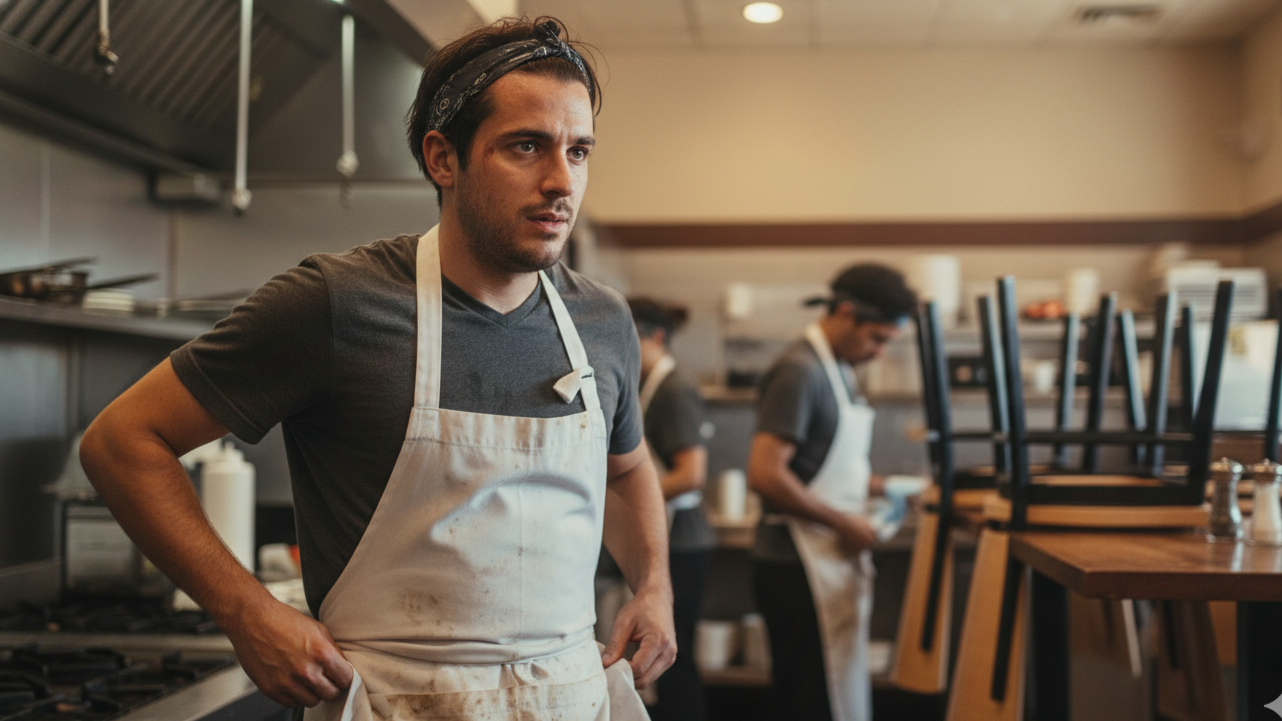

If you’ve ever spent weeks training a solid team member, only to see their resignation message pop up before the quarter ends, you’re not alone. Restaurants continue to be faced with one of the highest attrition rates in all industries in 2026, and by this time, it is no longer merely a hiring problem. It is a profit leak right before our very eyes.
So, what's really going on? What made turnover stay the same instead of the increased wages, signing bonuses, and unlimited job offers? And why is it that some restaurants are slowly developing stable teams, and others continue to re-emerge at the bottom?
This blog deconstructs what is causing the restaurant industry turnover rate in 2026, the expenses that quietly burn the margins, and the red flags most owners have seen too late.
You will also discover how AI-based operations are no longer a nice tech, but something serious to retain. By the close of it, you will be aware of where the turnover starts and how to eventually stop it.
What is the Restaurant Industry Turnover Rate in 2025?
The restaurant industry turnover rate isn’t budging. Even following the years of pay increases, sign-on bonuses, and intensive recruiting, the average turnover is over 75 percent in 2025, and does not really indicate that it will go down. Obviously, money is not the solution to the problem.
A closer examination of the floor is an interesting story. Turnover of front-of-house employees, such as servers, hosts, and bartenders, is at 41 percent per year.
Back-of-house teams do not lag too much behind. Kitchen positions like line cooks and preparation staff have a turnover of about 43 percent, which is due to physically demanding shifts and very low growth prospects.
When separated by restaurant format, the difference is even bigger. The average full-service restaurants fall in the range of 75 to 100 percent of turnover, depending on systems and leadership.
Restaurants that deal with fast food commonly reach the 130 percent mark and turnover a full year. It is a bit better in the case of fast-casual brands, as organized working processes simplify work maintenance.
Will the Restaurant Industry Turnover Rate Remain High in 2026?
Even with the increase in wages and employment hiring tools, the turnover would not reduce as many predicted. These are not limited to compensation.
Wage Pressure and Increasing Labor Cost
Salaries have been raised in most areas, but an increase in wages has not corrected retention. Increases in minimum wage, complexity of compliance, and adjustment of tip credit have raised labor costs without any effect on job satisfaction.
Burnout and Long Shift Hours
The manual aspect of restaurant labor has not changed. Hours of work long, nights late, two shifts in one day; weekend-centered work schedules are still the norm. Tolerance is what has been modified. Recovery time and routine are more important to younger workers than to their predecessors. Burnout is quickly experienced, and escapes are soon thereafter experienced when schedules are hectic.
Operational Chaos
This is where the bulk of the turnover silently starts. Paperwork, incompatible systems, and old-fashioned POS interfaces cause friction on a daily basis. New recruits are overworked when they are supposed to memorize modifiers, work with tablets, and process payments on various screens.
Low Career Development Potential
A lot of employees at the restaurant have no vision of moving on. When learning ceases, the motivation declines. Staff members make the job a temporary one since there are no tangible routes of upskilling, cross-training, or stepping up to leadership. The temporary thinking is the source of permanency.
The Real Price of a High Turnover
The turnover does not only have an impact on morale. It quietly erodes profit.
It can cost between 3,500 and 5,000 dollars to hire and train one employee of the restaurant, including onboarding time, pay of the trainer, and lost productivity. Multiply it by the number of exits, and there is an exponential increase in the cost.
The next blow is the loss of productivity. The new employees require weeks before they can attain full speed, adding to the mistakes, service slowness, and additional burden to the elder employees. This is followed by a blow to guest experience. Poor service consistency, errors in making orders, and decreased table turns have a direct effect on repeat visits.
In a restaurant with such thin margins, a 5 percent loss of profit will be the difference between growth and stagnation. High turnover has a ripple effect that the customers experience long before the owners are able to see it on paper.
How to find the Turnover rate of your Restaurant?
You cannot control something you do not quantify. Having the ability to compute turnover correctly will provide a baseline on which to track improvement and identify risks early on. The first step towards correcting your numbers is getting to know them.
Annual turnover formula:
(Number of employees who left ÷ Average number of employees) × 100
Monthly turnover formula:
(Number of employees who left during the month ÷ Average employees that month) × 100
As an illustration, when your restaurant had an average number of 40 employees in the previous year, and 28 of them exited, the restaurant industry turnover rate is 70 percent per annum.
Early Warning Signs Your Restaurant Is at Risk of High Turnover
Infrequently does turnover not have indicators. The signs of danger are revealed in most of the teams weeks before.
An increase in the number of no-shows and last-minute callouts tends to show disengagement. The loss of punctuality speaks of the same. The decline of upselling is typically a sign that the personnel have ceased to invest in the emotional connection with the guest.
Cases of frequent change requests in the schedule may indicate burnout or a lack of balance in workload. System, training, or communication grievances are usually brought up internally first before resignations come up. The last red flag is guest complaints related to staff interaction. Turnover is already in progress at that time.
Early detection of these signs enables the owners to respond in time before exits are filled.
The Best Strategies to Lower Restaurant Turnover in 2026
Incentives and pep talks are not enough to curb the restaurant industry turnover rate in the modern environment. The best approaches are towards eliminating friction in everyday duties and ensuring that staff members are encouraged at all times.
Enhance Ease of Operation using AI-Native Solutions
There is accelerated onboarding and streamlined day-to-day operations in restaurants that are operated using AI-native platforms. Smooth workflow processes save weeks of training in days.
Automated Labor Planning and Future Forecasting
Predictive restaurant scheduling software computes past footfall, seasonal, and regional trends. This eliminates conjecture in the planning of shifts. Equilibrium in the schedules ensures that there is no overwork on the busy days and boredom on the downtime days. When employees feel they are being given their time, the loyalty goes up.
Eliminate Friction in FOH and BOH Processes.
The miscommunication is minimized with the use of self-order kiosks, QR code ordering, and real-time menu updates. There are no interruptions in the flow of orders between the guest and the kitchen. This will ease tension between FOH and BOH teams and make shifts generally easier.
Less Cognitive load using AI training assistants
Introductory videos and live cues are used to educate new employees. Rather than being memorized on the first day, the staff are made secure through performance support. This reduces the time to ramp-up and it reduces early attrition.
Develop a Culture of Recognition.
Analytics under the AI can show the best performers in terms of sales, accuracy, and consistency. Rewards encourage motivation through publicity. Employees who are perceived to stay longer. The recognition does not have to be costly, but rather regular and supported by facts.
The National Restaurant Association says that technology is no longer merely assisting in the labor force, but it is beginning to define it. According to Moutray, AI-based insights, predictive analytics, and intelligence communication tools are transforming the way restaurants recruit, schedule, and serve their staff.
What is more important, these tools are not merely turning managers more productive. They are simplifying work, making it more predictable and transparent, as well as making it less frustrating for the employees. Once people start working, rather than fighting, with the systems, satisfaction increases, and turnover will begin to decline.
The winning restaurants in the talent battle in 2026 and onwards will not be those with the highest payment. They will be those who will make work easier, fairer, and more predictable.
Restaurants Can’t Beat Turnover Without Smarter Systems
The restaurant industry turnover rate will not fix itself, and waiting it out is no longer an option. People don’t leave restaurants because they dislike hospitality. They leave because daily work feels harder than it needs to be. Stress piles up. Systems slow them down. Burnout sets in. Wages help, but they don’t solve chaos.
This is where NOVA changes the equation. NOVA is built to remove friction at every step of restaurant operations, from faster onboarding and intuitive workflows to real-time support that helps teams perform with confidence. When staff aren’t fighting systems, they show up better. When work feels structured and fair, people stay longer. And when teams stay, guest experience and margins improve naturally.
If your goal is to reduce turnover, protect profitability, and build a team that grows with your restaurant, smarter systems are non-negotiable. NOVA isn’t just an operations platform. It’s a retention strategy.
See how NOVA helps restaurants keep great people and build stronger teams.