25 Fast Food Restaurant Ideas for 2026: Innovative Concepts to Attract Customers & Boost Profits

Fast food isn’t fighting for your wallet anymore. It’s fighting for a spot in your routine.
Price and speed still matter, sure. But they’re not the whole story now. With the QSR market expected to grow at a steady 3.74% CAGR between 2025 and 2033, off a 2024 base of roughly $248.8 billion, something else is clearly driving that growth. Not hype. Not novelty. Habit. The brands that win are the ones you don’t debate with yourself about. You’re hungry, your brain is tired, and your hands already know what to tap. That’s the real advantage.
Speed used to be the flex. In 2026, it’s just table stakes. Customers expect ordering to feel almost boring in the best way. Menus that make sense at a glance. The second a restaurant makes someone pause too long or squint at a menu, it’s over. People don’t get annoyed; they just drift elsewhere. But when a brand feels easy, like it already gets you, people return without making a decision.
This blog breaks down 25 fast food restaurant trends and concepts built for this shift. Not shiny ideas that look good in a pitch deck, but ones that hold up on a busy Tuesday night. Concepts that balance what customers crave with what operators can actually run, and where technology supports growth instead of creating new headaches.
When AI Replaces Guesswork at the Counter
Technology is no longer behind the scenes. It now shapes how customers order, decide, and return. The smartest fast food brands use AI quietly, without making the experience feel technical. These concepts focus on reducing friction while increasing order value and speed.
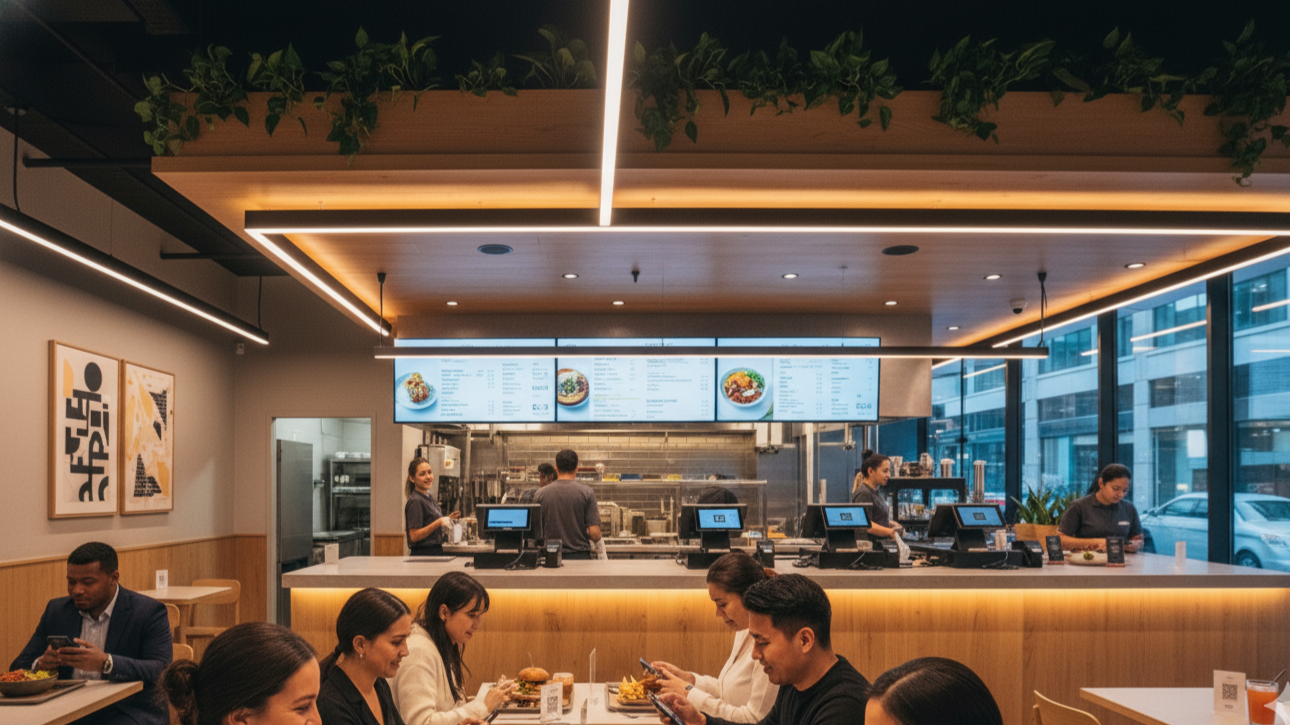
Smart Kiosk-First Fast Food Outlet
This model removes the traditional cashier and shifts ordering entirely to smart kiosks. Staff focus on preparation and fulfillment instead of handling queues. The result is faster throughput with fewer operational bottlenecks.
Sample menu: Classic chicken burger, spicy paneer wrap, loaded fries, iced latte, and chocolate brownie.
Why this works: Customers spend more time browsing when they are not rushed by a line behind them.
Kiosks consistently increase average order value through visual prompts and upsells.
How to stand out: Use AI-driven suggestions that change by time of day and customer behavior. Connect kiosks to a POS like NOVA so prep timing, inventory, and upsells stay perfectly aligned.
Vision AI Drive Through That Knows You Before You Speak
This is one of the fast food restaurant trends that upgrades the drive-thru into a personalized experience. Vision AI identifies repeat vehicles and links them to order history. The interaction feels smooth, familiar, and fast.
Sample menu: Breakfast burritos, hash brown bites, crispy chicken sandwiches, cold brew coffee.
Why this works: Recognition builds emotional loyalty without relying on apps or cards. Faster ordering reduces congestion and increases peak-hour capacity.
How to stand out: Display personalized prompts like “Your usual is ready in 90 seconds.” Trigger predictive kitchen prep through POS integrations to cut idle time.
Data Driven Build-Your-Own Bowls Without the Chaos
Customization attracts customers but overwhelms kitchens if unmanaged. This concept uses data to guide choices without limiting freedom. The balance keeps both customers and staff happy.
Sample menu: Grain bowls, salad wraps, grilled proteins, signature sauces.
Why this works: AI-guided suggestions reduce decision fatigue for customers. Predictable ingredient demand lowers waste and improves food cost control.
How to stand out: Show live “most ordered today” combinations on digital menus. Use POS data to retire low-performing ingredients quickly.
Menus That Travel the World in Under Five Minutes
Fast food restaurant trends like global flavors now influence everyday eating habits. Customers crave variety without committing to long dining experiences. These concepts bring excitement without slowing service.
Global Street Food Served at Express Speed
This format packages international street food into fast, repeatable builds. Prep remains standardized while flavors feel adventurous. Customers feel like they are exploring without waiting.
Sample menu: Tikka rolls, bao buns, birria tacos, and Korean fried chicken bowls.
Why this works: World flavors create perceived premium value at accessible pricing. Limited builds keep prep times short and predictable.
How to stand out: Rotate featured cuisines quarterly and promote them as limited runs. Track repeat orders per dish through POS insights before locking menus.
Protein-Forward Fast Food for the Fitness-First Crowd
Health-focused customers still want convenience. This concept removes guilt from fast food decisions. Routine meals drive habitual visits.
Sample menu: Grilled chicken boxes, paneer power bowls, egg white wraps, protein smoothies.
Why this works: High-protein meals justify higher ticket sizes. Fitness customers return frequently and build routines around brands.
How to stand out: Display macros clearly on digital menus and kiosks. Allow portion adjustments that sync automatically with pricing via POS.
Plant-Forward Without the Preachy Vibe
Plant-based food fast food restaurant trends succeed when they feel indulgent. This concept leads with taste, not messaging. Sustainability becomes a quiet benefit.
Sample menu: Plant burgers, jackfruit tacos, lentil nuggets, oat milk shakes.
Why this works: Plant ingredients often reduce raw material costs. Flexitarian demand continues to grow across age groups.
How to stand out: Focus marketing on texture, crunch, and sauces. Use POS data to highlight plant items that convert best.
Allergy-Safe Kitchens That Families Rely On
For many families, eating out feels risky. This concept removes uncertainty completely. Trust becomes the strongest marketing channel.
Sample menu: Gluten-free pizzas, dairy-free desserts, nut-free snack boxes.
Why this works: Parents prioritize safety over price and distance. Word-of-mouth referrals grow faster in this niche.
How to stand out: Use POS-enforced allergen rules that block unsafe combinations. Display certifications and prep protocols visibly in-store.
Operations That Quietly Protect Your Margins
Efficiency compounds over time. Small operational wins turn into large financial advantages. These ideas reduce stress while improving profitability.
Pickup-Only Stores That Eliminate Waiting
Fast food restaurant trends like such remove dine-in complexity entirely. Orders flow directly from digital to kitchen. Throughput increases without expanding space.
Sample menu: Burgers, wraps, rice bowls, beverages.
Why this works: Lower rent and staffing costs improve margins quickly. Customers value predictable pickup times.
How to stand out: Install smart lockers with live ETAs. Sync kitchen pacing with POS order volume.
Micro Kitchens Designed for High-Rent Cities
Smaller footprints force better discipline. Every square foot must earn revenue. This model scales well in dense markets.
Sample menu: Grilled chicken bowl, spicy tofu bowl, sesame veggie bowl.
Why this works: Lower fixed costs reduce financial risk. Tighter menus simplify training and execution.
How to stand out: Map kitchen workflows directly inside your POS. Track prep time per item and optimize weekly.
Subscription Fast Food That Feels Like a Smart Hack
Subscriptions turn visits into habits. Revenue becomes predictable instead of seasonal. Customers feel like they are beating the system.
Sample menu: Daily lunch bowls, rotating dinner plates.
Why this works: Recurring revenue stabilizes cash flow. Subscribers visit more frequently than walk-ins.
How to stand out: Allow easy pauses and swaps. Use POS data to personalize weekly menus.
Experiences Built for Sharing, Not Just Eating
Modern fast food is also content. Design choices influence social sharing. Virality reduces marketing spend.
Futuristic Cafés That Sell Content Along With Coffee
This concept is built for social feeds. Visual drama attracts first-time visitors. Tech becomes part of the brand story.
Sample menu: Neon drinks, metallic burgers, glow desserts.
Why this works: Social sharing acts as free advertising. Experience-led brands command premium pricing.
How to stand out: Sync visuals, kiosks, and POS storytelling. Refresh visuals quarterly to stay relevant.
TikTok Menus That Change Faster Than Trends
Trends fade quickly. This model is built to move fast. Menus rotate before fatigue sets in.
Sample menu: Smash burgers, croissant cubes, viral desserts.
Why this works: Scarcity increases urgency. Frequent changes drive repeat visits.
How to stand out: Review sales weekly through dashboards. Kill underperformers fast without emotional attachment.
Retro Diners That Deliver Comfort at Modern Speed
Nostalgia lowers resistance. Customers know what they want instantly. Speed completes the experience.
Sample menu: Milkshakes, grilled cheese, fries, pancakes.
Why this works: Familiar food reduces decision time. Comfort foods drive emotional loyalty.
How to stand out: Guarantee sub-five-minute service times. Design prep flows around that promise.
Budget-Friendly Models That Scale Without Stress
Not every brand needs heavy capital. Smart simplicity often scales faster. These ideas lower risk while staying profitable.
Five-Dollar Meal Concepts That Thrive on Volume
Such fast-food restaurant trends limit choice and create speed. Speed creates volume. Volume protects margins.
Sample menu: Burger, side, drink combo.
Why this works: Low complexity reduces errors. High volume compensates for thinner margins.
How to stand out: Rotate sauces and sides weekly. Use POS insights to fine-tune pricing.
Food Trucks That Operate Like Scalable Brands
Mobility meets systemization. Trucks act as moving billboards. Operations stay centralized.
Sample menu: Burgers, ramen bowls, loaded fries.
Why this works: Lower startup costs reduce risk. Flexible locations follow demand.
How to stand out: Manage inventory and sales via cloud POS. Track route profitability weekly.
Dessert Bars Built for Impulse Decisions
Desserts sell fast and often. Decision time is minimal. Margins stay strong.
Sample menu: Waffles, soft serve, donuts.
Why this works: Quick assembly increases throughput. Add-ons significantly raise ticket value.
How to stand out: Launch seasonal toppings aggressively. Bundle desserts with loyalty rewards.
Tech That Improves Experience Without Feeling Like Tech
Customers feel technology before they notice it. The best systems fade into the background. Experience improves without friction.
The Five-Minute Promise Restaurant
Everything on the menu is designed to hit the table in under five minutes. Prep is standardized, cook times are predictable, and anything that risks slowing the line quietly steps aside during peak hours. Customers don’t feel rushed. They feel respected.
Sample menu: Grilled chicken sandwich, crispy fish sandwich, veggie smash wrap, loaded fries, house slaw, and fountain drinks.
Why this works: Clear time expectations reduce anxiety. Known waits feel shorter. Fast doesn’t feel chaotic; it feels dependable.
How to stand out: Engineer prep times first, recipes second. Auto-hide slower items during rush periods using POS rules.
The No-Menu Restaurant
Guests never see a full menu. At any moment, only 5-6 items are available. The selection changes based on time of day, weather, and what’s moving fastest in the kitchen. It feels intentional, not restrictive.
Sample menu: Morning: egg sandwich, breakfast burrito, hash bowl.
Why this works: Fewer choices mean faster decisions. Relevance increases conversion. The kitchen runs cleaner, and waste drops.
How to stand out: Rotate menus automatically based on demand signals and conditions. Let data curate without explaining itself.
The Familiar Stranger Café
New guests are gently guided. Regulars glide through. The experience adapts quietly based on visit history, without labels or callouts. Nobody feels watched. Everyone feels understood.
Sample menu: Core drinks and plates stay constant, with default customizations remembered for regulars and suggested pairings for first-timers.
Why this works: First visits feel welcoming. Repeat visits feel effortless. Personalization builds loyalty without shouting about it.
How to stand out: Use POS data to set smart defaults and speed paths for returning customers, while keeping the surface experience warm and human.
Sustainability That Also Saves Real Money
Sustainability is not one of the fast food restaurant trends. In 2026, it is quite necessary. These ideas reduce costs first. Brand value follows naturally.
Zero-Waste Kitchens Powered by Smarter Planning
Waste hides in poor forecasting. Data fixes that. Margins improve quietly.
Sample menu: Cross-utilized ingredients.
Why this works: Food costs drop consistently. Younger customers respect responsible brands.
How to stand out: Use POS forecasting daily. Track waste per item weekly.
Refillable Beverage Stations That Cut Costs
Packaging costs add up. Refills reduce them. Customers appreciate the value.
Sample menu: Iced teas, lemonades, sodas.
Why this works: Lower consumables improve margins. Service speed increases.
How to stand out: Gamify refills through loyalty perks. Show sustainability stats in-store.
Solar-Powered Outlets That Lower Utility Bills
Energy is a long-term cost. Solar reduces exposure. Branding becomes future-ready.
Sample menu: Works across all formats.
Why this works: Utility bills drop over time. Eco branding improves perception.
How to stand out: Display live energy savings digitally. Tie savings to community impact stories.
Radical Restaurant Formats for 2026
The “Mood-Locked” Meal
You don’t choose dishes. You choose how you want to feel.
Menu options:
- Calm Mode: warm grain bowl, slow-roasted protein, mild sauce
- Focus Mode: high-protein wrap, crunchy veg, citrus-forward dressing
- Comfort Mode: crispy main, creamy side, nostalgic flavor hit
Why this hasn’t been done right yet: Menus are built around food categories. This one is built around mental states. It removes decision fatigue and matches how people think in 2026.
The Time-Boxed Plate
Every item is designed for a specific eating window.
Menu options:
- 5-Minute Plate: handheld, zero mess, no sides
- 12-Minute Plate: balanced meal with one hot side
- 20-Minute Plate: sit-down comfort meal
Why this is new: Menus rarely respect time as a constraint. This treats time like a first-class ingredient and lets customers order around their schedule.
The Memory Remix Menu
Familiar flavors from childhood, rebuilt with modern formats and clean execution.
Menu options:
- “After-School Snack” Box: upgraded fries, spiced dip, mini sandwich
- “Sunday Lunch” Plate: slow-cooked main, simple carb, comfort gravy
- “Festival Bite” Wrap: bold spices, handheld, zero cutlery
Why this works for 2026: People crave emotional familiarity without fast-food guilt. This taps nostalgia without feeling dated or ironic.
Fast Food Winners in 2026 Will Think Like Tech Companies
Great food and fast food restaurant industry trends attract attention once. Great systems create repeat behavior. That is where profit lives.
The most successful fast food brands in 2026 will not operate like restaurants alone. They will think like tech companies that happen to serve food. AI-native restaurant POS systems, smart self-ordering kiosks, predictive ordering, loyalty engines, and drive-thru optimization will define who scales smoothly and who struggles.
Platforms like NOVA connect ordering, kitchen flow, real-time analytics, kiosks, loyalty, and drive-thru operations into one intelligent system. When operations run intelligently, growth stops feeling risky and starts feeling inevitable.
If you build for speed, insight, and experience together, profitability follows naturally. Connect with NOVA to simplify your restaurant operations and unlock smarter growth in 2026.