What Is Restaurant Branding? Guide to Building a Memorable and Profitable Restaurant Brand

What is restaurant branding? Many restaurant owners assume branding is simply a logo, attractive interiors, or a catchy restaurant name. In reality, restaurant branding is far more powerful and commercially important. It is the complete perception customers form about your business before they visit, while they dine, and long after they leave.
In today’s market, guests have more dining choices than ever before. In most urban areas, a customer can compare dozens of restaurants within minutes through search engines, food delivery apps, maps, and social media. That means branding often influences the first decision before food quality gets a chance to speak for itself.
Research consistently shows that customers rely on familiarity, trust, reviews, convenience, and emotional connection when choosing where to eat. A strong restaurant brand helps owners stand out in crowded markets, attract higher-intent customers, reduce dependency on discounts, and build repeat business over time.
Restaurant owners who invest in branding often see benefits such as stronger word-of-mouth, higher average order values, better online ratings, more direct traffic, and easier expansion into additional locations. This guide explains what restaurant branding truly means, why it matters, and how owners can build a brand that grows revenue and long-term loyalty.
What Is Restaurant Branding?
Restaurant branding is the identity, personality, and reputation of your restaurant in the minds of customers. It is not one asset or one campaign. It is the sum of every interaction a guest has with your business. That includes your name, logo, menu style, pricing, interiors, service quality, packaging, social media presence, online reviews, website experience, reservation flow, delivery accuracy, and post-visit communication.
If customers describe your restaurant as premium, authentic, fast, family-friendly, exciting, healthy, reliable, or trendy, that is branding at work. If they describe it as inconsistent, overpriced, forgettable, slow, or generic, that is also branding. Your brand is shaped whether you actively manage it or not. The difference is that intentional brands create growth, while unmanaged brands leave perception to chance.
Why Restaurant Branding Matters More Than Ever
Customers Make Faster Decisions Today
Modern diners often decide where to eat in seconds. They scan photos, ratings, prices, menus, and ambience online before choosing.
Google studies across consumer categories have shown that users rely heavily on quick comparisons, reviews, and brand trust signals during decision-making. In restaurants, that means your online brand presence influences traffic more than many owners realize.
If your brand looks credible, desirable, and relevant, you increase the chances of winning that click or booking.
Repeat Customers Are More Profitable
Industry benchmarks frequently show that returning customers spend more over time and are cheaper to retain than acquiring new ones through paid channels.
A memorable brand improves repeat behavior because customers remember the experience, trust consistency, and feel emotionally connected.
Strong Brands Reduce Price Sensitivity
When customers perceive stronger value, they compare less on price alone. This is why two restaurants selling similar menu items can command very different pricing based on brand perception.
A recognizable neighborhood café can charge premium pricing because guests buy atmosphere, reliability, and identity in addition to coffee.
Discovery Is Digital First
Many restaurants now receive first impressions through:
- Google Business listings
- Instagram and short-form video
- Delivery platforms
- Review sites
- Maps
- Websites
- Influencer mentions
That means branding starts before guests enter the restaurant.
The Business Value of Restaurant Branding
Owners should view branding as a growth investment, not a design expense.
A strong brand can improve:
Higher Footfall Conversion
If 1,000 people discover your restaurant monthly online, branding determines how many actually book, visit, or order. Even a modest increase from 3 percent conversion to 5 percent means 66 percent more customers from the same visibility.
Higher Average Ticket Size
Premium, trusted brands often increase add-ons, desserts, beverages, and premium item selection.
Better Marketing Efficiency
Restaurants with a clear brand identity usually perform better in paid ads because customers recognize and trust them faster.
More Direct Orders
Customers search directly for brands they know, reducing commissions paid to third-party marketplaces.
Easier Multi-Unit Expansion
A strong brand system makes it easier to replicate customer expectations across new outlets.
The Core Components of Restaurant Branding
1. Brand Positioning
Brand positioning answers one question: why should customers choose you over alternatives nearby?
Examples include:
- Fast premium lunches for office professionals
- Authentic regional cuisine with family dining comfort
- Late-night burger destination for young adults
- Healthy bowls for urban professionals
- Fine dining celebration venue
Restaurants that position clearly grow faster than restaurants trying to be everything to everyone.
If your positioning is simply “good food and service,” it is too generic to win attention.
2. Brand Story
Stories create emotional memory. Customers often remember founder journeys, heritage recipes, sustainability values, community roots, or culinary passion more than generic promotions.
If your grandmother’s recipes inspired the menu, tell that story. If you source locally, explain why. If your concept solves rushed urban dining, own that mission. The story gives meaning beyond the meal.
3. Visual Identity
Visual branding includes:
- Name
- Logo
- Color palette
- Typography
- Photography style
- Packaging design
- Staff uniforms
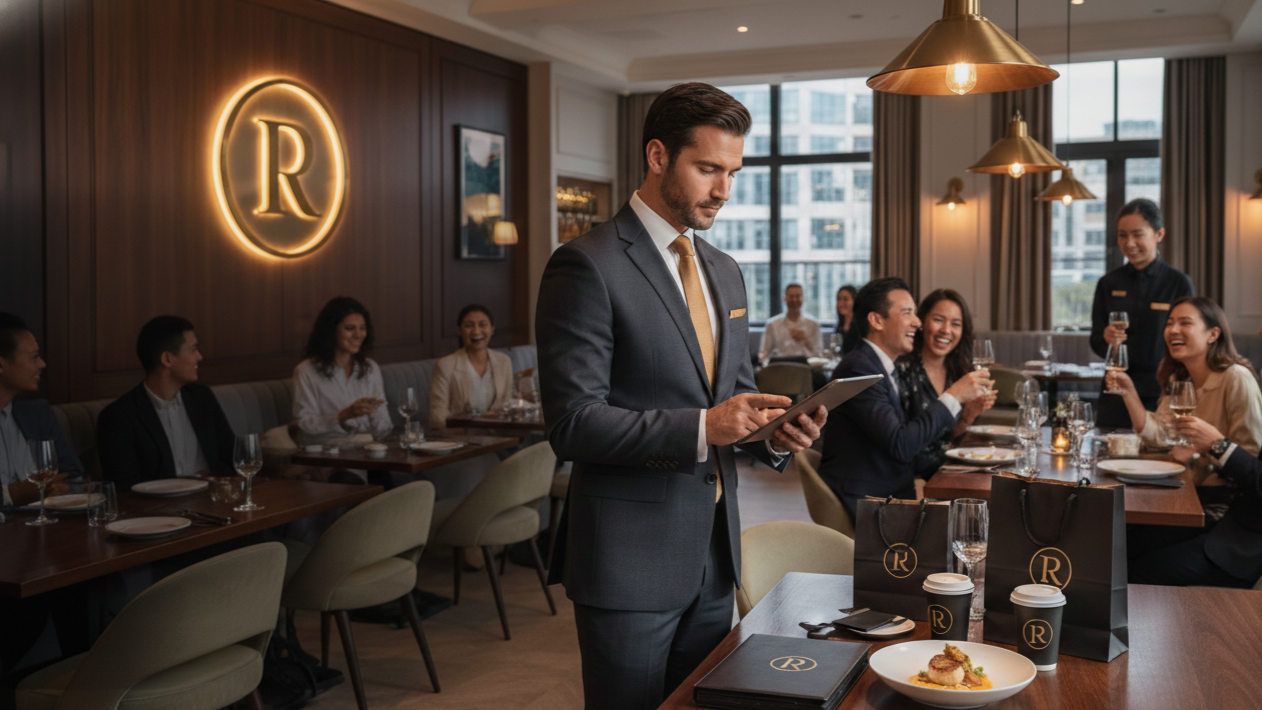
- Interior atmosphere
- Signage
Consistency matters more than complexity. A simple, recognizable identity repeated everywhere outperforms random design changes.
4. Service Experience
Hospitality is branding in motion. Research in customer experience repeatedly shows that service interactions strongly shape loyalty and reviews. Guests may forgive minor delays, but they remember indifference.
Service branding includes:
- Greeting warmth
- Seating flow
- Speed of service
- Staff confidence
- Problem resolution
- Billing experience
- Farewell interaction
A restaurant promising premium hospitality must deliver premium service behavior.
5. Menu Branding
Your menu is both a sales tool and a branding tool. Menus influence perception through:
- Item naming
- Price anchoring
- Signature dishes
- Layout psychology
- Visual hierarchy
- Storytelling
- Dietary clarity
Restaurants that engineer menus strategically often increase profitability by steering guests toward high-margin and signature items.
6. Digital Branding
Your website and digital presence now function like a second storefront. Critical digital branding assets include:
- Mobile-friendly website
- Easy reservations
- Updated business hours
- Accurate menus
- Professional food photography
- Review management
- Social media consistency
- Fast online ordering
This is where platforms like NOVA Platform can help restaurant owners connect branding with restaurant POS, operations, ordering, guest data, and modern growth systems.
How to Build Restaurant Branding Step by Step
Step 1: Know Your Audience with Real Data
Use restaurant POS and guest data to identify:
- Peak traffic hours
- Most profitable menu items
- High repeat customer segments
- Average party size
- Delivery vs dine-in demand
- Seasonal patterns
- Price sensitivity trends
Branding should align with customer reality, not assumptions. For example, if weekday lunch drives 45 percent of revenue, your brand messaging should support speed and reliability for working professionals.
Must Read: The 2026 Guide for Restaurant Customer Relationship Management
Step 2: Audit Competitors
Study nearby competitors on:
- Ratings
- Review volume
- Menu price points
- Social engagement
- Delivery positioning
- Visual identity
- Ambience themes
Look for whitespace. If competitors focus heavily on discounts, a quality-first trusted brand may stand out. If everyone looks formal, approachable casual dining may win.
Step 3: Create a Clear Brand Promise
Complete this sentence:
When guests choose us, they can always expect...
Examples:
- Fresh meals served in under 15 minutes
- Authentic flavors with warm family hospitality
- Premium dining worth celebrating
- Affordable comfort food done consistently well
A brand promise creates internal alignment.
Step 4: Build Signature Moments
Memorable moments generate reviews and referrals.
Examples:
- Welcome drink
- Birthday rituals
- Chef greetings
- Branded takeaway note
- Live dessert finishing
- Kids' engagement moments
Small moments often create a large word-of-mouth impact.
Step 5: Standardize Across Every Touchpoint
Customers should feel the same brand whether they:
- Visit in person
- Order online
- Browse Instagram
- Call for a reservation
- Read reviews
- Receive delivery packaging
Consistency builds trust.
Data Points Restaurant Owners Should Track
Branding should be measurable. Monitor these metrics monthly:
Repeat Visit Rate
How many customers return within 30, 60, or 90 days?
Average Rating Score
4.4 vs 4.1 can significantly impact click-through and trust.
Review Volume Growth
Steady review growth signals healthy customer engagement.
Average Order Value
A strong premium brand can increase spend.
Direct Traffic
Branded searches and direct website visits indicate awareness.
Customer Acquisition Cost
If branding improves word of mouth, acquisition cost often declines.
Social Mentions and Shares
Signals emotional resonance.
Table Turn Time with Satisfaction
Operational efficiency without hurting experience supports brand trust.
Common Branding Mistakes Restaurant Owners Make
Trying to Please Everyone
Broad positioning creates weak memory.
Inconsistent Experience
Great food one day, poor service the next damages trust quickly.
Overusing Discounts
Heavy discounting trains customers to wait for deals rather than value your brand.
Neglecting Reviews
Many diners read reviews before visiting. Silence can cost traffic.
Weak Technology Experience
Slow billing, confusing menus, unavailable items, or order errors hurt perception immediately.
Modern systems like NOVA Platform help reduce friction through faster POS workflows, menu control, reporting, and smoother guest journeys.
Restaurant Branding Trends for the Next Few Years
Forward-looking owners are focusing on:
- AI-powered guest personalization
- Loyalty ecosystems
- Hyperlocal community branding
- Sustainability storytelling
- Social-first menu launches
- Data-backed menu optimization
- Seamless dine-in and digital journeys
- Reputation management automation
Branding is becoming more measurable, personalized, and tech-enabled.
Practical 30-Day Branding Plan for Owners
Week 1
Audit Google listing, reviews, menu photos, website, and social channels.
Week 2
Define positioning, audience, and brand promise.
Week 3
Improve one signature guest experience moment and train staff.
Week 4
Use POS data to identify top customers, top items, and retention opportunities.
Then repeat monthly.
Conclusion
So, what is restaurant branding? It is the reason customers notice you, trust you, recommend you, and return to you. It is not just design. It is perception backed by consistent execution.
For restaurant owners, branding can increase loyalty, pricing power, direct demand, and long-term enterprise value. In crowded markets, food quality alone is no longer enough. Great food must be paired with a memorable brand and reliable experience. When combined with operational tools like the NOVA Platform, branding becomes more than creative expression. It becomes a measurable growth engine.
Restaurants that actively build brands today are the ones customers remember tomorrow.