
Growth in the quick-service restaurant (QSR) industry is at an unprecedented pace. In 2024, the global QSR market was at USD 971.36 billion and is projected to reach USD 1,930.14 billion by 2032. Clearly, this is extraordinary growth - due to extraordinary and intentional consumer demand for speed, convenience, and reliability - QSRs provide all three.
So, the question becomes: Do restaurant operators actually know what is a QSR and why this model is becoming more critical in 2026? And, most importantly, what opportunity exists for you?
In this blog, you will read a succinct overview of what a QSR really is, why the QSR format is booming, how QSR is different from other formats, and what restaurant operators should be thinking about leveraging the opportunity. When you are done reading this blog, you will be more informed about how you can fit QSR into your own thought process and your own strategic plan for 2026.
What is a QSR? A Clear Definition for All Operators
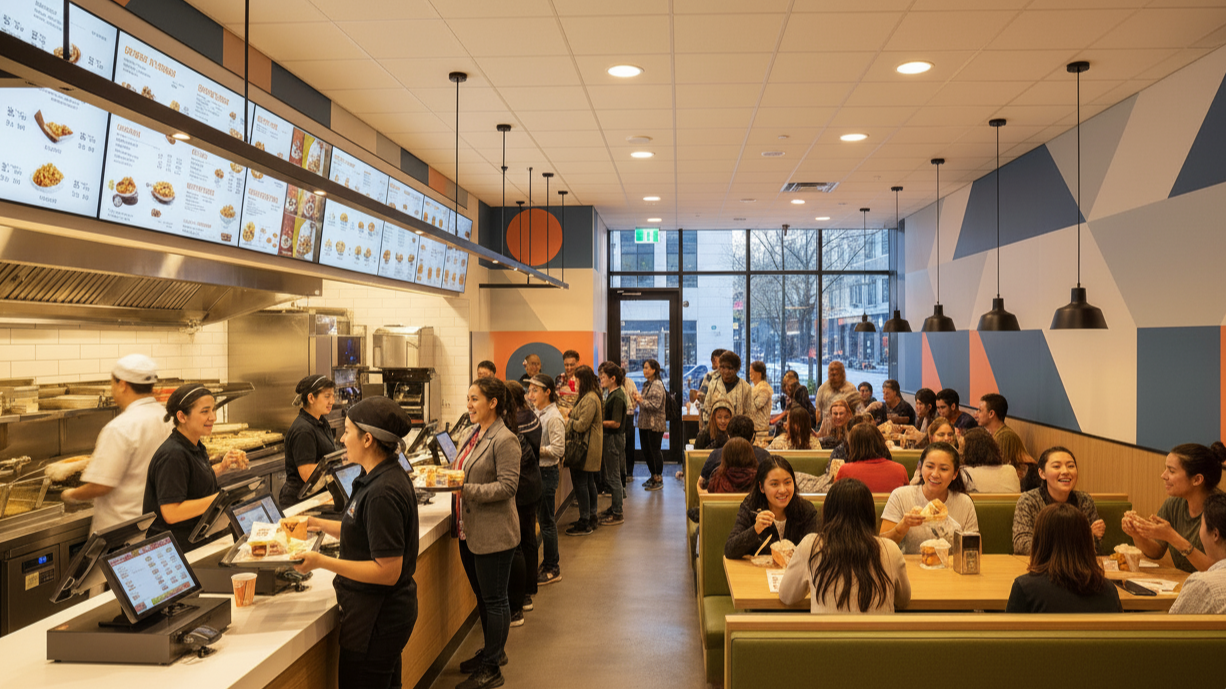
A Quick Service Restaurant (QSR) is a restaurant type that focuses on speed of service, simplified menus, volume of orders, and efficiency of operation. They are designed to serve as many customers as fast as they can while keeping costs predictable and low.
Here are the core traits that define a QSR:
1. Speed of Service
Everything in a QSR is built around time. Guests expect that they will have their food prepared and handed to them within minutes. This influences the design of kitchens, food prep, and workflow, what the roles are for staff, and what type of equipment is used.
2. Limited Menu or Focused Offering
QSRs do not try to be all things to all people. They have a narrow list of items that they know how to prepare very quickly and very consistently. They are designed to minimize costs and operational chaos with a limited menu.
3. Cost Structure and Volume of Sales
Because the menu is simple, kitchens can operate with fewer kitchen employees, less complicated equipment, and a smaller footprint. QSR money comes from the volume of sales.
4. Pick Up and Delivery or Drive-Through Focused
The trend in modern times has moved to have the guest pick up their food or have it delivered, rather than eat in the restaurant. Even some QSRs that have dining space have no dine-in or use it minimally.
5. Cloud Kitchen Compatibility
QSRs are a perfect candidate for expanding into delivery-focused models for cloud kitchens. The menus and workflow are more aligned to the speed of service needed for QSRs.
6. Customer Satisfaction Remains a Key Priority
Recent data shows 82% of customers are satisfied with QSR experiences. But there’s a catch: two-thirds cut spending after a single poor experience.
This means QSRs must focus on:
- Fast service
- Error-free orders
- Friendly delivery experience
- Clean packaging
One bad day can lose a loyal customer.
A QSR is the opposite end of the spectrum: fast, affordable, and built for repeatable routines.
Recognizing Real QSR Models: Clear Examples for Restaurant Operators
Many new restaurateurs search for what is a QSR when planning their first outlet. Before choosing the QSR model or refining your current setup, it helps to look at how successful brands structure their operations.
Real-world examples make the concept easier to understand and give restaurant owners a benchmark to measure their own workflows, menus, and service style. With that context, let’s look at the types of QSR models that dominate the US market today.
Established QSR Leaders in the United States
When restaurant operators think of QSRs, the major players immediately come to mind:
- McDonald’s
- Subway
- KFC
- Taco Bell
- Burger King
These brands didn’t reach a global scale through complex menus or elaborate service models. They built empires by mastering speed, consistency, and operational precision, which are at the core of every successful QSR.
Evolving and Category-Specific QSR Concepts in the US
The US market is also seeing rapid growth in niche and category-focused QSR brands, especially in:
- Chicken-focused concepts
- Better-for-you bowls
- Mexican-inspired menus
- Regional comfort food chains
- Delivery-first QSR startups
These emerging concepts are gaining traction because they offer focused menus that move fast and travel well, exactly what customers expect in a QSR experience.
QSRs vs Other Formats
Restaurant owners often confuse QSRs with other categories, so here’s the quick breakdown:
- Fast casual: Slower, more premium ingredients, comfortable seating.
- Casual dining: Full service, broader menu, higher prices.
- Fine dining: Multi-course experience, ambience, craftsmanship.
Why These Examples Matter for Restaurant Owners
Looking at familiar brands helps operators recognize the core structure behind the QSR model. Many owners eventually realize one of two things:
- Their existing restaurant already functions like a QSR but lacks the systems to scale, or
- They can easily adapt their concept into a high-throughput format built for today’s market demands.
Every operator must be clear about what is a QSR before choosing their restaurant format.
Why QSRs Hold a Strategic Advantage in 2026
The QSR segment isn’t just growing; it’s shaping how modern restaurants operate. With customer habits shifting and technology accelerating, understanding this model gives restaurant owners a competitive edge in planning for the future.
1. Convenience Culture Is Growing
Customers want good food fast. They prefer quick meals between meetings, errands, and commutes. QSRs fit seamlessly into this lifestyle.
2. Urban Living Drives High Demand
Cities are getting denser. Homes are smaller, days are busier, and on-the-go eating is becoming the norm. QSRs naturally meet this demand.
3. Delivery and Takeaway Are Now a Habit
Even after the pandemic, delivery and pickup remain standard choices. QSR menus are designed to travel well, making them strong performers on third-party apps.
4. Tech Is Transforming QSR Operations
Digital innovation is optimizing speed, accuracy, and margins through:
- Touchscreen self-ordering
- AI-enhanced drive-through kiosks
- Predictive prep schedules
- Delivery route optimization
- Virtual brands built through Cloud Kitchens
5. A More Accessible Path for New Restaurateurs
Compared to full-service concepts, QSRs offer an easier entry point because they enable:
- Lower upfront investment with smaller spaces and simpler design
- Reduced staffing needs due to streamlined workflows
- Highly repeatable operations that simplify multi-location scaling
- Faster break-even windows thanks to high-volume sales potential
- Easier tech adoption since QSR systems are built around speed and data
This is why first-time restaurateurs, franchise operators, and even seasoned chefs often choose QSRs when planning their next venture.
How the QSR Business Model Works?
A QSR does not achieve its level of success through luck. Every quick order and reliable meal relies on a model designed for fast production, efficiency, and high volume.
Operators who master these nuances will have more clarity around controlling costs, throughput, and profits. Before reviewing specific opportunity levers, it is helpful to understand what is a QSR model at a high level.
1. Cost Structure Designed for Efficiency
A QSR typically has:
- Compact kitchens
- Minimal dine-in area
- Cross-trained staff
- Bulk procurement
- Simple workflows
This means lower operating costs per order.
2. High-Volume Revenue Strategy
QSRs make money through volume, not high menu prices. Here’s how they unlock revenue:
- Faster order fulfillment
- Upsells built into ordering flows
- High repeat visit potential
- Delivery sales on top of walk-ins
3. Key Metrics Every QSR Owner Watches
To keep profits healthy, QSRs track:
- Table turnover (for dine-in)
- Average check value
- Prep time per order
- -Delivery vs dine-in mix
- Food cost percentage
- Labor cost percentage
4. Role of POS & Automation
A modern quick-serve restaurant POS amplifies the performance through:
- Real-time inventory updates
- Speedy order routing
- Auto-reconciliation
- Performance analytics
This cuts operational stress and boosts throughput.
QSR vs Fast Casual vs Casual Dining: What’s Best for You?
As a restaurant owner, the real question is: What kind of experience do you want your customers to have, and what kind of daily operations do you want to manage?
Is your strength speed? Or storytelling? Do you see yourself running a high-volume machine or a sit-down destination?
Let’s break it down so you can choose the format that matches your vision and your lifestyle.
QSR vs Fast Casual
A fast casual brand prioritizes a better ambiance and more premium ingredients. It often has:
- Higher prices
- More dine-in seating
- Wider menu
A QSR is built around speed. If your priority is quick turnover and delivery, QSR wins.
Must Read: Fast Food vs Fast Casual
QSR vs Casual Dining
Casual dining requires:
- More staff
- Larger space
- Complex menu
- Longer customer experience
This format fits owners who value service and ambiance. A QSR fits owners looking for scale and operational simplicity.
Which Format Should You Choose?
Ask yourself:
- What kind of customers do you want?
- What capital do you have?
- How big do you want your brand to become?
- Do you want faster or slower operations?
The right format should match your lifestyle and vision.
The QSR Trends That Will Shape 2026
According to the Startup Financial Projection, leading quick-service restaurant (QSR) businesses can achieve profit margins of 15 percent or more, as long as they are diligent in managing their prime costs of food and labor and operate efficiently.
The QSR industry is not just evolving, but it is evolving rapidly into an era fueled by technology, continued changing customer behavior, and an increase in operational efficiency. Knowing upcoming industry changes will help you develop your practices rather than react to changes.
Here are some of the leading trends to be on the lookout for:
- AI-enabled ordering and predictive kitchen automation
- Ghost kitchens and virtual brands that are scaling
- Personalization in menus and loyalty based on data
- Sustainability and energy-efficient equipment
Must Read: Kiosk Self-order for Quick Serve Restaurants
How Should Restaurant Owners Approach the QSR Model?
If you're a restaurant owner considering entering or adapting to the QSR model, here’s your roadmap.
1. Decide If QSR Fits Your Vision
Ask yourself:
- Do you want a high-volume business?
- Will your menu work well for fast prep?
- Can your location support fast service?
- Are you prepared to lean on technology?
- Do you want to keep capital requirements low?
If the answer is yes, QSR is a strong option.
2. Evaluate Your Location
Good QSR locations include:
- Offices
- Colleges
- Malls
- Transit hubs
- High footfall streets
- High-density residential areas
3. Design a Menu Built for Speed
Use:
- Items that cook quickly
- Items that hold well
- Items that are consistent across staff
- Ingredients with overlapping use
Menu engineering is half the QSR game.
4. Build the Right Tech Stack (Including a Strong Restaurant Management Software)
A modern all-in-one restaurant management platform like NOVA helps QSRs:
- Track inventory instantly
- Reduce wait times
- Manage online orders
- Run delivery and dine-in sales smoothly
- Maintain accurate reports
- Optimize staff workflows
Without the right POS, QSRs often hit a ceiling.
5. Create Standard Operating Procedures
Consistency builds trust. QSRs should have clear SOPs for:
- Food prep
- Packaging
- Cleaning
- Inventory
- Customer experience
The smoother the system, the faster the service.
6. Scale Smartly
QSRs scale well because the model is repeatable. Once the first outlet runs efficiently, you can expand:
- Multiple outlets
- New neighborhoods
- Virtual brands
- Mall kiosks
- Cloud Kitchens
Supercharging Your QSR’s Growth with NOVA
Operating a QSR in 2026 isn’t simply about the fast service; it’s about tight margins, flawless execution, and scalable systems. NOVA provides you with exactly this.
When utilizing NOVA, you won’t just manage your QSR; you elevate your QSR. You have tools that mitigate mistakes, improve the speed of operations, and most importantly, give you real-time transparency in every corner of your business so you can confidently grow instead of guessing.
So what does NOVA help you win at?
Speed. Faster processing and seamless coordination between the front and back of the house during peak hours.
Accuracy. Fewer order errors, menus automatically sync, and cleaner data across all channels.
Inventory Control. Track in real-time to mitigate over-ordering, waste, and stockouts.
Profitability. Get insights to help your managers cut costs, price better, & lift margins.
Scalability. Systems built to grow with you, new locations, new menus, new volumes.
If you’re building a QSR that wants to lead instead of following, then NOVA is your competitive advantage.
Interested in seeing the difference today? Schedule a quick demo and let NOVA unleash speed and profitability.