.svg)
Outdoor dining has evolved from a nice-to-have into a strategic growth lever for restaurants. What was once seasonal seating is now a core part of the guest experience and a powerful revenue driver when executed well.
Today’s guests actively seek out restaurants with patios. They associate outdoor dining with relaxation, social connection, and premium experiences. For restaurant owners, a well-designed and well-operated patio can result in higher foot traffic, increased check sizes, and stronger brand visibility.
This guide goes beyond design inspiration. It walks restaurant owners through planning, designing, operating, and monetizing a restaurant patio so it becomes a profitable long-term asset rather than just extra seating.
Why Restaurant Patios Matter More Than Ever
Consumer behavior has permanently shifted. Guests increasingly prefer open-air dining, flexible seating options, and visually appealing spaces worth sharing online.
At the same time, patios allow restaurant owners to increase seating capacity without major interior renovations, improve curb appeal and walk-in traffic, drive higher-margin beverage sales, and create differentiated experiences that competitors cannot easily replicate.
In competitive markets, a patio is no longer a bonus. It is a business advantage.
What Defines a Successful Restaurant Patio?
Not all patios perform equally. The most successful restaurant patios balance guest comfort, operational efficiency, brand consistency, and revenue potential.
Guest Comfort Comes First
Guests will not linger or return if they are uncomfortable. Successful patios prioritize ergonomic seating, adequate shade and airflow, temperature control through heaters, fans, or misting systems, and noise management from streets or kitchens.
Comfort directly impacts how long guests stay, and longer stays typically lead to higher spending.
Operational Flow Matters
A visually appealing patio fails if staff cannot serve it efficiently. Owners must consider the distance from kitchen and bar, clear server pathways, visibility of tables from service stations, and ease of clearing and resetting tables.
Brand Alignment
Your patio should feel like an extension of your restaurant, not an afterthought. Casual brands may lean relaxed and social, while upscale restaurants may prioritize elegance and spacing. Consistent colors, materials, and lighting reinforce your identity.
Revenue Readiness
Every patio decision should support faster service, higher sales, or longer guest visits. A patio that looks great but slows operations will underperform.
Restaurant Patio Design and Layout Ideas That Work
Space Planning for Small and Large Patios
Small patios benefit from linear layouts and modular furniture, while large patios can support multiple zones such as dining, bar, and lounge seating. Sidewalk patios should prioritize visibility and pedestrian flow, while courtyard or backyard patios can create immersive dining experiences.
Flexible layouts allow owners to adjust seating for peak hours, events, or weather changes.
Furniture and Materials
Choose durability without sacrificing comfort. Weather-resistant tables and chairs, lightweight furniture for easy reconfiguration, and table sizes optimized for two to four guests help improve table turnover. Oversized furniture often reduces seating density without increasing revenue.
Weather-Proofing for Real Conditions
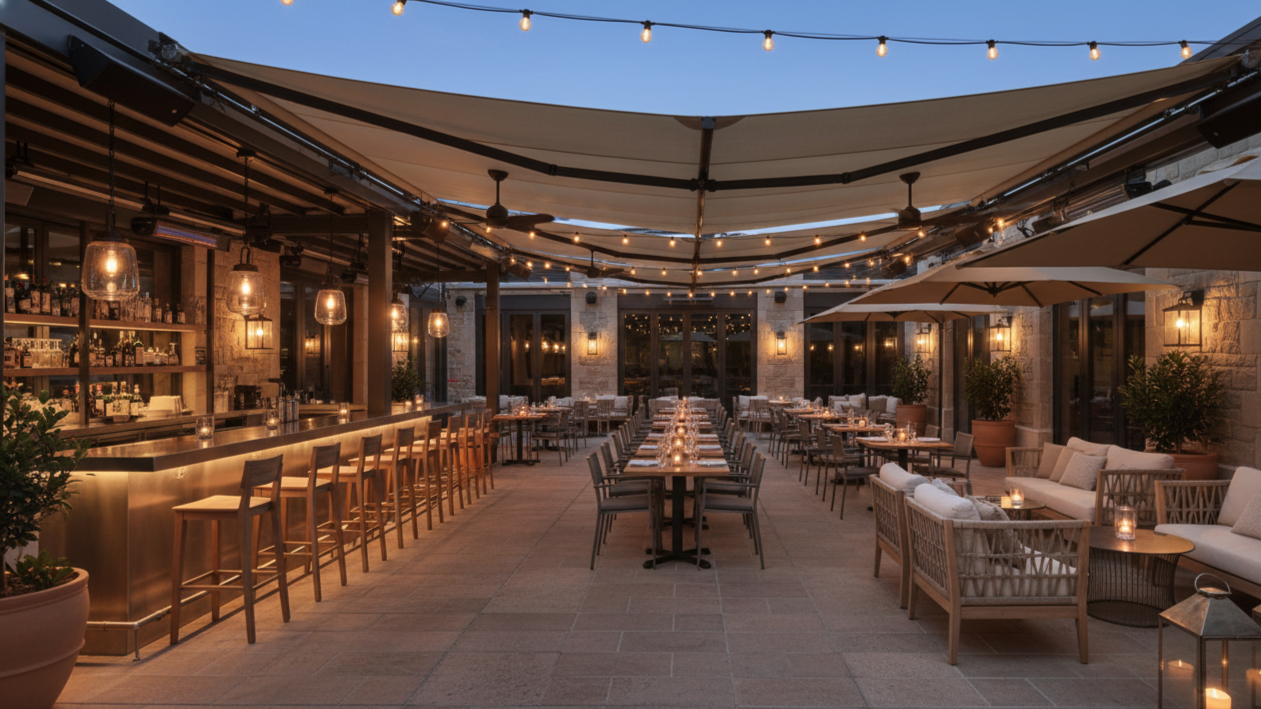
Weather is the biggest variable for patio performance. Planning ahead includes retractable awnings or pergolas, umbrellas for flexible shade, outdoor heaters for colder months, and fans or misting systems for hot climates.
Patios that adapt to weather remain usable and profitable for more months of the year.
Lighting and Ambience
Lighting does more than set the mood. It extends dining hours and influences spending. Soft daylight-friendly setups work well for brunch and lunch, while warm ambient lighting encourages evening dining. String lights, lanterns, and wall sconces create a welcoming atmosphere that invites guests to stay longer.
Designing a Patio Your Staff Can Serve Efficiently
One of the most common mistakes restaurant owners make is designing patios only for guests and not for staff.
Key considerations include POS access for outdoor tables, service stations near patios for drinks and cutlery, clear pathways that avoid guest congestion, and visibility between patio and kitchen teams.
If servers walk farther, service slows. Slower service reduces table turns and guest satisfaction. A smooth patio operation feels relaxed to guests but is carefully engineered behind the scenes.
Menu and Beverage Strategy for Patio Dining
Patio success is not just about seating capacity. It is about what you sell outdoors.
Patio-Friendly Menu Items
Shareable plates, lighter dishes, items that hold up well outdoors, and menus with fewer modifiers help kitchens move faster and reduce friction. Overly complex menus slow service and frustrate guests.
Beverage-First Thinking
Patios are especially strong drivers of beverage sales. Cocktails, mocktails, sangrias, cold brews, lemonades, and iced teas perform well outdoors. Pitchers and shareable drinks increase check sizes and encourage group ordering.
Many restaurants see their highest-margin sales come from patio beverages.
Patio-Exclusive Menus
Happy hour patio menus, weekend brunch outdoors, and seasonal drink specials create a sense of exclusivity. Exclusive offerings drive demand and repeat visits.
Seasonal and Weather Planning for Year-Round Patio Use
Weather unpredictability does not have to mean lost revenue. Smart patio planning includes seasonal staffing adjustments, flexible seating configurations, temporary enclosures during colder months, and menu changes based on temperature and demand.
Clear communication with guests through signage, reservations, or waitlists helps manage expectations and reduce friction. Restaurants that treat patios as year-round assets consistently outperform competitors.
Legal, Safety, and Accessibility Considerations
Patios come with operational responsibility. Ignoring compliance can lead to fines or shutdowns.
Restaurant owners should account for local permits, sidewalk usage rules, fire code clearances, ADA-compliant pathways and table heights, sanitation standards, pest control, waste handling, and appropriate insurance coverage.
A compliant patio protects guests, staff, and the business itself.
How Restaurant Patios Drive Revenue, Loyalty, and Marketing
When executed well, patios influence more than daily sales.
Increased seating capacity without indoor remodeling directly boosts revenue potential. Guests tend to spend more outdoors, particularly on beverages, and longer dwell times often lead to additional orders.
Patios also drive loyalty. Many guests choose restaurants specifically because of outdoor seating. A great patio experience builds emotional attachment and repeat visits.
From a marketing perspective, patios are highly visible assets. Photo-worthy spaces drive organic social sharing, events attract new audiences, and curb appeal increases walk-in traffic.
Using Technology to Run a High-Performing Restaurant Patio
Outdoor dining adds a new layer of operational complexity. Orders travel farther, service areas expand, and coordination between the kitchen, bar, and servers becomes more challenging. Without the right systems in place, patios can quickly turn into bottlenecks instead of revenue drivers.
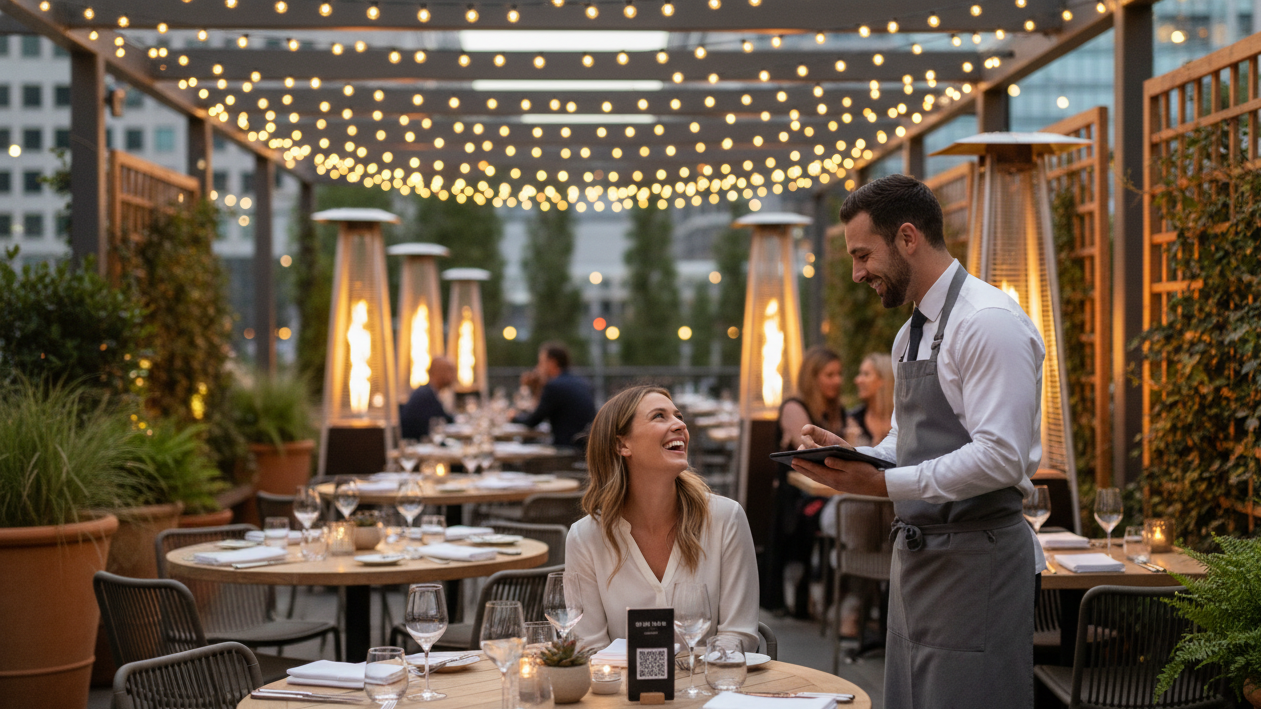
Modern restaurant technology removes this friction by extending core operations seamlessly to outdoor seating areas. Advanced POS systems enable accurate outdoor table mapping, ensuring every patio table is clearly tracked and managed. Tableside ordering through handheld devices allows servers to send orders directly to the kitchen, reducing delays, miscommunication, and repeat trips indoors.
Contactless payments are especially valuable for patios, where guests prefer quick and convenient checkouts without waiting for staff to return with payment terminals. Real-time order tracking helps teams monitor patio orders alongside indoor ones, preventing missed tickets and uneven service levels.
Most importantly, a unified system that manages both indoor and patio operations from a single platform creates consistency. Staff work faster and with more confidence, managers gain clear visibility into performance, and owners can compare sales, order values, and table turnover across indoor and outdoor sections. With the right technology foundation, patios scale smoothly, service stays controlled during peak hours, and outdoor dining becomes a reliable profit center rather than an operational headache.
Common Restaurant Patio Mistakes and How to Avoid Them
Even experienced operators make patio mistakes. Common issues include overcrowding tables, ignoring sun direction and peak heat times, understaffing patio sections, treating patios as overflow seating, and lacking restaurant POS or payment access outdoors.
Avoiding these mistakes protects both guest experience and profitability.
Conclusion: Your Restaurant Patio Is a Long-Term Asset
A restaurant patio is no longer just extra seating. It is a strategic investment.
When designed thoughtfully and operated efficiently, patios increase revenue, strengthen brand identity, build guest loyalty, and differentiate restaurants from competitors.
Owners who treat patios as core business drivers and support them with smart design, strong operations, and modern technology unlock their full potential. With the right approach, your patio can become not just your most popular section, but also your most profitable one.