.svg)
You can figure out how good a restaurant is by simply observing diners, even before you’ve seen the menu. Look at where they pick to sit. When the outside tables are full, people will absolutely wait for one to become available.
There’s a subtle draw to sitting on a patio. It eases you into a slower pace, often without you being aware of it, and you’ll linger over your meal, chat at length, and won’t be in a hurry. Even the same coffee, or the very same meal, feels nicer, a little more of a treat.
It’s about far more than simply having more places to sit; it noticeably alters your feelings. And this change in mood frequently means another drink, another dessert, or just a longer time spent at the restaurant.
Restaurant owners will find this is where it gets truly interesting. It isn’t only about fitting in more tables; it impacts how customers act and how much they spend.
In this blog, we will explain how patios actually boost income, and how to plan and manage one so that it improves both the experience for your customers and your earnings.
What Is Restaurant Patio Seating?
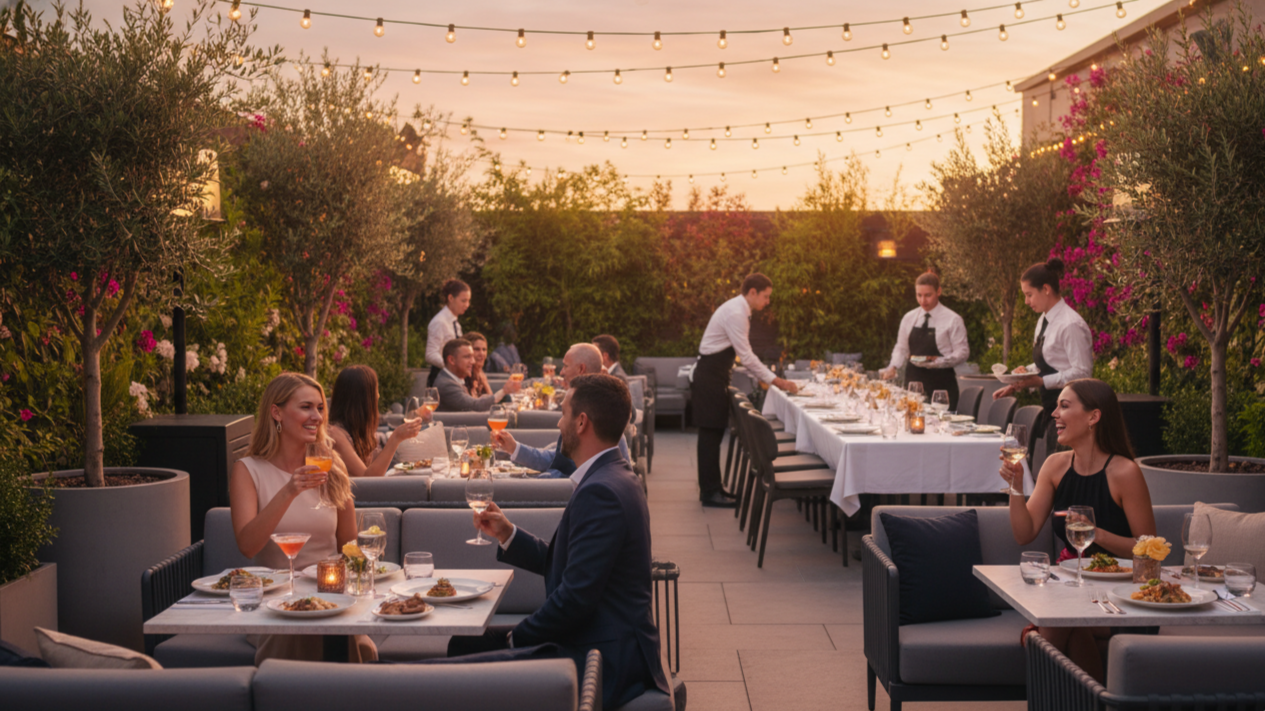
The patio at your restaurant is simply another area at your restaurant outside. The cool thing about a patio is how "just" moving outdoors can change the entire atmosphere. When guests are inside this restaurant, they are much more aware of time, noise, and activity happening around them. When eating or drinking on an outdoor patio, guests relax, lean back in their chairs, observe their surroundings, and take their time reading through the menu.
As an owner/manager, you start to recognize patterns in the way that guests use the patio area. Guests using the patio do not rush to order drinks, order dessert, stay after finishing, etc. Guests on the patio are treated like just "another table".
Therefore, even though a patio adds one more seating area for a restaurant, the outdoor area is actually a very different experience for the restaurant owner and for the guest at the restaurant, and will influence how all parties involved feel, act, and spend money.
Must Read: The Ultimate Restaurant Patio Guide
Advantages of Restaurant Patio Seating for Restaurant Owners
Patio seating is an upgrade that positively impacts multiple facets of your restaurant. From the number of customers you can serve to the revenue earned per table, the value is tremendous.
Most of the benefits that come with patio seating are passive, meaning you do not actively push sales or encourage customers to spend more time at the table. The positive atmosphere of the patio does this for you.
Here's how having patio seating works to your advantage as a restaurant owner:
a. Increased Seating Capacity
Let's begin with the most obvious benefit. Patio seating offers the opportunity to serve more guests with no additional indoor space required. This means:
- Tables can be turned over more frequently during peak rush hours.
- Guest waiting times are reduced.
- The staff can better manage the rush.
From a business standpoint, this leads to a more favorable revenue outcome. There is an even better situation with additional tables during peak hours. Patio seating has psychological benefits as well. It encourages additional demand for seating.
b. Greater Revenue per Square Foot
When compared to indoor expansion, outdoor seating offers a greater return due to the overall setup costs and return opportunity.
Think about it:
- Reduction of heavy costs associated with construction
- Ability to run outdoors-only promotions and seasonal menus
- Drinks and light snacks typically sell better in outdoor settings
Guests sitting outdoors are also more likely to order an extra beverage or stay a bit longer, especially in pleasant weather. That small increase in time and spend adds up quickly across multiple tables.
c. Better Guest Experience
Being outdoors does not just accommodate eating, it provides enjoyment and comfort to your customers, and the open air, the natural light, and the feeling of more space are relaxing and enjoyable.
Additionally, improved customer experience can lead to improved customer loyalty and encourage repeat visits and spending, which is the key to your business's long-term growth.
d. Competitive Differentiation
In outdoor dining spaces with a good design, your business can gain a significant competitive advantage in a crowded market. High-quality outdoor spaces can change how your customers perceive your place and can lead to a high-quality discovery and brand engagement.
It can also lead to high-quality visitation and social interactions. It can cause your restaurant to be the most chosen place in your area when customers look for the best Instagrammable spots.
A high-quality outdoor space can lead to higher-quality Google Maps, Instagram, and other location-based social media engagement.
Types of Restaurant Patio Seating Layouts
Not all patios are created equal. The layout you choose should match your concept, location, and audience.
a. Sidewalk Patio Seating
This is common in urban areas and works especially well for cafés and casual dining spots. The biggest advantage here is visibility. People walking by can see your guests, your food, and your vibe in real time.
This creates a powerful pull effect. When someone sees others enjoying themselves, they’re more likely to walk in.
b. Rooftop Patio Dining
Rooftop patios bring in a premium feel. Whether it’s a skyline view or a sunset setting, rooftops naturally increase perceived value. Guests are willing to spend more because the experience feels special.
These spaces are perfect for evening dining, date nights, and small celebrations.
c. Garden or Courtyard Patios
These are quieter and more intimate. They work well for boutique restaurants or places that want to offer a relaxed, slow dining experience. Guests here are not in a rush. They’re more likely to order multiple courses, desserts, and drinks.
d. Flexible Seasonal Patios
Not every restaurant has a permanent outdoor setup, and that’s okay. Seasonal patios allow you to expand seating during peak months without a long-term investment.
They’re easier to install and can be adjusted based on demand. This flexibility makes them a smart option for many operators.
Designing Restaurant Patio Seating for Maximum Efficiency
Design is where most restaurants either win or struggle. A patio that looks great but functions poorly will hurt your operations. So you need to balance aesthetics with efficiency.
Here are key things to focus on:
- Table spacing and flow
Guests should feel comfortable, but servers should also move easily. Tight layouts slow down service.
- Server movement
Your staff should not have to walk long distances between indoor and outdoor areas. Every extra step adds to service time.
- Shade and weather protection
Umbrellas, canopies, or pergolas are not optional. Comfort directly affects how long guests stay.
- Lighting
Evening dining depends heavily on lighting. Warm, soft lighting creates a welcoming atmosphere.
- Noise control
Outdoor spaces can get noisy. Smart layout and materials can help manage sound levels.
When done right, your patio should feel effortless to guests and efficient for your team.
Operational Challenges of Patio Seating
Running a patio is not as simple as placing tables outside. It introduces new challenges that many restaurants underestimate:
- Managing outdoor tables during rush hours
- Delays in taking orders due to distance
- Slower payment processing
- Miscommunication betweent the kitchen and outdoor staff
These small inefficiencies can quickly turn into lost revenue. For example, if a table waits too long to place an order, you’re not just risking a bad experience; you’re losing potential upsell opportunities. The goal is to make patio service as smooth as indoor service, if not better.
How Technology Helps Manage Restaurant Patio Seating
This is where smart systems come into play. Modern restaurant technology helps bridge the gap between indoor and outdoor operations.
Key tools include:
- Handheld devices for taking orders instantly
- Real-time table management
- Direct communication with the kitchen
- Tableside payment options
- Access to guest and order data
These tools reduce delays and improve accuracy. From a guest’s point of view, the experience feels seamless. From an operator’s point of view, it keeps everything under control, even during peak hours.
Using Data to Optimize Patio Performance
The smartest restaurants don’t treat patios as “extra seating.” They treat them as revenue centers. This means tracking performance and making decisions based on data.
Important metrics include:
- Table turnover rate
- Peak outdoor dining hours
- Average spend per table
- Seasonal trends
Once you understand these patterns, you can make better choices. You can adjust staffing, run targeted promotions, or even redesign your layout based on what’s working best. Data removes guesswork and replaces it with clarity.
How NOVA Helps Restaurants Manage Patio Seating
Managing a patio becomes much easier when your systems are built for it. With NOVA’s AI-native restaurant platform, you can handle both indoor and outdoor operations without friction.
NOVA helps you:
- Track patio tables in real time
- Take orders instantly with handheld POS devices
- Process payments at the table
- Monitor performance through analytics
- Keep service fast and consistent
The biggest advantage is control.
Instead of reacting to chaos during busy hours, you stay ahead of it. Your team works faster, your guests feel taken care of, and your patio actually contributes to your bottom line.
Turn Your Restaurant Patio Into a Revenue-Driven Space
Restaurant patio seating is no longer just about aesthetics or extra space. It’s a serious business opportunity. When you approach it strategically, your patio can:
- Increase your seating capacity
- Improve guest satisfaction
- Drive higher revenue per table
But none of this happens by accident. It comes from the right mix of design, operations, and technology.
With NOVA, you can turn your outdoor space into a fully optimized dining area that runs smoothly and performs consistently.
Because at the end of the day, the goal is simple. Not just to fill tables, but to make every table count.