
Running a restaurant has never been easy. Between rising food costs, labor pressure, delivery commissions, and shrinking margins, operators are constantly looking for smarter ways to protect profitability without compromising the guest experience.
One hidden cost many restaurants underestimate is credit card processing fees. Every card transaction reduces revenue, and over time, those charges can add up to thousands of dollars each year.
That is why more restaurants are exploring dual pricing, a transparent pricing model that offers one price for cash payments and another for card payments. When implemented correctly, dual pricing can help restaurants reduce payment processing costs, improve cash flow, and give guests more payment flexibility.
In this guide, we explain how dual pricing works, its benefits, common challenges, and how the right POS system can make implementation seamless.
What Is Dual Pricing?
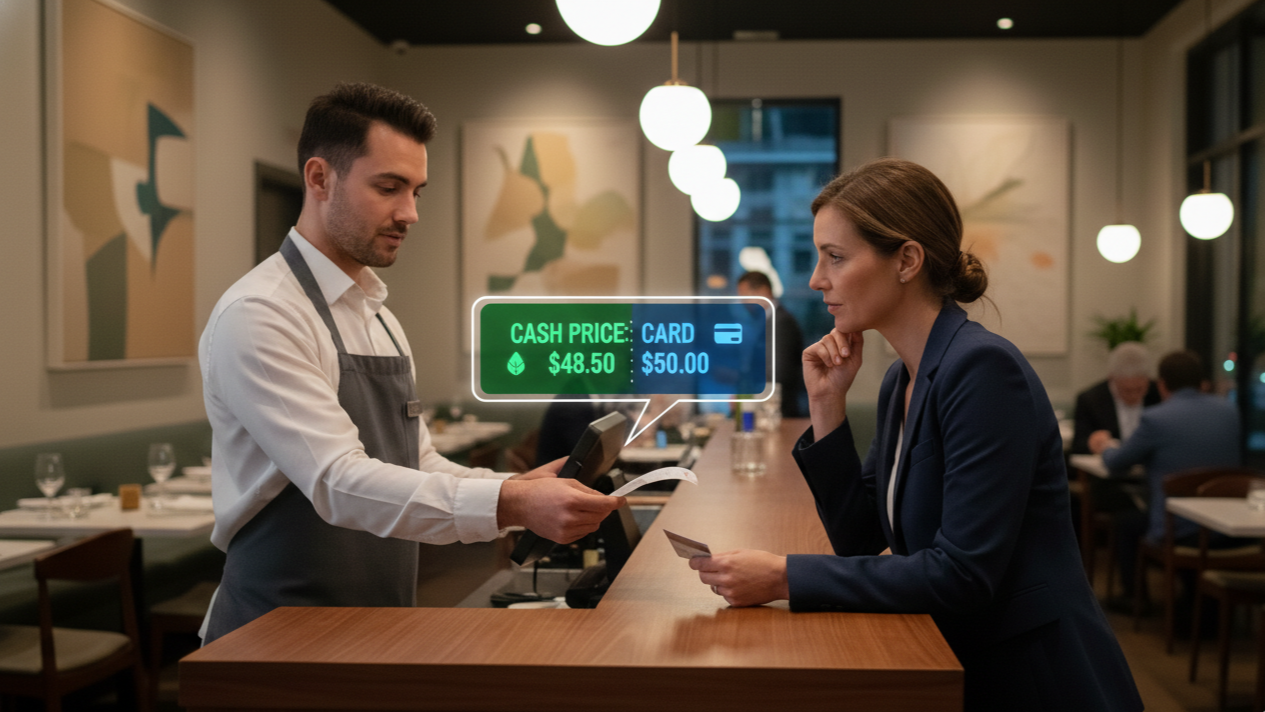
Dual pricing is a payment model where restaurants display two prices:
- Cash Price: a lower price for guests paying with cash
- Card Price: a slightly higher price that reflects card processing costs
For example:
If a menu item costs $8.00 in cash, it may cost $8.28 when paid by card, depending on the configured processing rate.
This model gives guests a clear choice at checkout while helping restaurants recover some of the costs associated with digital payments.
Dual pricing is often confused with other pricing models:
Cash Discounting
A listed price is reduced when a guest pays in cash.
Surcharging
An additional fee is added only when paying by card.
Dual Pricing
Both cash and card prices are shown clearly upfront, giving guests visibility before payment.
Restaurants should always review applicable local and state regulations before implementation.
Why Restaurants Are Turning to Dual Pricing
Restaurant margins are already tight. Many operators work within net profit margins of 3% to 5%, while card processing fees can range from 2% to 4%+ per transaction depending on provider and card type.
At the same time:
- Card payments now account for a significant share of restaurant transactions in the U.S.
- Inflation continues to pressure food and labor costs
- Operators need better control over profitability
- Every avoidable expense matters
For a restaurant doing $80,000 in monthly sales, a 3% effective card processing cost can equal $2,400 per month or $28,800 annually if most payments are made by card.
Dual pricing gives restaurants a practical way to offset these costs without raising menu prices for every guest.
How Much Can Dual Pricing Save Restaurants?
Let’s look at a simple example.
Example:
- Monthly Revenue: $100,000
- Average Card Processing Fee: 3%
- 40% of transactions shift to cash over time
That means:
- $40,000 per month moves from card to cash
- 3% fee avoided on $40,000 = $1,200 per month
- Annual Savings = $14,400 per year
If monthly revenue increases to $150,000 under the same assumptions, annual savings could exceed $21,000.
Even modest shifts in payment behavior can create meaningful margin improvement.
How Dual Pricing Works in Restaurants
Modern restaurant POS systems make dual pricing easy to manage.
Typically:
- Card price is reflected as the standard displayed price
- Cash price is calculated automatically
- Guests see both options clearly before payment
- At checkout, the correct total is applied based on the payment method
- Receipts clearly show the final amount paid
With the right technology, the process feels smooth for both staff and guests.
Major Advantages of Implementing Dual Pricing
Minimizes Credit Card Processing Costs
Every card transaction comes with a fee. For busy restaurants processing hundreds or thousands of transactions each month, these charges can significantly impact profits.
For example, a restaurant with $1.2 million in annual revenue and a blended processing fee of 3% could pay approximately $36,000 annually in payment fees.
Dual pricing helps recover part of those costs while giving guests an alternative payment option.
Improves Transparency
Unexpected fees frustrate guests.
Dual pricing works best because it is clear and upfront. Guests can see both prices before paying and choose the option that works best for them.
That transparency can build trust and reduce payment disputes.
Helps Maintain Cash Flow
Depending on the processor, card settlements may take one to three business days.
Cash payments provide immediate liquidity, which can help restaurants manage:
- Vendor payments
- Daily operating expenses
- Payroll timing
- Emergency purchases
For independent restaurants, especially, faster access to funds matters.
Enhances Guest Experience
No one likes surprises at checkout.
When pricing is clearly communicated in advance, guests feel more in control and are less likely to question the bill.
That often leads to smoother transactions, faster payment completion, and better overall satisfaction.
Creates a Competitive Edge
Restaurants that operate efficiently can reinvest savings into:
- Better service
- Marketing
- Technology upgrades
- Staff training
- Guest loyalty programs
Even recovering 1% to 2% of revenue can create a meaningful competitive advantage over time.
Common Challenges of Dual Pricing in Restaurants
Resistance to Change
Some guests may initially misunderstand dual pricing.
That is why staff training and clear signage are essential. The goal is to communicate pricing clearly, not create confusion.
Menu Complexity
Displaying two prices can feel cluttered if done poorly.
Restaurants should use clean menu layouts and clear labeling so guests can understand pricing quickly.
Compliance Requirements
Pricing rules can vary by state, processor agreement, and how fees are presented.
Restaurants should ensure:
- Prices are clearly displayed
- Menus and signage are updated
- Receipts are accurate
- Local requirements are followed
Dual Pricing for Restaurants: How to Implement It
Upgrade Your POS Solution
Not all POS systems support dual pricing properly. Modern restaurant POS platforms like NOVA can automate pricing logic, simplify staff workflows, and improve guest transparency. NOVA can help restaurants with:
- Automatic cash pricing calculations
- Customer-facing price display
- Clear receipt formatting
- Split payment handling
- Reporting on discounts and savings
- Real-time menu updates across channels
Update Menus and Signage
Guests should clearly understand pricing before ordering or paying.
Ensure consistency across:
- Printed menus
- Digital menu boards
- QR menus
- Online ordering channels
- Front counter signage
Focus on Staff Training
Your team should confidently explain:
- Why two prices exist
- How payments are processed
- Which amount applies
- How guests can choose their preferred method
Clear communication prevents friction.
Communicate Proactively
Use your website, social media, email list, and in-store messaging to explain the change before guests encounter it.
When customers understand the reason behind the model, adoption becomes easier.
Why NOVA Is Built for Dual Pricing
Most POS systems treat dual pricing as a basic add-on. NOVA approaches it differently.
NOVA is built for modern restaurant operations where pricing, speed, transparency, and control all need to work together. Instead of forcing operators to manage dual pricing manually, NOVA helps automate the process across the entire guest journey.
With NOVA, dual pricing becomes part of a smarter operating system for your restaurant, helping you reduce payment costs while maintaining a seamless checkout experience.
AI-Native POS Workflows
NOVA is designed with AI-driven workflows that help streamline day-to-day operations. From faster order entry to smarter payment flows, the platform helps teams work efficiently during peak hours while minimizing manual errors.
This means staff can focus more on guests and less on complicated payment handling.
Centralized Menu Management
Updating pricing manually across multiple channels can be time-consuming and risky.
With NOVA, restaurants can manage menus centrally across:
- In-store POS terminals
- Self-service kiosks
- QR menus
- Online ordering platforms
- Multi-location operations
This helps ensure dual pricing stays accurate and consistent everywhere guests interact with your brand.
Faster Checkout Experiences
Long lines and slow payments impact both guest satisfaction and table turnover.
NOVA helps restaurants speed up checkout with intuitive payment flows, quick tender selection, and clear display of available payment options. Guests can easily choose between cash and card pricing without confusion.
That means faster transactions and smoother front-of-house operations.
Built-In Transparency for Guests
Guest trust matters.
NOVA helps clearly present both payment options during checkout so guests understand the difference between cash and card pricing before they pay. Clear receipts and customer-facing displays help reduce surprises, misunderstandings, and disputes.
Transparency can lead to a better payment experience and stronger customer confidence.
Integrated Reporting and Cost Visibility
Many restaurants know they are paying processing fees, but few track the true impact consistently.
NOVA gives operators visibility into:
- Cash vs card payment mix
- Payment trends over time
- Discounts applied
- Revenue by location
- Operational performance metrics
This helps restaurants measure the real business impact of dual pricing and make smarter financial decisions.
Multi-Location Consistency
For growing restaurant brands, consistency matters.
NOVA allows operators to standardize pricing rules, menus, reporting, and workflows across multiple locations. Whether you operate two stores or twenty, dual pricing can be managed with greater control and fewer manual adjustments.
Better Operational Visibility
Dual pricing should support operations, not complicate them.
NOVA connects payments with broader restaurant workflows such as sales reporting, menu performance, and front-of-house execution. Operators gain clearer visibility into how pricing decisions affect margins, guest behavior, and overall performance.
More Than a Pricing Feature
With many POS systems, dual pricing is just another setting.
With NOVA, it becomes part of a connected restaurant growth platform designed to improve efficiency, protect margins, and create better guest experiences.
That means restaurants do not just implement dual pricing. They run smarter because of it.
Final Thoughts
Every restaurant owner is looking for ways to protect margins without hurting guest experience.
Dual pricing can be an effective strategy to:
- Reduce payment processing costs
- Improve cash flow
- Increase transparency
- Give guests more flexibility
The key is implementing it the right way, with clear communication and the right POS platform behind it.
NOVA helps restaurants roll out dual pricing smoothly with automation, transparency, and operational control.
Want to see how dual pricing works in real life?
Book a demo with NOVA today.