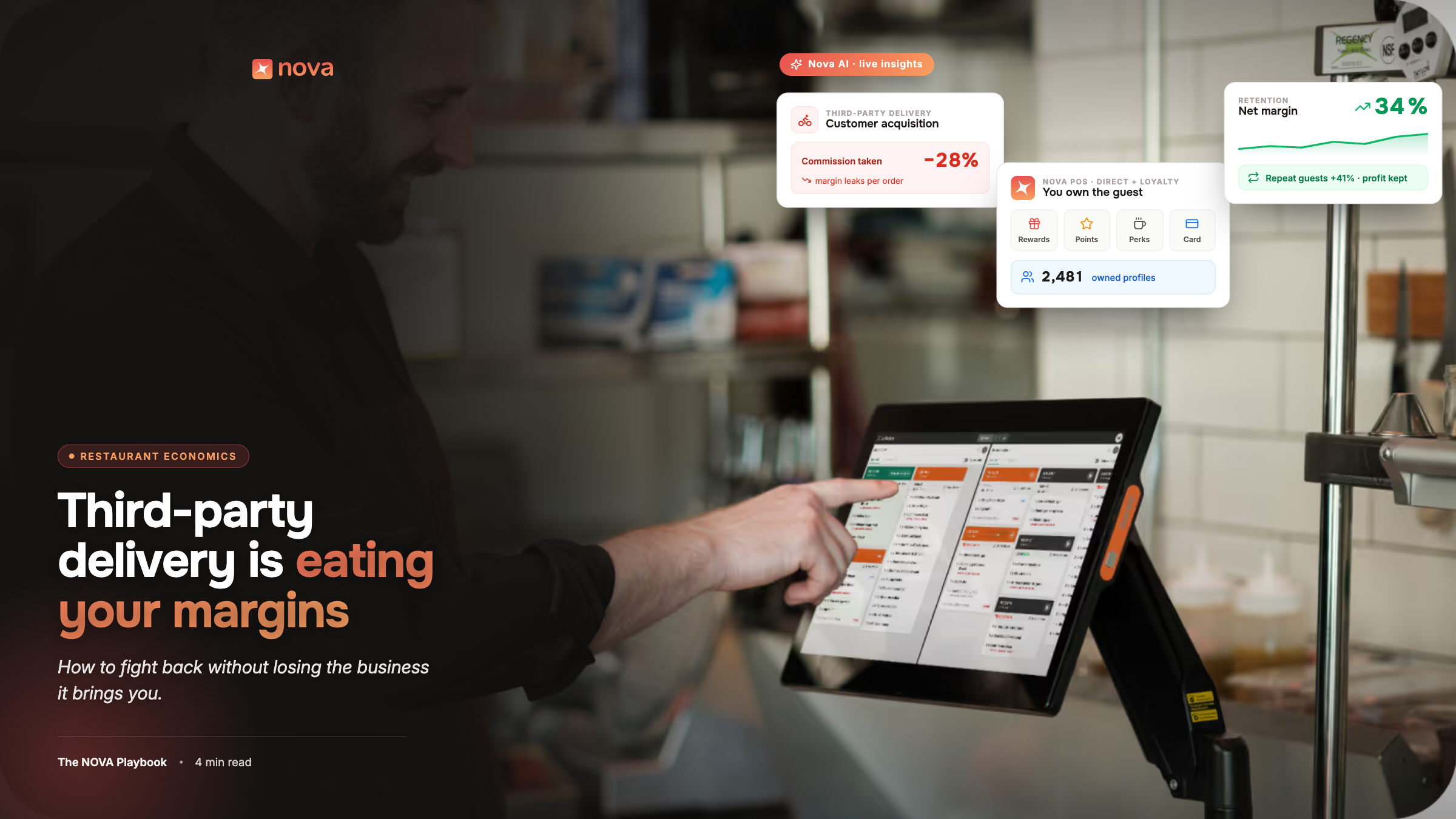

Here's how to fight back without losing the business it brings you.
If it feels like DoorDash, Uber Eats, and Grubhub take a bigger cut every year, you're not imagining it. Commission rates, ad placement fees, and “premium” listing costs have climbed steadily, and for many restaurant owners, the squeeze on margin is now one of the biggest threats to profitability, right up there with food and labor costs.
The instinct for a lot of owners is to just cut ties with third-party apps altogether. But the data suggests that's the wrong move. The better strategy isn't to abandon these platforms: it's to use them for what they're actually good at, while building a system that protects your margin on the orders that matter most: repeat customers.
The Delivery Market Isn't Slowing Down
The numbers make it clear why this problem isn't going away. The US online food delivery market was valued at roughly $430 billion in 2025 and is projected to reach $618 billion by 2030, growing at close to a 9-10% CAGR. Delivery isn't a pandemic-era blip that fades - it's becoming a permanent, growing share of how people eat.
That means the margin pressure from third-party platforms isn't a temporary cost of doing business. It's structural, and it's going to keep showing up on your P&L unless you change how you use these platforms.
Third-Party Apps Are an Acquisition Channel, Not a Retention Channel
Here's the piece most owners miss: third-party delivery apps are genuinely excellent at bringing you new customers. Roughly 37% of consumers say they discover new restaurants through delivery apps. That's a customer acquisition funnel most independent restaurants could never build or afford on their own — millions of app users browsing for somewhere to order, plus the ability to pay for featured or sponsored placement to get in front of them.
The problem isn't that third-party apps forever own the customer; the real problem is inaction to make the customer yours after the introduction.
The Real Margin Opportunity Is Beyond the First Order
This is the stat that should change how you think about delivery strategy: 79% of delivery orders come from customers who have already ordered from that restaurant before. Repeat business is where the volume actually lives - and repeat business is exactly where you have the most leverage to protect your margin, because you don't need a third-party platform to reach a customer who already knows you.
When a customer orders directly through your own website, app, or phone, you avoid the commission fees, you can price the order more competitively for the customer, and you own the customer relationship and the data that comes with it. Everybody wins except the delivery platform.
A Two-Step Strategy: Acquire Third-Party, Retain First-Party
Put together, these points form a simple framework:
1. Acquire through third-party platforms. Let DoorDash, Uber Eats, and similar apps do what they do best - put your restaurant in front of new customers who are actively browsing. Pay for preferred placement where it makes sense; treat it as a customer acquisition cost, not a permanent cost of serving your regulars.
2. Retain through first-party ordering. Once a customer has ordered from you once, your job is to move their next order to a channel you control. Two levers do most of the work here:
- Price. Since you're not paying commission on direct orders, you can offer better pricing than the customer sees on third-party apps; a meaningful incentive given how price-sensitive repeat ordering behavior tends to be.
- Loyalty and punch-card promotions. A simple, tangible incentive tied to direct ordering - for example, order three times through your website at $25 or more and get a free drink (worth $15) on your next in-store visit - gives customers a reason to build the habit of ordering direct instead of defaulting back to the app.
The goal isn't a complicated loyalty platform. It's building a habit. Every direct order is margin you keep and customer data you own - data that tells you what your best customers actually want, which is exactly what a modern restaurant POS system should be helping you capture and act on.
The Takeaway
Third-party delivery apps aren't the enemy, but treating them as your only delivery strategy is what's costing you margin. Use them to get discovered. Use your own ordering system, backed by a POS that tracks customer behavior and makes loyalty easy to run, to keep the customers you've already earned.